

The ultimate guide of flange for stoma bag
Table of Contents
A suitable flange for stoma bag can significantly reduce the risk of leakage and skin complications. At the same time, it extends the wearing time to enhance the patient’s sense of security and quality of life. Therefore, it is crucial to select the appropriate flange for stoma bag and attach it correctly.
Zodelo is well aware that for stoma patients, choosing the right stoma bag and ostomy accessories is of vital importance. Therefore, based on user experience, we are committed to developing and manufacturing high-quality and safe manufacturing bags and their accessories, so that all users can enjoy a more comfortable and reassuring life. Meanwhile, Zodelo also provides you with the most comprehensive and detailed information on ostomy care. This article will provide you with a detailed introduction to flange for stoma bag.
What is flange for stoma bag?
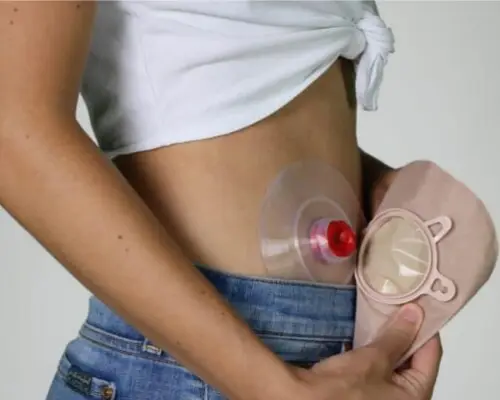
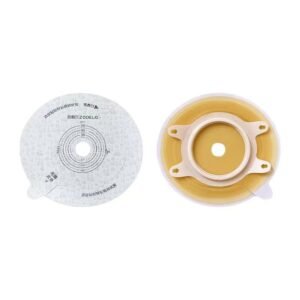
Flange for stoma bag, also known as baseplate or skin barrier. Is a key component in the stoma bag system that directly contacts the patient’s skin and is fixed around the stoma. In the Two-Piece stoma bag system, the flange is an independent component and is connected to the bag body by means of snap or bonding. In the one piece stoma bag system, the flange and the bag body are formed in one piece.
The core function of the Flange for stoma bag is to firmly fix the stoma bag to the abdominal wall. Form a reliable seal between the stoma and the skin. Prevent excrement from leaking. This protects the skin around the stoma from irritation. The design and quality of flanges directly determine the safety, comfort and complication rate of stoma care.
Types of flange for stoma bag
1. Classification by structural form
1.1. Flat Flange
It is suitable for protruding or normal-height stomas. Or patients with a flat abdominal wall without obvious folds or depressions.
Advantages: Light and thin wearing experience, high comfort level.
Defect: Limited sealing performance for retractable stomas or irregular abdominal walls.
1.2. Convex Flange
The center of the flange protrudes outward, exerting a gentle pressure on the flange. It has stronger sealing performance. It can significantly reduce the risk of leakage.
It is suitable for retracting stomas, which are flush with the skin. The abdominal wall is uneven and sunken after the operation.
1.3. Deep Convex Flange
Provide stronger support and external thrust.
It is suitable for people with severe retraction or high leakage risk.
It is usually recommended to use it in combination with an ostomy belt.
Careful assessment is needed to avoid excessive pressure on the stoma.
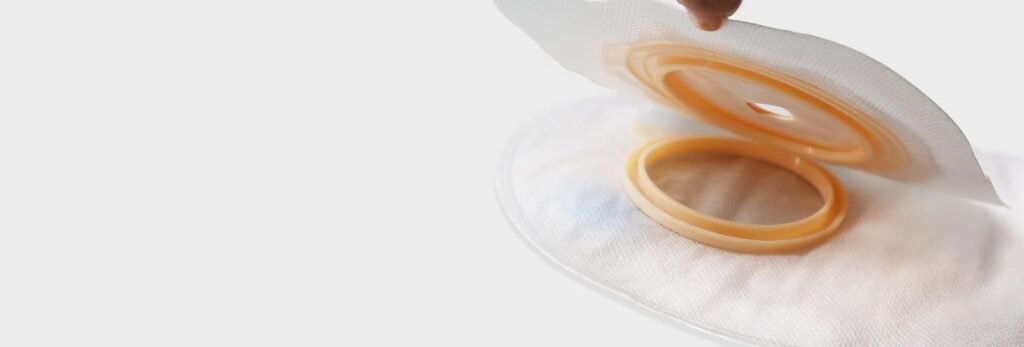
2. Classify by connection method
2.1 Click Coupling
The “click” connection is achieved through a mechanical ring. The connection is firm and the security is high.
Suitable for those with high activity levels or at night.
Limitations: The thickness is slightly larger, and some patients may experience a foreign body sensation.
2.2 Adhesive/Flexible Coupling
The bag body is connected through a flexible rubber layer. Lighter, thinner and softer.
It conforms to the curve of the abdominal wall and has good concealment.
Limitation: The connection stability is slightly lower than that of mechanical clips.
3. Classified by skin care techniques
3.1 Standard hydrocolloid flange
Basic adhesive formula. Suitable for those with good skin condition and low risk of leakage.
3.2 Skin-friendly flange
Contains skin-protecting factors. Suitable for people with sensitive skin, those prone to redness or mild irritation. Effectively reduce skin irritation and minimize skin allergies.
3.3 Extended Wear Flange
It has stronger resistance to water and excrement erosion. Suitable for: High-volume ileostomy, used in environments with excessive sweating or hot conditions.

The Role of flange for stoma bag
1. Sealed and leak-proof
The flange forms a seal by precisely adhering to the skin around the stoma. Poor sealing is the main cause of stoma complications (dermatitis, infection, and odor), while high-quality flanges can significantly reduce the incidence of leakage.
2. Protect the skin health around the stoma
Continuous contamination and irritation of the skin by excreta can lead to: moist dermatitis, skin erosion, itching and exudation. The hydrocolloid material of the flange can isolate irritating substances. Maintain the stability of the skin’s microenvironment. Effectively protect skin health.
3. Provide structural support
Convex surfaces and deep convex flanges are supported by physical means:
Push the retraction opening outward.
Improve the direction of excretion.
Reduce the reflux of excrement inside the bag to the skin.
4. Enhance the sense of security and quality of life when wearing
A stable flange for stoma bag can reduce the frequency of stoma bag replacement. Reduce the risk of leakage. Enhance self-confidence and social confidence.
5. Achieve personalized care
Different stoma types (colon, ileum, urinary tract), different abdominal wall conditions, and different lifestyles all require matching different flange for stoma bag schemes. Professional flange selection is a core component of the personalized stoma care system.
Choosing the Right flange for stoma bag
1. Select flange for stoma bag according to the stoma shape
a. Protruding stoma
Suitable for: Flat Flange
Reason: Excrement naturally stays away from the skin. The requirements for abdominal wall sealing are relatively low.
b. A stoma that is flush with the skin or slightly retracted
Suitable for: Convex Flange
Function: Improve the direction of excretion by pushing outward. Significantly reduce the probability of leakage.
c. Stoma with obvious retraction or high risk of leakage
Recommendation: Deep Convex Flange.
Clinical recommendations.
It should be used under the guidance of a stoma therapist first.
When necessary, combine the ostomy belt.
2. Select flange for stoma bag according to the condition of the abdominal wall
The condition of the abdominal wall is often overlooked, but in actual care, it is one of the main factors leading to leakage.
Characteristics of the abdominal wall | Recommended Flange |
Smooth and tight | Flat or slightly convex |
Postoperative depression | Convex surface or deep convex |
Laxity, obesity | Flexible convex flange |
Frequent activities | Stable convex surface or snap-on type |
4. Select the flange material according to stoma type
- Ileostomy: The excrement is liquid and highly corrosive. It is suitable for Extended flange. It features water resistance and erosion resistance.
- Colostomy: Excrement is relatively formed. Suitable for standard or skin-friendly flanges.
- Urostomy: Continuous discharge of urine. Choose moisture-resistant and anti-crystallization flanges.
5. Choose based on your skin condition
- Sensitive skin: Low-allergenic, skin repair type hydrocolloid.
- Prone to redness, swelling or erosion: Avoid frequent replacement and choose long-lasting flanges.
- Need to extend wearing time: High-density hydrocolloid structure.
6. Flange selection for one-piece or two-piece systems
- One-piece flange: Thin, light and concealed. Suitable for people who use it stably on a daily basis.
- Two-piece flange: No need to frequently peel and stick the skin when changing the bag body. Suitable for people with sensitive skin or those who need long-term care.
Tip on Applying the flange for stoma bag
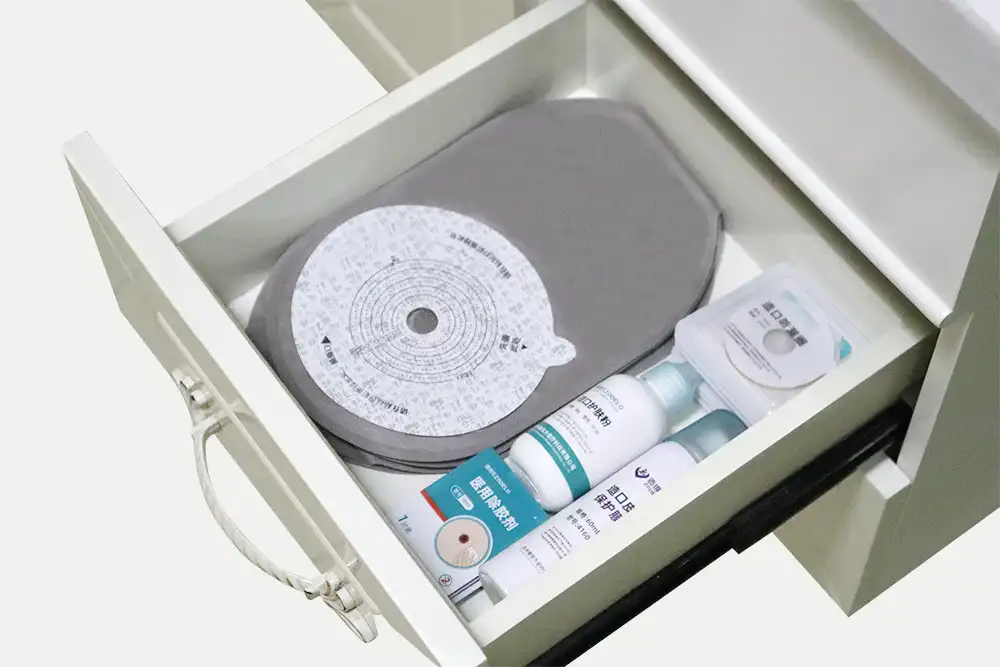
Correctly attaching the flange for stoma bag is as important as choosing it. More than half of the leakage problems are caused by improper adhesion.
1. Accurately measure the size of the stoma
The size of the stoma may change in the early postoperative period and needs to be remeasured regularly. The opening should be 1 to 2 mm larger than the diameter of the stoma.
Avoid leakage problems caused by overly large openings. Or the opening is too small, resulting in stoma compression problems.
2. Thoroughly clean and dry the skin
Use warm water or non-irritating detergent. Avoid using skin care products containing alcohol, fragrances or other chemical components that may irritate the skin. After cleaning, the skin must be completely dry before attaching the flange for stoma bag.
3. Use ostomy accessories in conjunction
ostomy accessories can effectively enhance sealing performance and extend the wearing time.
People who are prone to moisture or sweating: Use Barrier Film.
For patients with uneven skin and wrinkled scars: Use stoma ointment or sealing rings to fill in the depressions
4. Attach flange correctly
The stoma bag can be slightly heated with both hands before application.
Press with your palm for 30 to 60 seconds after application.
Body temperature can activate the viscosity of water colloids.
5. Special precautions for convex flanges
After application, observe the color of the stoma and whether there is any pain or a sense of pressure.
Stop using it and consult a professional if the following situations occur:
The stoma was purple and dark.
Persistent pain.
Increased bleeding.
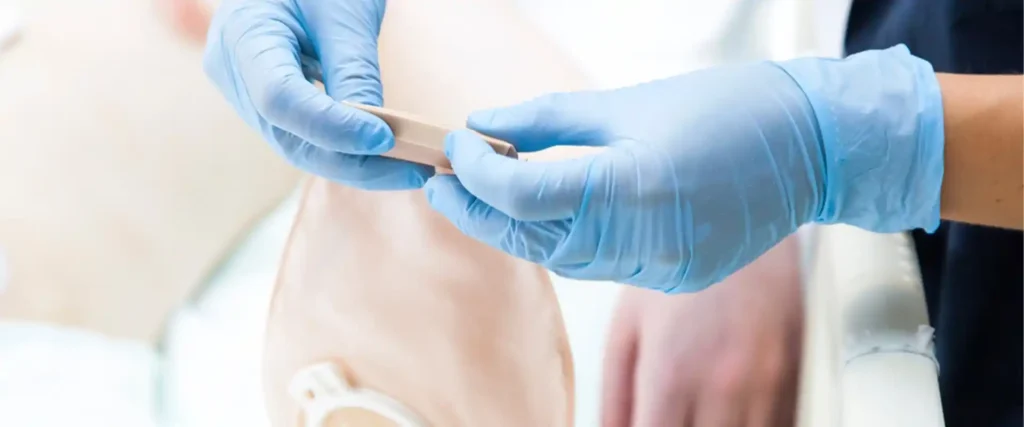
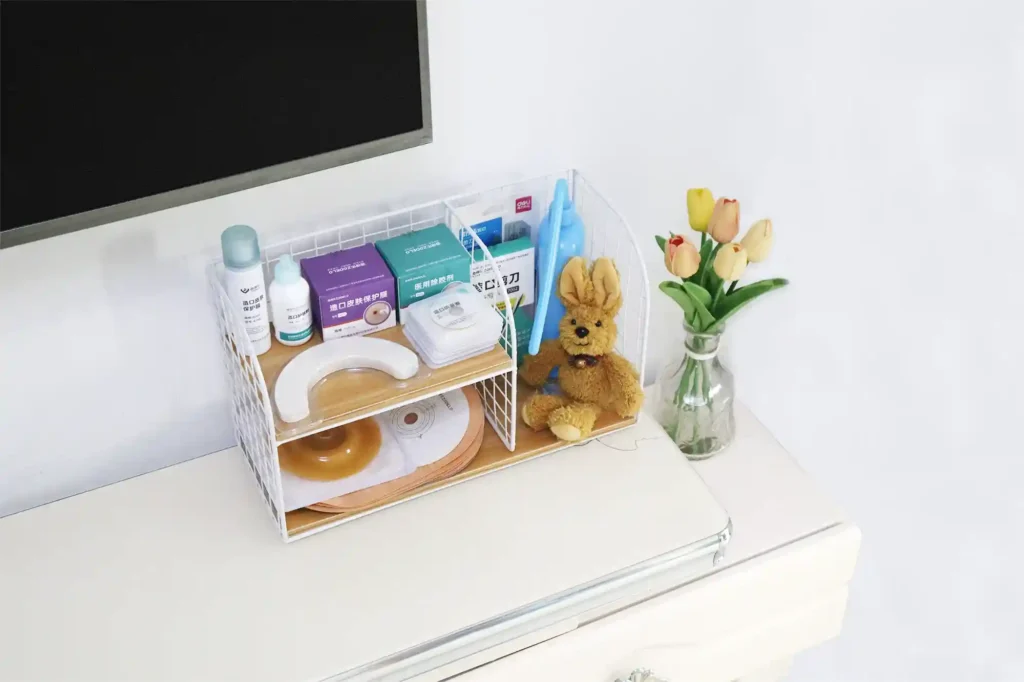
Essential stoma bag accessories to consider
When choose flange for stoma bag, some additional ostomy accessories products are also indispensable.
- Ostomy Skin Care Powder:Helps absorb moisture and protect sensitive skin around the stoma.
- Reinforced Ostomy Adhesive Patch: Provides extra security and comfort with breathable fabric support.
- Medical Adhesive Remover:Gently dissolves adhesive residue for painless and easy removal.
- Ostomy Baseplate Adhesive Remover:Specifically designed to remove baseplate adhesive while protecting the skin.
- Ostomy Barrier Ring:Creates a secure seal to prevent leakage and protect the peristomal skin.
- Ostomy Skin Barrier Film:Forms a protective layer that shields skin from irritation and adhesives.
- Ostomy Skin Barrier Spray:Provides quick, even coverage with a convenient spray application.
- Ostomy scissors:Help cut the size of the skin barrier opening and can effectively avoid uneven, rough and angular edges.
Confusion Over the Use of Ostomy Paste in Applying flange for stoma bag
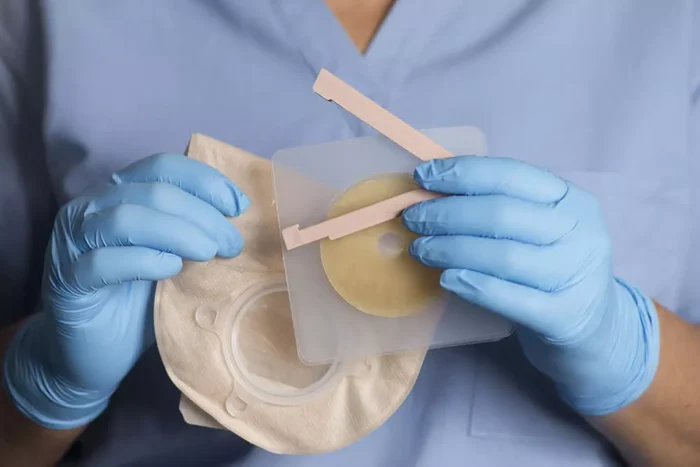
- Misconception 1:Ostomy paste is “glue” used to stick flanges
- Ostomy ointment is not an adhesive. Excessive or incorrect use of ostomy paste will instead weaken the adhesion of the flange. The core function of stoma ointment is to fill in skin depressions and smooth out irregular skin surfaces. Enhance sealing performance and reduce leakage.
- Misconception 2: All stoma patients need to use ostomy paste
- Ostomy paste is an auxiliary sealing tool, not a basic necessity. If the stoma protrudes well, the abdominal wall is flat and there is no history of leakage, ostomy paste is not needed at all.
- Misconception 3:If there is a leak, apply more ostomy ointment
- The fundamental causes of leakage are often: mismatch of flange types, inaccurate opening dimensions, and problems with the web wall structure.
- stoma paste can only fill the gaps but cannot stick the stoma bag.
Step-by-Step guide to Changing an Ostomy Bag
Step 1: Wash your hands
Before replacement, wash your hands thoroughly to keep them clean and avoid contaminating the stoma and causing infection during the process
Step 2: Remove the old stoma pouch
- If the pouch to be replaced is an emptying one, the excrement inside the pouch needs to be drained first.
- Hold the skin with one hand and gently remove the adhered base with the other. If it cannot be removed, it can be used in combination with a glue remover.
- Discard the old disposable stoma bag.
Step 3: Observe the stoma
A normal stoma should be bright red and moist. If the color is incorrect or there is erosion, exudation or other conditions, one should go to the hospital for medical treatment in time.
Step Four: Clean the stoma
- Gently wipe the stoma with warm water and a soft towel until it is clean.
- Wait for the stoma to dry or use it in combination with stoma powder.
Step 5: Measure the diameter of the stoma
Measure the stoma with a measuring card to determine its diameter.
Step 6: Cutting
Based on the measured diameter, the opening diameter of the cutting base needs to be increased by 1-2mm. Confirm that the cutting edge is smooth and flat.
Step 7: Paste the chassis
- Remove the undercarriage backing and gently press against the stoma.
- Check for any wrinkles or curled edges around to ensure a firm and seamless bond.
Step 8: Organize the discharge outlet
Empty the bottom of the pouch, fold it and fasten the clips or Velcro tightly to ensure a seal and prevent leakage.
FAQs about flange for stoma bag
Q1. What to do when stoma bag keeps leaking?
- Replace the stoma pouch: At the same time, remeasure the diameter of the stoma, cut the base plate and make sure the opening size is 1-2mm larger than the stoma size.
- Use stoma auxiliary products: Such as leak-proof rings and leak-proof pastes to enhance the adhesion between the base plate and the skin, ensure a stronger bond and better sealing performance.
- Change to a more suitable pouch for yourself:You can contact a professional doctor and, based on your specific condition and living habits, modify the pouch style or choose a more adhesive base
- Increase the frequency of replacement:Avoid leakage due to the pouch being too full of contents.
Q2. 1 piece vs 2 piece stoma bag,what’s the difference?
Type | Structural features | Advantages | Disadvantage |
The skin barrier and the bag are integrated and cannot be separated. | Lightweight and invisible: Softer and thinner, not conspicuous when worn. | Risk of skin damage: Every time the bag is changed, the bottom must be torn off. Frequent tearing may irritate the skin. | |
The skin barrier and the bag are separate and connected by snap fasteners or adhesive. | Simple operation: Just stick it on in one step. | Slightly bulky: The connection points are relatively hard and a little thicker than the one-piece type. |
Q3. How to apply a flange for stoma bag?
- Cleaning and drying:Wash the skin around the stoma with warm water and gently wipe it to dry.
- Measurement and cutting:Use a measuring card to measure the size of the stoma. Draw lines on the chassis and cut holes. The hole diameter should be 1-2 millimeters larger than the actual size of the stoma.
- Preheating:Warm the back adhesive of the chassis with your palm. Temperature can increase its stickiness.
- Paste:Remove the protective paper. Stick it on the stoma from bottom to top.
- Press and smooth: Use your fingers to press the inner circle of the base a few times to ensure there are no wrinkles or bubbles.
Conclusion - urostomy bag vs catheter

Choosing the appropriate flange for stoma bag and replacing it correctly is of vital importance for the daily care of patients. Therefore, all patients should have a clear understanding of the flange for stoma bag in order to better protect the stoma and improve the quality of life and confidence. Of course, if you encounter problems that you cannot solve by yourself, you should seek medical attention in time. Seek professional help to prevent the condition from worsening.
Zodelo is well aware of the significance of ostomy pouchs for ostomy patients. Therefore, we constantly research and upgrade them, and at the same time listen to customer feedback and opinions to launch all types of stoma bages, such as: Airlora Series, Calmlora Series, Mellora Series, Joylora Series and ostomy product accessories , just to meet the experience of all customers. Welcome to our website to get more stoma care guidelines and product selection support. If you need any assistance, please contact us.
More Resources about flange for stoma bag
- Ostomy: Adapting to life after colostomy, ileostomy or urostomy— Mayoclinic
- A Guide to Ostomy Bags and Pouching Systems— Uchicagomedicine.org
- Stoma (medicine)– wikipedia
- Best ostomy bag for flat stoma– zodelo
- The Ultimate Guide Of Deep Convex Stoma Bags– zodelo
- Ostomy bag accessories:What Ostomy Accessories Do I Need?– zodelo

Top 10 Colostomy Bag Manufacturers In India 2026
top 10 colostomy bag

Top 10 Stoma Bag Suppliers Uk 2026
Top 10 Stoma Bag Sup

The Ultimate Guide To Sex With A Colostomy Bag
The Ultimate Guide T

Top 10 Colostomy Bag Manufacturers And Suppliers In China 2026
Top 10 Colostomy Bag