

10 causes for colostomy bag
Table of Contents
What is a colostomy bag?
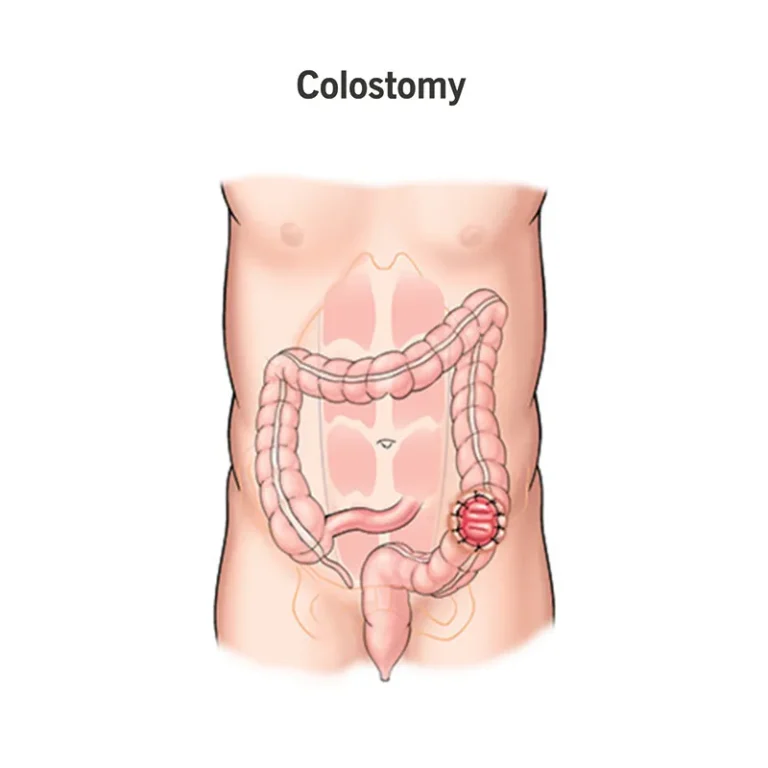
A colostomy pouch is an excretory collection device. It is specifically designed for patients with a colostomy. Simply put, it serves as an “artificial anus” attached to the abdomen. Sometimes, a patient requires the surgical removal of the anus. Other times, a section of the intestine is no longer functional due to illness. In these cases, doctors create a stoma. They do this by bringing a segment of the large intestine out through the abdominal wall. The purpose of the colostomy pouch is to collect the stool that naturally passes through this opening. This prevents the soiling of clothing.
Quick Answer: Main Reasons for Colostomy
- Rectal Cancer (Low-lying): The tumor is located too close to the anus (e.g., <5 cm), necessitating the removal of the anus and the creation of a stoma to save the patient’s life.
- Intestinal Obstruction: Severe blockage of the intestines; a stoma is created to “divert” fecal matter, thereby preventing intestinal rupture or infection.
- Intestinal Perforation/Rupture: A tear in the intestinal wall; a temporary stoma allows the bowel to rest and prevents fecal matter from leaking into the abdominal cavity.
- Protection Following Intestinal Anastomosis: After major surgery, a stoma is created to prevent leakage at the surgical connection site, giving the bowel time to heal.
- Congenital Anal Malformations: The anus did not develop properly at birth, requiring a stoma to facilitate bowel movements.
- Severe Intestinal Trauma: Major injuries—such as those sustained in car accidents—render the intestine irreparable, necessitating a permanent stoma as a substitute.
- Inflammatory Conditions (e.g., Crohn’s Disease): Severe intestinal inflammation; a stoma relieves pressure and aids in the recovery of the affected areas.
- Radiation Enteritis: Radiation therapy has damaged the intestines, requiring a stoma to protect the injured region.
- Prevention of Intestinal Obstruction: For high-risk patients, a stoma is created preemptively to reduce the risk of future obstruction.
- Other Intestinal Diseases: Such as Familial Adenomatous Polyposis (FAP), which requires the surgical removal of a section of the intestine followed by the creation of a stoma.
10 causes for colostomy bag
Colon Cancer
1. What It Is
Colon cancer is a malignant tumor that develops within the colon. Cancer cells grow continuously and spread, potentially metastasizing to other organs. Common symptoms include bloody stools, abdominal pain, changes in bowel habits, and weight loss. Early detection improves the cure rate; however, in advanced stages, surgical removal of a portion of the intestine—or even the anus—may be required.
2. Why a Colostomy Is Needed
The disease renders the natural anus unusable, or the intestine must be “rerouted” to save the patient’s life.
- Tumor Location Is Too Low: If the tumor is located too close to the anus (e.g., <5 cm), both the tumor and the anus must be surgically removed to achieve a cure. Without an anus, the large intestine must be brought out through the abdominal wall to create a stoma (an artificial opening), allowing stool to be expelled through this site.
- Intestinal Obstruction/Rupture: If a tumor blocks the intestine or the intestine ruptures, a stoma can “divert” the flow of stool, thereby preventing the spread of infection.
- Post-operative Protection: Following intestinal surgery, a stoma can relieve pressure on the surgical site, prevent leakage at the anastomosis (the point where the intestine was reconnected), and promote healing.
3. Temporary or Permanent
Depending on the patient’s condition and treatment requirements, there are two scenarios:
- Permanent Colostomy: In cases of low rectal cancer requiring the removal of the anus, a stoma is required for the remainder of the patient’s life. Stool is expelled through an opening on the abdomen, and the original anal function cannot be restored.
- Temporary Colostomy: Once an intestinal obstruction has been resolved and the intestine has recovered, the stoma can be closed. Following intestinal surgery, a temporary stoma serves to protect the anastomosis site; after 3 to 6 months, a second surgery is performed to “reconnect” the intestine and restore normal bowel function.
Crohn’s Disease
1. What It Is
Crohn’s disease is a chronic, relapsing inflammatory condition affecting the digestive tract. It can affect any part of the digestive system—from the mouth to the anus—though it most commonly affects the terminal ileum and the colon.
2. Why a Colostomy Is Needed
Core Objectives: To alleviate complications, protect the bowel, and buy time for therapeutic treatment.
- Bowel Obstruction: Thickening of the bowel wall or scarring leads to a blockage, preventing normal bowel movements; a stoma is required to create a “bypass” route for waste elimination.
- Fistulas/Abscesses: The bowel wall is breached, forming abnormal channels—such as between sections of the bowel, or between the bowel and the bladder or vagina (internal fistulas)—or breaching the skin (external fistulas). A stoma reduces the flow of fecal matter through the affected area, thereby promoting healing.
- Acute Perforation: A rupture of the bowel wall leads to peritonitis (inflammation of the abdominal lining); a stoma allows for the emergency “diversion” of fecal matter to help control the infection.
3. Temporary or Permanent
For patients with Crohn’s disease, a stoma is typically temporary, though in a minority of cases, it may be permanent. Understanding these scenarios provides further context among the 10 causes for colostomy bag usage:
- Temporary Stoma (Most Common): Once the bowel obstruction is relieved or the fistula/abscess is brought under control—and after the intestinal inflammation has subsided and the surgical site has healed—the stoma can be closed, allowing for the resumption of normal bowel movements through the anus.
- Permanent Stoma (Minority of Cases): The anus or rectum is severely damaged and cannot be repaired (e.g., due to recurrent perianal disease or complex fistulas). This represents one of the more severe 10 causes for colostomy bag necessity, where long-term diversion is essential for the patient’s health.
Ulcerative Colitis
1. What It Is
Ulcerative colitis (UC) is a chronic, non-specific inflammatory bowel disease that primarily affects the colon (large intestine) and the rectum.
2.Why Is a Colostomy Needed?
Core Reason: The disease renders the colon unsalvageable or severely impaired in function; a stoma is therefore required to sustain life or serve as a transitional measure during treatment.
- Toxic Megacolon: Extreme dilation of the colon, which carries a risk of rupture leading to peritonitis; an emergency stoma is required to “divert” fecal matter and save the patient’s life.
- Uncontrollable Bleeding or Perforation: Severe damage to the intestinal tract; a stoma allows for rapid control of the condition and prevents the spread of infection.
- Transitional Treatment Measure: In complex surgical cases, a temporary stoma may be created initially, with a second-stage surgery performed later once the patient’s condition has stabilized.
3.Temporary or Permanent
For patients with ulcerative colitis, a stoma may be either temporary or permanent, depending on the surgical plan and the severity of the disease:
- Permanent Stoma (Common Scenario): If a total colectomy and proctectomy (removal of the entire colon and rectum) is performed—such as in preparation for an IPAA procedure, or in cases where pouch surgery is not feasible—the rectum and anus must be removed, and fecal matter is permanently discharged through a stoma on the abdominal wall. This is one of the critical 10 causes for colostomy bag necessity.
- Temporary Stoma (Less Common Scenario): Following emergency surgery (e.g., for toxic megacolon), a stoma is initially created to stabilize the patient’s condition; a second-stage surgery to reconstruct intestinal function is then performed once circumstances permit. Understanding this helps complete the picture of the 10 causes for colostomy bag usage in inflammatory bowel diseases.
Bowel Obstruction
1.What It Is
Simply put, a bowel obstruction is a severe “traffic jam” within the intestines. Under normal circumstances, food residue and stool pass smoothly through the intestines and are expelled from the body; however, when a bowel obstruction occurs—due to various causes such as external compression by a tumor, intestinal twisting (volvulus), post-surgical adhesions, or severe inflammation—the contents of the intestines become completely or partially unable to pass through.
2.Why a Colostomy Is Needed
In cases of bowel obstruction, a colostomy is typically performed as a life-saving measure and to relieve pressure. This is primarily based on the following two core reasons:
- Emergency Relief to Save Lives: When the intestine is completely blocked (particularly in cases of left-sided colon obstruction) and the diseased section cannot be immediately surgically removed, doctors must create an opening above (proximal to) the point of obstruction to allow the accumulated stool to drain out of the body. This is analogous to a clogged sewer pipe: an emergency drain is cut into the wall to prevent the pipe from bursting (which corresponds to intestinal perforation).
- Physical Condition Precludes Major Surgery: Many patients presenting with bowel obstruction are in extremely poor physical health (e.g., suffering from severe infection, malnutrition, or advanced age) and cannot tolerate a lengthy, definitive surgical procedure to remove the obstruction. In such instances, a colostomy serves as a rapid, relatively minimally invasive emergency intervention designed to stabilize the patient and ensure survival, allowing for subsequent treatment to be considered once their physical condition has improved.
3.Temporary or Permanent?
The vast majority of colostomies performed due to bowel obstruction are temporary; however, in a minority of cases, they may become permanent:
- Temporary Colostomy (Most Common): Serving as a “staging post.” The colostomy allows the obstructed section of the intestine to decompress and rest, thereby resolving inflammation and edema.
- Permanent Colostomy (Minority of Cases): If the bowel obstruction is caused by an unresectable advanced-stage tumor, or if the patient has suffered a complete loss of anal sphincter function—or is too physically frail to withstand a second surgery—then the colostomy must be retained for the remainder of the patient’s life, serving as a permanent channel for waste elimination.
Bowel obstruction is one of the most critical among the 10 causes for colostomy bag usage, often requiring immediate surgical intervention. Understanding this condition provides essential insight into why a stoma becomes a life-saving necessity within the broader context of the 10 causes for colostomy bag necessity.
Intestinal Trauma
1.What It Is
Intestinal trauma typically refers to a rupture, perforation, or severe laceration of the colon or rectum caused by external force. This constitutes a surgical emergency; once the intestine ruptures, stool—which contains a high concentration of bacteria—leaks into the abdominal cavity, making it highly likely to trigger severe, potentially life-threatening infections.
2.Why a Colostomy Is Needed
In cases of severe intestinal trauma, a stoma is primarily created to divert the fecal stream and prevent the spread of infection:
- Controlling Life-Threatening Infections: Following an intestinal rupture, the abdominal cavity becomes heavily contaminated. If the rupture were simply sutured closed, the continued passage of stool through the repair site would hinder wound healing and could even cause the repair to break open again (anastomotic leak). A stoma allows stool to be rerouted and expelled elsewhere, bypassing the injured area entirely.
- Creating Conditions for Healing: This allows the damaged section of the intestine to undergo a period of complete “rest,” preventing continuous irritation of the wound by stool. Consequently, the risk of abdominal abscesses and sepsis is significantly reduced, thereby saving the patient’s life.
3.Temporary or Permanent
The vast majority of stomas created as a result of trauma are temporary:
- Temporary Stoma (Most Common): The purpose is to protect the injured intestine while it heals. Typically, 3 to 6 months after the injury—once the patient has fully recovered and any intestinal inflammation has subsided—a second surgical procedure can be performed to reverse the stoma and restore normal bowel function via the anus.
- Permanent Stoma (Extremely Rare): A permanent stoma is generally not created unless the trauma has resulted in the complete and irreparable destruction of the anus or the lower section of the rectum.
Intestinal trauma represents one of the most urgent among the 10 causes for colostomy bag necessity, as it often requires immediate life-saving surgical intervention. Recognizing this highlights the critical role of stoma creation within the broader spectrum of the 10 causes for colostomy bag usage in emergency medicine.
Diverticulitis
1.What It Is
Diverticulitis is an inflammation of the “small pouches” (diverticula) that bulge outward from the wall of the colon. It is typically triggered when fecal matter becomes trapped within these small pockets, leading to an infection. In severe cases—much like a bulge in a tire that eventually ruptures—this can result in intestinal perforation and a severe infection within the abdominal cavity.
2.Why a Colostomy Is Needed
Diverticulitis can lead to intestinal perforation, severe peritonitis, or a large abscess. At this stage, the intestinal tissue becomes severely swollen and fragile. Attempting to forcibly suture the intestine carries a very high risk. The sutures might tear open. Therefore, it becomes necessary to surgically remove the diseased segment of the intestine. Doctors then create a stoma (colostomy) to divert the flow of fecal matter. This prevents secondary contamination of the abdominal cavity. Consequently, it controls the infection and saves the patient’s life.
3.Temporary or Permanent
In the vast majority of cases, the colostomy is temporary. The purpose of the stoma is to allow the abdominal infection to fully resolve. It also gives the intestine a period of rest. This typically lasts 3 to 6 months. Once the patient has physically recovered, a second surgery is performed. This surgery reconnects the intestine. It thereby restores normal bowel movements through the anus.
Diverticulitis is frequently cited among the 10 causes for colostomy bag necessity. This is particularly true when complications like perforation occur. Understanding this condition adds vital context to the 10 causes for colostomy bag usage. It is highly relevant in emergency and complex gastrointestinal surgeries.
Congenital Disease
1.What It Is
These refer to conditions where an infant’s intestines have developed abnormally at birth. Examples include Hirschsprung’s disease (congenital megacolon). In this condition, a segment of the intestine lacks nerve cells. This causes it to spasm and become blocked. Another example is anal atresia, which is the absence of a normal anal opening. These are classified as congenital malformations. They prevent newborns from passing stool normally after birth. Consequently, they can lead to severe intestinal obstruction.
2.Why a Colostomy Is Needed
The goal is to “save the newborn’s life” and “buy time for growth.” Infants are physically very fragile immediately after birth. They cannot directly withstand the rigors of a major, definitive surgical procedure. Therefore, doctors will first create a temporary opening (stoma) on the abdomen. This allows stool to pass. It thereby relieves the life-threatening intestinal obstruction. Once the infant has grown a bit (typically 3 to 6 months old) and reached a healthy body weight, the definitive corrective surgery is then performed.
3.Temporary or Permanent
In the vast majority of cases, it is temporary. The stoma serves merely as a life-saving conduit during a “transitional period.” Once the infant’s physical condition permits, the definitive corrective surgery is completed. This involves removing the diseased segment of the intestine and reconnecting the bowel. Afterward, the stoma is closed. Normal bowel movements through the anus are then restored.
Congenital disease is one of the most critical 10 causes for colostomy bag usage in pediatric surgery. It provides a vital lifeline for newborns. Recognizing this condition is essential. It helps in understanding the full spectrum of the 10 causes for colostomy bag necessity across different stages of life.
Ischemic Bowel Disease
1.What It Is
Commonly referred to as “intestinal stroke,” this condition occurs when blood vessels supplying the intestines become blocked (e.g., by a blood clot) or go into spasm. This leads to insufficient blood flow to the bowel, causing the intestinal wall to suffer damage, necrosis (tissue death), or even perforation due to a lack of oxygen. It is most frequently observed in elderly individuals suffering from hypertension and arteriosclerosis.
2.Why a Colostomy Is Needed
When the intestine undergoes severe ischemic necrosis, emergency surgery is required. Doctors must excise the dead segment of the bowel. At this stage, the abdominal cavity often harbors severe infection. Furthermore, the patient is typically in a severely weakened state. The remaining intestinal tissue is edematous (swollen) and poorly vascularized. Therefore, attempting to forcibly suture the bowel back together carries a very high risk. It could lead to anastomotic leakage, which is the failure of the surgical connection to heal. Consequently, surgeons will bring a healthy section of the intestine out through the abdominal wall. They create a stoma to divert the fecal stream to exit externally. This procedure serves to save the patient’s life and control the infection.
3.Temporary or Permanent
Both scenarios are possible, depending on the severity of the necrosis:
- Temporary Stoma: If the condition of the remaining intestine is deemed satisfactory following the removal of the necrotic segment, the stoma may serve as a transitional measure. Once the patient’s infection is under control and their physical health has recovered (typically after 3 to 6 months), a second surgery can be performed to reconnect the bowel.
- Permanent Stoma: If the extent of the intestinal ischemic necrosis is very extensive, or if the patient is elderly and frail—rendering them unable to withstand a second surgical procedure—then the stoma may need to be retained for the remainder of the patient’s life.
Ischemic bowel disease is a severe and life-threatening condition that ranks among the critical 10 causes for colostomy bag necessity, particularly in elderly patients. Understanding this condition is vital to comprehending the full scope of the 10 causes for colostomy bag usage in emergency gastrointestinal surgeries.
Infection/Perforation
1.What It Is
Intestinal perforation refers to the formation of a hole in the intestinal wall—much like a punctured tire—causing fecal matter and bacteria from within the intestine to leak into the abdominal cavity. This typically triggers a severe abdominal infection (peritonitis) or even sepsis, constituting an extremely critical surgical emergency.
2.Why a Colostomy Is Needed
Following a perforation, the abdominal cavity becomes inundated with fecal matter teeming with bacteria, resulting in severe contamination. If one were to simply attempt to suture the hole closed at this stage, the wound would be unable to heal—and might even rupture again—due to constant exposure to and infection by the fecal matter. Therefore, a stoma (colostomy) must be created to “divert” the flow of feces so that it bypasses the site of the perforation. This measure controls the potentially fatal infection and provides the abdominal cavity and intestine with a clean environment conducive to healing.
3.Temporary or Permanent
In the vast majority of cases, the stoma is temporary. The purpose of the stoma is to allow the intestine and abdominal cavity to undergo adequate rest and recovery following a severe infection. Typically, the infection is fully controlled and the patient has physically recovered. This usually takes 3 to 6 months. At that point, surgeons will perform a second operation. They will close the stoma and reconnect the intestine. This restores normal bowel movements through the anus.
Intestinal perforation is one of the most urgent and critical 10 causes for colostomy bag necessity. It demands immediate surgical intervention to prevent fatal sepsis. Recognizing this condition is essential. It helps in fully understanding the life-saving role of stomas within the broader context of the 10 causes for colostomy bag usage.
Surgical Protection
1.What It Is
It is not a treatment for the disease itself; rather, it is a “temporary waste diversion channel” that surgeons create on the abdomen—as a precautionary safety measure—prior to performing certain high-risk intestinal surgeries.
2.Why a Colostomy Is Needed
The primary objective is to “protect the surgical anastomosis (connection site) and prevent fecal leakage.” After a section of the intestine has been removed and reconnected, the junction requires time to heal. If fecal matter were to pass directly through this site, it could easily disrupt the still-healing tissue, leading to severe abdominal infection and potentially becoming life-threatening. The stoma temporarily diverts the flow of waste, providing the underlying surgical site with a clean, pressure-free environment in which to heal—thereby significantly reducing surgical risks.
3.Temporary or Permanent
It is absolutely temporary. It serves merely as a “temporary bodyguard.” Typically, three to six months pass after the surgery. A physician will then examine the patient. They confirm that the intestinal connection has fully healed and is structurally sound. After this, a simple minor procedure is performed to close the stoma. This allows the patient to resume normal bowel movements through the anus.
Unlike other conditions that force an emergency intervention, surgical protection is a proactive strategy among the 10 causes for colostomy bag necessity. It is designed specifically to prevent life-threatening complications like anastomotic leakage. Recognizing this preventive approach adds a vital dimension. It helps in fully understanding the comprehensive list of the 10 causes for colostomy bag usage in modern gastrointestinal surgery.
Can People Live Normally With a Colostomy?

Absolutely. Living with a stoma does not mean a decline in quality of life. With proper care and a positive mindset, the vast majority of people with stomas can return to a normal life—one that is dignified and of high quality. Regardless of the specific 10 causes for colostomy bag necessity, patients can regain their confidence and live fully.
Daily Life and Social Interactions
- Bathing and Swimming: You can certainly remove your stoma pouch while bathing; water will not enter the stoma. When swimming, simply wear a mini-pouch or a stoma plug, and you can enter the water just as usual.
- Dressing and Traveling: No special clothing is required; the stoma pouch remains discreetly hidden beneath loose, comfortable garments, completely invisible to outsiders. Once you have recovered, you can travel and fly just as you did before.
- Work and Exercise: You may return to work once your physical strength has recovered. Moderate exercises—such as walking, yoga, and swimming—are unaffected; simply avoid strenuous activities, such as heavy lifting, that significantly increase intra-abdominal pressure.
Diet and Health Management
- Balanced Diet: There is no need for excessive dietary restrictions. Simply maintain a nutritionally balanced diet, chew your food thoroughly, and eat smaller, more frequent meals. You may just need to moderately reduce your intake of foods that tend to cause gas or produce strong odors.
- Proper Care: Modern stoma pouches feature excellent sealing capabilities, effectively preventing both leaks and odors. By mastering the correct techniques for changing and cleaning your pouch, you can effectively protect the surrounding skin and avoid any embarrassing odor-related situations.
Psychological Well-being and Quality of Life
- Reintegration into Society: Although there is a necessary adjustment period following surgery, joining patient support groups and communicating openly with family and friends can significantly alleviate psychological stress.
- Normal Socializing: Having a stoma does not hinder normal social interactions or intimate relationships. As you physically recover and become more proficient in your care routines, the vast majority of people are able to regain their self-confidence and enjoy a rich, fulfilling life.
It is important to remember that the need for a stoma is simply a medical solution to the 10 causes for colostomy bag requirement. It is not a barrier to happiness. Thanks to modern medical advancements, individuals can lead active, unrestricted lives. This applies even when facing any of the 10 causes for colostomy bag usage. Embracing this new normal means understanding something vital. The 10 causes for colostomy bag creation are just the beginning. It is the start of a resilient and empowered journey.

FAQs about 10 causes for colostomy bag
Q1. What is the most common reason for a colostomy?
The leading cause is colorectal cancer. When a tumor blocks the bowel or the rectum must be removed, a colostomy is created for waste elimination, making it the most prominent among the 10 causes for colostomy bag necessity.
Q2. Do Crohn's disease or Ulcerative Colitis require a bag?
Yes. Severe inflammation or damage from these inflammatory bowel diseases (IBD) may require a colostomy to rest the bowel or remove diseased sections, which stands as one of the critical 10 causes for colostomy bag necessity.
Q3. How does a bowel obstruction lead to surgery?
A blockage prevents stool from passing, which is a medical emergency. A colostomy relieves pressure and bypasses the obstruction. This is one of the primary 10 causes for colostomy bag necessity.
Q4. Can physical trauma cause the need for a stoma?
Absolutely. Severe abdominal injuries from accidents or wounds can damage the colon, requiring a temporary or permanent colostomy to allow healing.
Q5. Why do newborns sometimes need a colostomy?
Babies born with birth defects like imperforate anus or Hirschsprung’s disease often need a colostomy to ensure proper waste elimination.
Q6. Is diverticulitis one of the 10 causes for colostomy bag?
Yes, in severe cases. If diverticulitis causes a colon perforation or severe infection, surgery may be needed to remove the affected part and create a stoma.
Q7. Can severe bowel incontinence be treated with a colostomy?
Yes. If fecal incontinence is unmanageable with other treatments, a colostomy can significantly improve hygiene and quality of life.
Q8.What happens if a colon stent gets blocked?
If a stent placed to open a blocked colon fails or becomes obstructed, a colostomy serves as an alternative way to bypass the blockage.
Q9.Why are complex fistulas on the list of 10 causes for colostomy bag?
An abnormal tunnel (fistula) near the anus can be hard to heal. Diverting stool via a colostomy keeps the area clean and aids surgical repair.
Q10. Do blood flow issues or radiation require a bag?
Yes. Conditions like ischemic colitis or severe damage from pelvic radiation are among the 10 causes for colostomy bag creation.
Conclusion - 10 causes for colostomy bag
The need for colostomy pouches stems from a diverse array of medical conditions, encompassing the 10 causes for colostomy bag necessity, which range from severe inflammatory diseases—such as Crohn’s disease and diverticulitis—to life-threatening emergencies like intestinal obstruction and colorectal cancer. Although the underlying causes vary widely—from accidental trauma to congenital defects—they all converge on a common objective: to save patients’ lives, restore digestive function, and enhance their quality of life when the body’s natural excretory pathways have been compromised, highlighting the vital role these interventions play among the 10 causes for colostomy bag usage.
At Zodelo, every step from material selection to research and development adheres to one belief: to reduce users’ troubles and enhance their comfort. Zodelo will always be by your side, providing you with the most comfortable, safe and reassuring stoma care products.
More Resources about Ostomy Wafer Sizes
- Top 6 Reasons for a Colostomy-healthgrades
- Colostomy: Surgery, Bags and Stoma Care-mayoclinic
- Why a colostomy is done-nhs
- Leakage, Bleeding, Irritation and Other Common Ostomy Pouching System Issues-uchicagomedicine.org


Top 10 Colostomy Bag Manufacturers In India 2026
top 10 colostomy bag

Top 10 Stoma Bag Suppliers Uk 2026
Top 10 Stoma Bag Sup

The Ultimate Guide To Sex With A Colostomy Bag
The Ultimate Guide T

Top 10 Colostomy Bag Manufacturers And Suppliers In China 2026
Top 10 Colostomy Bag