

Urostomy Vs Colostomy Bag: What Is the Difference?
Table of Contents
Urostomy bags and colostomy bags are both ostomy care products used to collect bodily waste. However, there are significant differences between the two in terms of appearance and function. Urostomy bags are used to collect urine, while colostomy bags are used to collect feces. To facilitate the passage of feces, the outlet of a colostomy bag is designed to be slightly wider than that of a urinary ostomy bag.
What Is a Urostomy Bag?
Due to bladder cancer, severe neurological bladder problems, chronic infections or inflammation, injury, or other diseases, the bladder may be removed or bypassed. A stoma surgeon creates a new opening in the lower abdomen through which urine can be drained from the body. This opening is called a urinary stoma.
Urine will flow or drip continuously from the stoma. To maintain hygiene, a skin barrier is used to connect the stoma to a pouch, which collects the urine. This pouch is called a urostomy pouch.
What is a Urostomy Bag? :Authoritative bodies note that in a normal urinary system, urine is a waste product filtered by the kidneys. It accumulates in the bladder and is expelled from the body through a tube called the urethra when you are ready to urinate. A urinary drainage bag is an external device specifically designed to collect urine.

What Is a Colostomy Bag?
When patients need to divert their normal bowel movements due to colorectal cancer, inflammatory bowel disease, intestinal obstruction, trauma, or other conditions, surgeons create an opening in the abdomen through which the patient will expel waste.
A colostomy bag, also known as a colostomy pouch or ostomy bag system, is a medical device used to collect waste expelled from the stoma following ostomy surgery.

What Is the Difference Between a Urostomy and a Colostomy?
| Comparison | Urostomy | Colostomy |
|---|---|---|
| Definition | A surgically created opening that diverts urine outside the body. | A surgically created opening that allows stool to pass outside the body. |
| Main Function | Collects urine when the bladder or urinary system cannot function properly. | Helps remove stool when part of the colon is damaged or removed. |
| Output Type | Liquid urine that is continuously produced and drained. | Stool with consistency depending on the stoma location. |
| Common Reasons | Bladder cancer, bladder removal, urinary tract damage, and other conditions. | Colorectal cancer, bowel obstruction, inflammatory bowel disease, and other conditions. |
| Suitable Ostomy Bag Type | Urostomy bag with a drainage outlet and anti-reflux design. | Colostomy bag available in drainable and closed-end options. |
| Key Requirements | Anti-reflux protection, smooth drainage, comfortable fit, and skin protection. | Leak prevention, odor control, gas management, and easy emptying. |
| Odor Control | Reduces odor through sealed structures and anti-reflux design. | Usually uses activated carbon filters to control odor and gas. |
| Emptying Frequency | Requires multiple emptying times per day due to continuous urine flow. | Depends on bowel habits and output volume. |
| Suitable Users | Patients requiring urinary diversion. | Patients requiring fecal diversion. |
What’s the Difference Between Urostomy Bags and Colostomy Bags:Urostomy and colostomy bags are used in two different types of ostomies. A urostomy bag is used to collect urine after a urostomy procedure. A colostomy bag, on the other hand, collects stool and is connected during a colostomy surgery.
8 Key Differences Between Urostomy and Colostomy Bags
1. Different Types of Output
Urostomy bags collect urine. Since the stoma lacks nerve endings or muscles to control urination, urine is typically produced and flows out continuously; the bag is equipped with an anti-reflux device, reducing the risk of urine backflow.
Colostomy bags collect feces. Bowel movements follow a certain pattern.
Ascending or transverse colon stomas: Feces are mostly liquid or semi-liquid and contain a high water content.
Descending or sigmoid colon stomas: Feces have already undergone water absorption in the large intestine and are mostly semi-solid or solid in consistency, resembling normal bowel movements.
2. Different Outlet Designs

The bottom of a urinary ostomy pouch is typically designed as a long, narrow tube with a soft stopper. While urine can drain out, occasional blockages may occur.
To address this issue for customers, the Zodelo R&D team designed a wider and shorter drainage opening, which has received positive feedback from patients following clinical use.You can learn more about the benefits of exhaust valves through this customer case study.
Colostomy bags, designed to accommodate solid or semi-solid waste, feature a wider opening at the bottom and typically use a clip or Velcro closure.
3. Different Anti-Reflux Designs
Urostomy bags are equipped with an anti-reflux mechanism inside the bag. Since urine flows continuously and the ostomy is located on the side or a flat area of the abdomen, the bag is specially designed to reduce backflow and lower the risk of infection.
Colostomy bags do not have an anti-reflux mechanism. Stool is expelled at regular intervals and, due to the effects of gravity, generally does not flow back.
4. Different Filter Requirements

Colostomy bags are equipped with activated carbon filters or vent valves. These features allow gas produced in the intestines to escape, reduces bag distension and helps eliminate or filter odors.
Urostomy bags do not have this design, as urine does not produce gas; their design focuses on fluid drainage and the reduction of backflow.
5. Different Emptying Frequencies
Urostomy bags need to be emptied frequently due to involuntary urine discharge; they should be emptied when filled to between one-third and one-half capacity; doing so reduces the likelihood of the chassis becoming loose.
The frequency of emptying a colostomy bag depends on diet and bowel motility. Stool from an ileostomy is looser and requires more frequent emptying. Stool from a sigmoidostomy is more formed and typically needs to be emptied only once or a few times a day.
6. Different Nighttime Management
Patients with urinary stomas connect a bedside drainage bag at night. The valve at the bottom of the urostomy bag is connected to a drainage tube, allowing urine to flow directly into the container, so they do not need to get up frequently during the night to empty the bag.
Patients with colostomies simply need to empty their stoma bag or replace it with a new one before going to bed.
7. Different Leakage and Skin Irritation Risks
Because urine flows continuously, the skin around the urinary stoma is more prone to irritation, and the adhesive strength of the pouch is significantly reduced, making leakage more likely to occur.
Feces discharged through a colostomy contain digestive enzymes that can corrode the skin. If the skin around the stoma appears sunken, a convex pouch should be used.
8. Different Product Selection Criteria
When selecting a urostomy pouch, the key considerations are the anti-reflux design, the drainage opening design, the seal, and comfort.
When selecting a colostomy pouch, the key considerations are odor control and gas management, the seal, and the pouch’s privacy and comfort features.
Why Are Urostomy Bags and Colostomy Bags Designed Differently?
| Design Feature | Urostomy Bag | Colostomy Bag |
|---|---|---|
| Output Type | Liquid urine | Stool (solid or semi-solid waste) |
| Drainage System | Drainage tap / valve | Clamp or drainable outlet |
| Anti-Reflux Design | Essential for preventing urine backflow | Usually not required |
| Filter Function | Primarily manages gas and helps reduce ballooning | Manages gas and helps control odor |
| Material Focus | Designed for liquid containment and skin protection | Designed for durability, odor resistance, and secure sealing |

Can Urostomy and Colostomy Bags Be Used Interchangeably?
No.
Urinary ostomy bags feature a built-in anti-reflux design. Colostomy bags do not have this feature. Urine flows involuntarily and continuously 24 hours a day; without this design, when you lie flat to sleep, the urine in the bag would flow back into the body through the stoma, which can easily lead to ascending infections.
Colostomy bags are designed for solid or semi-solid stool, so their design focuses on odor-control filtration systems and wide-bore discharge valves suitable for solid waste; they have no anti-reflux function for urine whatsoever. If a colostomy bag is used to collect urine, the urine may backflow, causing the baseplate to leak, irritating the stoma, and leading to infection.
What Types of Urostomy Bags Are Available?

1. Classification by Structural Design
- One-piece urostomy pouch: The baseplate and pouch are integrated and cannot be separated. The baseplate is typically thin and soft, providing a high level of comfort when in contact with the skin and making it very convenient to use—ideal for the elderly or first-time users. However, the entire pouch must be peeled off during each change, which can cause some tugging on the skin.
- Two-piece ostomy pouch: The baseplate and pouch are separable. The pouch can be removed at any time for cleaning or to inspect the stoma, eliminating the need to frequently peel off the baseplate and providing excellent protection for the skin around the stoma.
2. Classification by Baseplate Shape
- Flat baseplate: If your stoma protrudes from the skin surface (typically 1.5–2 cm above) and the surrounding skin is smooth and flat, a flat baseplate is suitable.
- Convex baseplate: If your stoma is flush with the surrounding skin or even recessed, you should choose a convex baseplate. It applies gentle inward pressure to help the stoma protrude outward more effectively, reduce urine leakage.
What Types of Colostomy Bags Are Available?
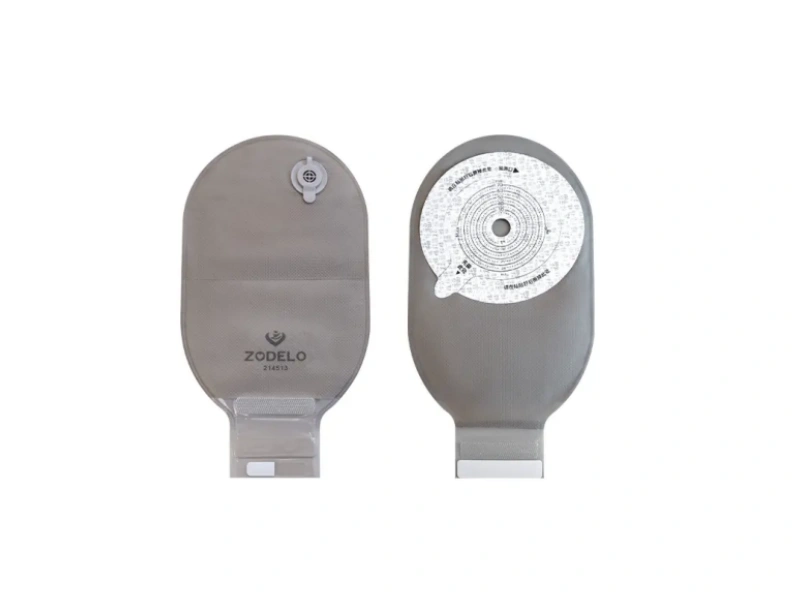
1. By structure: one-piece and two-piece
- One-piece colostomy pouch: The baseplate and pouch are integrated into a single unit. It is lightweight and discreet, making it suitable for patients with smooth skin and limited hand mobility. However, the baseplate must be peeled off during each change, and frequent changes can cause some skin irritation.
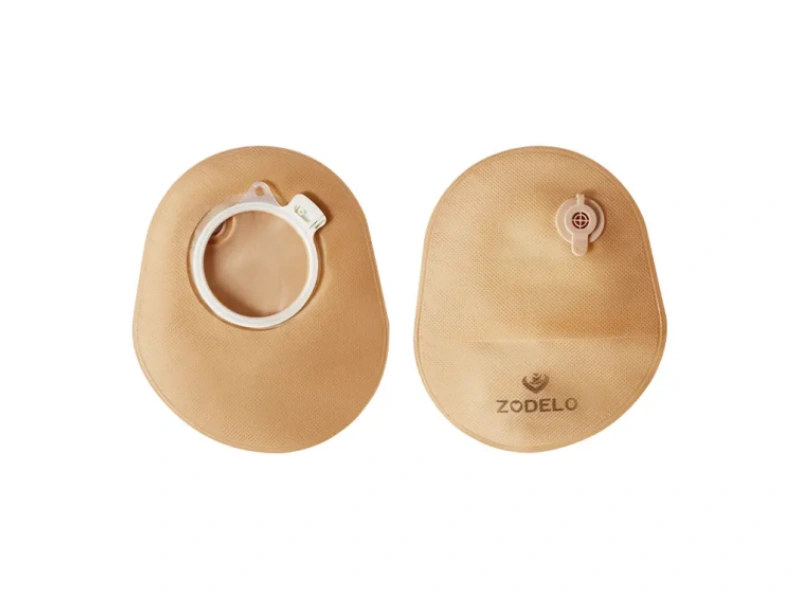
- Two-piece ostomy pouch: The baseplate and pouch are separate. You can leave the baseplate in place while removing the pouch for cleaning or emptying. This design is very gentle on the skin and makes it easy to monitor the stoma, making it suitable for patients requiring long-term care or who have frequent bowel movements.
2. Classification by Emptying Method
- Open-ended ostomy pouches: These pouches have a clasp or Velcro closure at the bottom, allowing them to be opened at any time to empty waste and reused.
- Closed-ended ostomy pouches: These are single-use pouches that are discarded once full. They are suitable for patients with regular bowel movements, well-formed stools, and infrequent bowel movements.
3. Classified by base shape: Flat and convex
- Flat base: Suitable for stomas that protrude from the skin surface and have smooth skin.
- Convex base: If your stoma is flush with the skin or slightly recessed, or if you have abdominal folds or loose skin, a convex base can lift the stoma, allowing waste to flow more easily into the pouch.
4. Special Designs
- Ostomy pouches with activated carbon inserts/vent valves: These pouches contain built-in activated carbon inserts that filter and neutralize gases, allowing for slower gas release. The vent valve releases gas in 3 seconds, effectively reducing pouch bloating and odor.
- Transparent vs. Opaque: Transparent pouches are very practical in the early postoperative period, allowing you to monitor the stoma at any time. During the recovery period, you may choose opaque, skin-colored pouches for privacy and aesthetic reasons.
One-piece or Two-piece Ostomy Pouch: Which Should You Choose?
One-piece ostomy pouch:
The one-piece baseplate and pouch are attached together.
Advantages:
- The entire unit is very lightweight and soft; it feels almost like a second skin when worn and offers excellent discretion.
- It is easy to use, with no complicated steps, making it ideal for older adults.
- The price is generally quite affordable.
Disadvantages:Each change requires peeling off the entire pouch along with the baseplate; frequent peeling may cause some skin irritation. Once applied, the orientation of the pouch cannot be adjusted.
Suitable for: People who have just undergone surgery, have stoma edema, have limited hand mobility, or prefer a lightweight, easy-to-use system.

Two-piece ostomy pouch:
The baseplate and pouch are separate; the baseplate is applied first, followed by the pouch.
Advantages:
- The baseplate can be used continuously for several days; only the pouch needs to be replaced, reducing the need to repeatedly peel off the baseplate.
- The pouch can be removed at any time for emptying or cleaning.
- The pouch’s orientation can be flexibly adjusted to suit different daily activities.
Disadvantages: Due to the snap or plastic ring design, the overall thickness is slightly greater, which may cause a mild sensation of a foreign object.
Replacing the pouch requires snapping the fasteners into place, which demands a certain level of hand strength.
Suitable for: Patients with frequent bowel movements, sensitive skin, or those requiring long-term care, as well as those who are frequently on the go and have high standards for hygiene and comfort.
How to Choose Pouch Size, Barrier Opening, and Convexity?
1. Choose the Right Ostomy Pouch Size
The size of the ostomy pouch should be selected based on the size of the stoma, the volume of output, and your daily activity needs. A pouch that is too small will require frequent changes, while one that is too large will create a noticeable sensation of a foreign object during use. The right pouch size will make your daily life much easier.
2. Ensure the Base Opening Fits the Stoma
The size of the base opening affects both comfort and security. Each time you change the ostomy pouch, it is essential to measure the diameter at the base of the stoma using a professional stoma measuring tape. When trimming the base, the opening should be 1 to 2 millimeters larger than the actual stoma. If the opening is too large, waste may irritate the skin. If it is too small, it may constrict the stoma and cause discomfort.
3. Choose a Convex Design Based on Stoma Shape
A convex design is suitable for retracted stomas or stomas that lie below the skin’s surface. The convex portion applies gentle pressure to help the stoma protrude more effectively, allowing waste to flow into the pouch.
How to Empty Urostomy and Colostomy Bags?
Urinary Ostomy Bag
Step 1: Gently twist open the threaded soft plug at the bottom of the bag. Pinch the tube to control the flow of urine.
Step 2: Align the opening of the urine bag with the urinal and loosen the tubing to reduce urine splashing. If the urine contains mucus, gently squeeze the bag.
Step 3: After emptying, wipe the outlet with a tissue or rinse it with clean water.
Step 4: After cleaning, reinsert the soft stopper into the tube and ensure the valve is completely closed.
Colostomy Bag
Step 1: Gently unfasten the sealing clip or Velcro. If using a self-sealing bag, slowly unroll the bottom of the bag.
Step 2: Hold the closure clip or pinch both ends of the drainage opening to slowly empty the bag. If the stool is runny, gently press the bag opening with a tissue.
Step 3: After emptying, use a wet wipe to wipe away any residue from the bag opening from the inside out, or rinse with clean water. Pay special attention to cleaning the groove of the closure clip.
Step 4: Roll the closure clip or Velcro toward your body 2–4 times, fold the ends together, and press firmly to secure.
A urostomy guide: How to empty and change the pouch :Patients with a stoma have noted that frequently emptying and changing the stoma bag aids in the care of the urinary stoma. Regularly emptying and cleaning the bag is crucial for inhibiting bacterial growth.

How to Change Urostomy and Colostomy Bags
1. Prepare ostomy supplies in advance, including a new ostomy pouch, a measuring tape, curved scissors, warm water, soft tissues, and skin care powder.
2. Use one hand to gently press and hold the skin around the stoma in place, while using the other hand to slowly peel off the old baseplate from top to bottom. If it is difficult to remove, spray a small amount of adhesive remover; do not pull it off forcefully.
3. Moisten a soft cotton wipe with warm water or saline solution, and gently wipe the stoma and surrounding skin from the outside in. Do not use irritating liquids such as alcohol, povidone-iodine, or soap. After cleaning, pat the skin dry with a soft tissue.
4. Use a measuring tape to measure the size of the stoma base. Measurements should be taken regularly. When cutting the new stoma base, it should be 1 to 2 millimeters larger than the stoma. After cutting, use your fingers to smooth out any rough edges.
5. If the skin is broken or has folds, you can sprinkle a ring of skin care powder around the stoma or apply a protective film or anti-leak ointment. Peel off the backing paper from the stoma baseplate and align it with the stoma, applying it from the bottom up.
6. After applying, use the warmth of your palm to press firmly on the baseplate for 5 minutes to ensure the adhesive bonds fully with the skin.
How to Prevent Ostomy Bag Leakage?
1. Measure the stoma regularly: The stoma may change depending on your physical condition; when cutting the baseplate, make it 1–2 mm larger than the stoma.
2. Press with warm hands to ensure a snug fit: When applying the baseplate, press from the bottom up, hold the edges of the baseplate with both hands, and warm it by holding it against your hands for 5 minutes.
3. Keep the skin dry: Clean the skin with warm water before changing the baseplate, then dry it thoroughly to ensure no moisture remains.
4. Change promptly: Replace the baseplate immediately if it turns white, the edges curl up, or leakage occurs; change it every 3–5 days.
5. Use barrier cream: Apply barrier cream to skin folds or uneven areas around the stoma.
How to Protect the Skin Around the Stoma?
1. Keep the skin clean and dry
When changing the ostomy pouch, clean the skin around the stoma with warm water, then pat it dry with a towel. Try to minimize the use of cleansing products that contain alcohol, fragrance, or oil.
2. Ensure the baseplate opening is the correct size
When trimming the ostomy baseplate, make sure it fits snugly around the stoma. If the opening is too large, waste is likely to leak. If the opening is too small, it may put pressure on the stoma.
3. Choose skin-friendly adhesive materials
High-quality ostomy pouches use medical-grade hydrocolloid baseplates, which provide stable adhesion and reduce leakage. They are also less likely to cause allergic reactions.
4. Address leakage issues promptly
If you notice that the ostomy pouch is loose, the base is lifting, or there is an unusual odor, check it immediately and replace it.
5. Regularly monitor skin changes
Get into the habit of checking the skin around the stoma to see if there is any redness, irritation, itching, or pain.
How To Manage Skin Irritation Around Your Urostomy Stoma :Authoritative medical institutions state that many people do not use stoma powder and skin-cleansing wipes correctly. These products are not effective against all types of skin irritation; improper use can actually aggravate the irritation or even lead to long-term skin damage.
How Does Odor Control Differ Between Urostomy and Colostomy Bags?


Urinary ostomy bags are used to collect urine; the interior of the bag features anti-reflux and sealing mechanisms that help reduce odor.
Colostomy bags are used to collect stool, and they have even higher requirements for odor control and sealing. Many colostomy bags on the market are equipped with activated carbon filters, but they have a relatively slow venting rate.
To address this issue for customers, Zodelo has developed a colostomy bag with a vent valve design that can vent the air from the bag in 3 seconds, effectively reducing bag bloating.
Common Mistakes When Using Urostomy and Colostomy
- Incorrect baseplate opening size
An opening that is too large can cause leakage, allowing waste to irritate the skin; one that is too small may constrict the stoma.
It is very important to choose the correct size and adjust it regularly. - Failure to replace the ostomy pouch in a timely manner
Prolonged wear can reduce adhesion, increasing the risk of leakage.
Check the baseplate regularly and replace the pouch as needed based on your individual circumstances. - Neglecting skin care around the stoma
Failure to thoroughly clean the skin around the stoma before use or to use alcohol wipes.
This can lead to skin redness, swelling, itching, and reduced adhesion. - Failure to choose a stoma pouch type that suits your needs
Different types of stoma pouches vary in drainage methods, anti-reflux features, and filtration designs.
Choosing the right product for you ensures it works most effectively.
How to Evaluate a Reliable Ostomy Bag Manufacturer?
1.Technical Capabilities and Expertise
- R&D Capabilities: Does the company have a professional R&D team and relevant patents?
- Production Scale: Does the company have modern production facilities and automated production lines?
- Technical Certifications: Does the company hold relevant international certifications such as CE, FDA, and ISO?
2.Product Quality, Safety, and Completeness
- Raw Material Compliance: Medical-grade materials are used.
- Clinical Validation: Products undergo rigorous testing and are backed by real-world feedback data.
- Product Line: Verify the completeness of product specifications.
3.Compliance and Reputation Verification
- Complete Qualifications: The company and its products must hold valid medical device registration certificates.
- Customer Base: Has served large medical institutions or possesses a stable customer base.
- Stable Supply Chain: Able to ensure timely delivery.
Urostomy Vs Colostomy Bag FAQs
Are Urostomy and Colostomy Bags the Same?
They are different.
Urinary ostomy pouches: Designed specifically for continuous drainage of fluid, they feature an anti-reflux valve and a drainage valve at the bottom for convenient drainage at any time.
Colostomy pouches: Designed specifically for collecting solid or semi-solid waste, they do not have an anti-reflux valve and come in either open-bottom or closed-bottom styles to accommodate formed stool.
Can a Urostomy Bag Be Used for a Colostomy?
Not recommended.
Stool from a colostomy is relatively thick and can easily clog the anti-reflux valve in a urinary ostomy pouch, preventing the pouch from venting properly and causing it to swell, which may even lead to leakage.
Can a Colostomy Bag Collect Urine?
No. Colostomy bags lack an anti-reflux design. If used for a urostomy, urine may flow back and cause an infection.
A urostomy guide: How to empty and change the pouch :Patients with a stoma have noted that frequently emptying and changing the stoma bag aids in the care of the urinary stoma. Regularly emptying and cleaning the bag is crucial for inhibiting bacterial growth.
Is a One-Piece or Two-Piece Ostomy Bag Better?
It depends on individual needs.
One-piece: The baseplate and pouch are attached together. The advantage is that it is lightweight, thin, and discreet. The disadvantage is that you have to peel off the baseplate every time you change it, which can irritate the skin.
Two-piece: The baseplate and pouch are detachable. The advantage is that you don’t have to peel off the baseplate, making it easier to inspect the stoma; the disadvantage is that it is slightly thicker and a bit more expensive.
How do the patterns of elimination differ?
A urinary stoma (urine) drains continuously over a 24-hour period and cannot be controlled voluntarily; a colostomy (feces), on the other hand, discharges intermittently.
Is the level of irritation to the surrounding skin the same?
Urostomies cause greater irritation. Urine is slightly acidic and prone to forming crystals; colostomy output is relatively less irritating to the skin.
Is there a difference in how often ostomy bags need to be changed?
Urinary ostomy bags are typically changed every 2–3 days; colostomy bags (especially closed bags) are changed less frequently, with some needing to be changed only every few days.
Which is more prone to leakage: urinary ostomy pouches or colostomy pouches?
Leakage can occur with both types, depending primarily on the product’s fit, the choice of baseplate, and the care routine. Urinary ostomies focus more on preventing urine backflow, while colostomies focus more on fecal sealing and stool management.
Why Do Colostomy Bags Need Filters?
Gas is produced by the contents discharged from a colostomy, so colostomy bags are typically equipped with activated carbon filters or venting systems to help reduce odors and prevent gas buildup inside the bag.
Why do urinary ostomy pouches need an anti-reflux design?
Since urine continuously flows into the pouch, the anti-reflux structure helps prevent urine from flowing back into the ostomy area, thereby reducing the risk of skin irritation and infection.
Conclusion: Should You Choose a Urostomy or Colostomy Bag?
Which type of ostomy bag should you choose? Urinary ostomy bags prioritize anti-reflux design, ease of urination, and long-term comfort; colostomy bags focus more on sealing performance, odor control, and waste management. Patients with different types of ostomies have different needs.
As a stoma bag manufacturer with a 20,000-square-meter factory, Zodelo has consistently strived to provide global customers with reliable, high-quality ostomy care products, including colostomy bags, urostomy bags, ileostomy bags, ostomy accessories, and OEM/ODM customization services. Every product undergoes rigorous gravity leakage tests and high- and low-temperature adhesion tests to help you meet the procurement needs of various markets.
Whether you are looking for a reliable ostomy bag supplier or planning to expand your own medical care product line, choosing Zodelo as your partner will help you establish a stronger competitive advantage in the growing ostomy care market.
If you have any requests or questions, please feel free to contact us or request a product catalog at any time!

Top 10 Colostomy Bag Manufacturers In India 2026
top 10 colostomy bag

Top 10 Stoma Bag Suppliers Uk 2026
Top 10 Stoma Bag Sup

The Ultimate Guide To Sex With A Colostomy Bag
The Ultimate Guide T

Top 10 Colostomy Bag Manufacturers And Suppliers In China 2026
Top 10 Colostomy Bag