

Guide To Newborn Colostomy Bag
Table of Contents
Some newborns are unable to excrete normally due to congenital or acquired conditions. Therefore, the newborn colostomy bag is used to help babies excrete while protecting their skin. Babies’ skin is fragile and their repair ability is limited. Therefore, parents need to carry out stoma care scientifically and reasonably, and choose the best quality newborn colostomy bag. Only in this way can leakage and skin complications be avoided, allowing for a comfortable life and healthy growth.
Zodelo is well aware of the significance of the colostomy bag and its accessories to ostomy patients. Therefore, based on user experience, we are committed to developing the highest quality and safest ostomy bags and ostomy accessories, so that all users can enjoy a more comfortable and reassuring life. Meanwhile, Zodelo also provides you with the most comprehensive and detailed information on ostomy care. This article will provide you with a detailed introduction to the newborn colostomy bag.
What to know about colostomy
1.What is a colostomy?
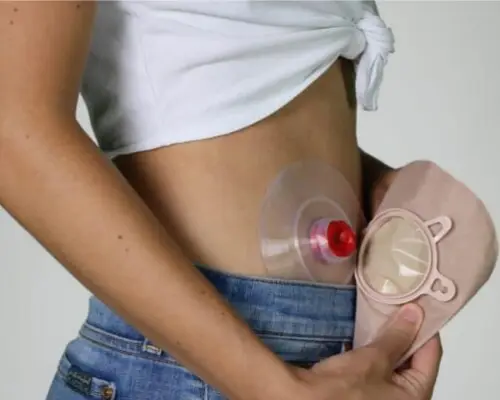
Colostomy is a surgical procedure that involves removing a part of the colon from the abdominal wall to create a new excretory passage in the abdomen. When patients are unable to use their excretory function normally due to diseases such as colorectal cancer, diverticulitis or intestinal perforation, intestinal obstruction, trauma or surgical complications, and congenital anal atresia, they need to undergo colostomy surgery. Feces will be discharged from the stoma into the colostomy bag, taking over the original excretion function.
2. Understanding Different Ostomy Surgeries
When parents want to know about the newborn colostomy bag, they also need to know about the different ostomy surgeries.
- Colostomy:Its opening is located in the colon area. It is mostly used for colorectal cancer, ischemia/perforation and chronic inflammatory lesions. Excrement is usually formed and the frequency of defecation is relatively low. You can choose a closed ostomy bag, which can be replaced directly at one time, making it more convenient and hygienic.
- Ileostomy:The opening is located at the end of the small intestine (ileum). It is commonly seen in inflammatory bowel disease, congenital malformations, and low rectal protective shunt. Excrement is mostly in liquid form. A better leak-proof system and skin protection measures are needed.
- Urostomy: Mostly Ileal Conduit. It is used for bladder cancer, severe neurogenic bladder, bladder injury after radiotherapy, etc. Continuous urination is achieved through the stoma after the operation. Special urostomy bags and night drainage bags with anti-backflow valves are required.
What to know about newborn colostomy bag

1. What is a newborn colostomy bag?
The Newborn colostomy bag is a medical collection device specifically designed for receiving excrement from neonatal colostomy stoma. When a newborn is unable to defecate through the normal anus due to congenital or acquired reasons, the doctor will create a stoma on the abdominal wall. The excrement is discharged from the abdominal stoma, and the stoma bag is used for the safe, hygienic and continuous collection of feces and intestinal fluid. The Newborn colostomy bag can protect the abdominal skin of newborns and prevent infection. At the same time, it creates conditions for the later intestinal reconstruction surgery.
2. Stoma site appearance

he essence of stoma is the eversion of the intestinal mucosa, and the blood supply in this area is rich. A normal and healthy stoma should be red and moist.
| Normal performance |
Color | Bright red or pink (similar to oral mucosa) |
Surface | Moist and shiny |
Form | Slightly protruding from the abdominal wall (1-5 mm) |
Tactile sensation | Soft and painless |
Bleeding | A slight touch with a small amount of bleeding is normal |
3. Who needs newborn colostomy bag?
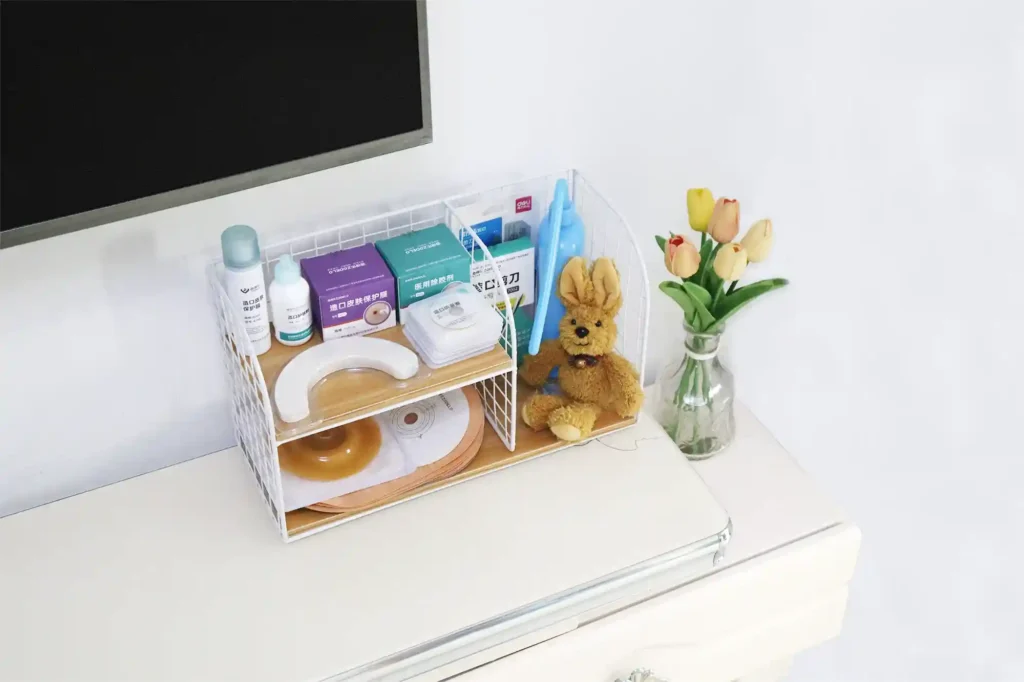
Newborns with congenital digestive tract structural abnormalities
- Congenital megacolon: The colon has no ganglia and cannot move normally.
- Anorectal malformations: Absence or abnormal position of the anus.
- Colonic/intestinal atresia: The intestinal lumen is blocked and needs to be diverted for defecation.
Newborns with severe intestinal diseases or complications
- Necrotizing enterocolitis: Stoma can reduce the burden on the intestines and save lives.
- Intestinal perforation: Stoma can prevent abdominal cavity infection.
- Severe infection or postoperative recovery period: Stoma can protect the anastomosis.
4. Newborn colostomy bag sizes
Newborns have small abdominal walls and extremely delicate skin. The weight, adhesive strength and size of the adult or children’s pockets are not suitable. Incorrect use may lead to leakage, skin infection or even erosion, stoma retraction or damage. Therefore, newborns must use the specially designed newborn colostomy bag.
The regular sizes of newborn colostomy bags can be referred to as follows:
| Common range |
Stoma diameter | 10–25 mm |
Bag capacity | 50–150 ml |
Chassis diameter | 40–70 mm |
Bag weight | Ultra-lightweight design (reducing traction |
An Important Note On Newborn Ostomy Care

1. Protect the skin
This is at the core of Newborn Stomy Care. The skin barrier function of newborns is not yet mature. Once damaged, recovery is slow and the risk is high. Therefore, when wearing the newborn colostomy bag, it is important to protect the skin.
2. Pay close attention to the condition of the stoma
Observe the stoma and skin several times a day. Do not repeatedly remove the undercarriage unless necessary. Avoid abrasions.
When the stoma appears pale or purplish black in color, there may be ischemia.
If the skin around the stoma is eroded, there may be problems such as leakage or improper care.
If the stoma is significantly concave, there may be a problem of stoma retraction.
3. Precise opening
The opening of the chassis should be 1 to 2 mm larger than the diameter of the stoma.
If the opening of the chassis is too large, leakage problems may occur, leading to skin irritation and allergic reactions and other issues.
If the opening of the chassis is too small, it may press on the stoma and affect blood supply.
Skin care of newborn colostomy bag
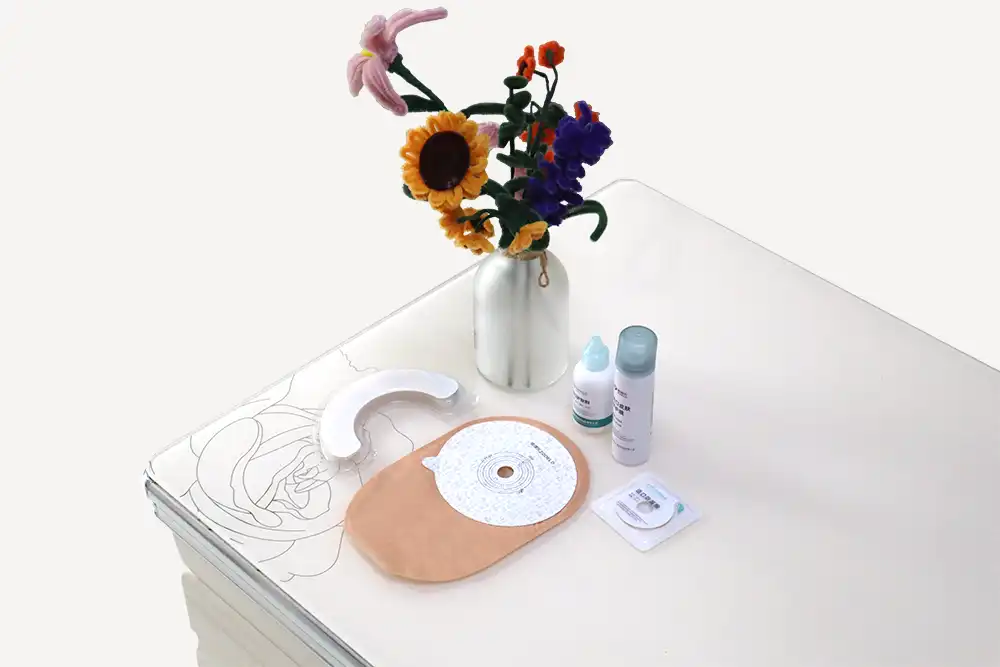
1. Why is skin care for a newborn stoma particularly crucial?
The skin of newborns is essentially different from that of adults. The stratum corneum of newborns is extremely thin and prone to problems such as damage and leakage. Moreover, the sebum secretion is low and the pH is relatively neutral. The barrier function is weak and it is more susceptible to fecal irritation. The skin repair ability of newborns is limited, and once damaged, it recovers slowly. Therefore, in neonatal stoma care, the importance of skin protection is higher than that of the newborn colostomy bag itself.
2. Key points for operating the Skin care of newborn colostomy bag
2.1. Gentle cleaning
Wash the skin around the stoma with warm water or normal saline. Gently press and dry with a soft non-woven fabric or gauze. Clean from the inside out to avoid repeated friction that may damage the skin. Avoid using cleaning products such as alcohol, iodophor and soap for cleaning. Irritating cleansers can significantly increase the risk of skin inflammation and damage in newborns.
2.2. Dry skin
The skin must be completely dry after cleaning. It can be air-dried naturally or gently pressed dry. If the base plate is adhered in a damp state, it is prone to problems such as detachment and leakage.
2.3. Chassis opening
The opening of the chassis should be 1 to 2 mm larger than the diameter of the stoma.
If the opening of the chassis is too large, leakage problems may occur, leading to skin irritation and allergic reactions and other issues.
If the opening of the chassis is too small, it may press on the stoma and affect blood supply.
2.4. Use skin protection products reasonably
Alcohol-free skin protective film (Spray/wipe type)
Stoma protection powder for newborns (only in case of exudation)
2.5. Frequency of Colostomy bag replacement
If the baby has no leakage and intact skin, the wearing time can be extended as much as possible. Frequent removal of the undercarriage can cause mechanical skin abrasions.
If there is obvious leakage, the newborn colostomy bag should be replaced immediately.
What to Expect: Pregnancy and Stoma Care

As pregnancy progresses, predictable physiological changes will occur in the stoma:
Change type | clinical picture | Professional explanation |
Stoma protrusion | It is more obviously turned outward | Increased intra-abdominal pressure |
Changes in stoma size | The diameter increases. | The enlarged uterus pulls on the abdominal wall |
The tightness of the chassis has declined | More prone to leakage | Changes in the abdominal curve |
Sensitive skin | Redness, itching and erosion | Hormonal changes + leakage irritation |
2. Stoma care during pregnancy
- Dynamic measurement of stoma size: It is recommended to remeasure every 2 to 4 weeks. Avoid excessive pressure from the chassis or excessive exposure of the skin.
- Adjust the type of stoma equipment: A softer and more elastic base can be replaced. Switch to a pregnancy adaptation system when necessary.
- Strengthen skin protection:Use a skin protective film. Prevent sensitive reactions caused by hormonal changes.
Key Information About Childbirth with a Stoma
1. Having a stoma does not mean being unable to get pregnant or give birth
From the existing literature on obstetrics and gynecology and stoma medicine as well as clinical practice:
Most women with enterostomy or urostomy have the ability to conceive and give birth normally. The stoma itself does not directly affect ovarian function or hormone levels. The risks mainly stem from the primary disease, previous history of abdominal surgery and the location of the stoma.
2. How to choose the mode of delivery?
The following factors are usually considered in medicine:
Stoma type (colon/ileum/urinary tract)
Does the position of the stoma affect the perineum or abdominal incision
Primary diseases (such as the active stage of Crohn’s disease)
Previous abdominal surgeries and the risk of adhesions
Natural childbirth is suitable for stoma patients with stable stoma and no active diseases.
Cesarean section is suitable for patients with severe adhesions and complex stomas
How to change the newborn colostomy bag?
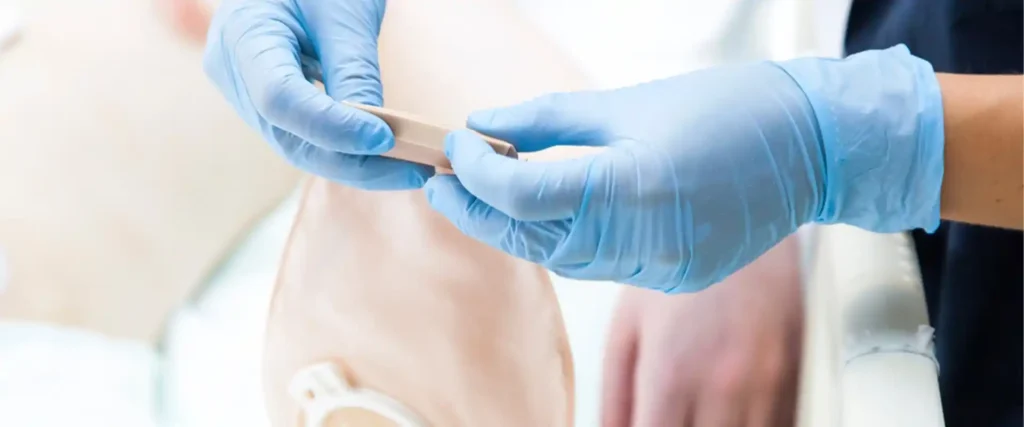
- Step 1: Prepare the necessary items
Newborn colostomy bag
Warm water or physiological saline
Non-woven fabric/gauze
Skin protective film
Stoma measuring ruler
- Step 2: Wash your hands
Before changing the stoma, please wash your hands thoroughly to keep them clean and avoid contaminating the stoma, which may cause infection during the replacement process.
- Step 3: Remove the old colostomy bag
Hold the skin with one hand and gently peel off the bonded base from top to bottom. If the glue adheres too firmly, you can use a glue remover spray.
Discard the old colostomy bag.
- Step 4: Observe the stoma.
A normal stoma should be bright red and moist. If the color turns black or purple, or if erosion and exudation occur, medical treatment should be sought promptly.
- Step 5: Clean the skin around the stoma.
Gently wipe the stoma with warm water and a wet wipe until it is clean.
Stoma powder can be used to keep the skin around the stoma comfortable and dry.
- Step 6: Measure the diameter of the stoma
Measure the stoma with a measuring card to determine its diameter.
- Step 7: Cutting
According to the measured diameter, the opening diameter of the cutting base needs to be increased by 1 to 2 millimeters. Confirm that the cutting edge is smooth and flat.
- Step 8: Paste the wafer
Remove the backing and gently press the stoma.
Check for wrinkles or curled edges to ensure a firm and seamless bond.
When should I change the newborn colostomy bag?
Whether to replace the ostomy bag should be judged based on the skin condition and tightness as the core criteria. Excessive replacement can increase the risk of skin damage.
However, if there is leakage, the base becomes loose, or the skin becomes red and swollen, the colostomy bag should be replaced in a timely manner.
How to empty the newborn colostomy bag?
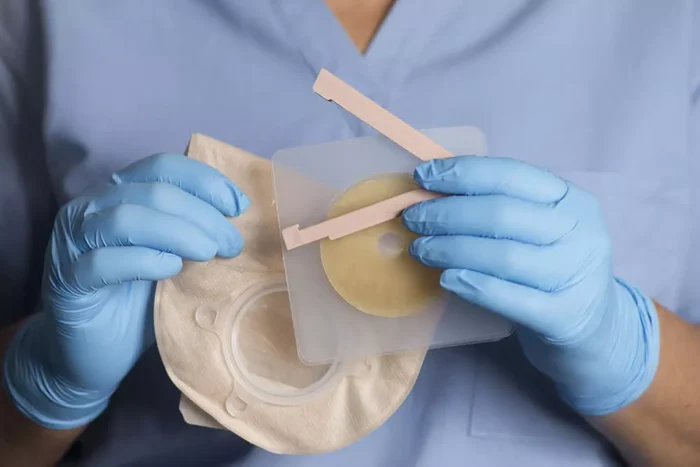
- Prepare the waste collection containers.
- Place the baby in a safe and stable position.
- Open the outlet at the bottom of the bag.
- Gently squeeze the bag body to let the excrement flow out.
- Clean the outlet with gauze.
- Reseal and make sure the seal is good.
When should I empty the newborn colostomy bag?
Situation | Suggestion |
The bag body bulges | Empty immediately |
Excrement reaches 1/3 to 1/2 of the bag body | Suggested to empty |
The gas is obvious. | Empty to prevent detachment |
Before night | Suggested to empty5 |
Living with a newborn colostomy bag
1. Foods That Thicken Stool
Breastfeeding remains the first choice. Formula milk feeding should follow the doctor’s advice and should not be changed at will. Therefore, mothers need to pay attention to their diet.
Food types | Professional description |
Rice and noodles | Easy to digest and leaves little residue |
Banana (ripe | Natural “light shaping” effect |
Apple puree (cooked | Pectin helps to thicken |
Potato | Low residue |
2. Output expectations
The normal excretion situation of a newborn is as follows:
| Common situations |
Frequency | Multiple times per day (especially ileal or proximal colostomy) |
Form | Thin paste to semi-liquid |
Color | Yellow, yellowish green, brown |
Gas | Common and normal |
If a large amount of watery stool is suddenly discharged, defecation stops, there is bleeding in the stool, or a strong foul smell is accompanied by fever. One should go to the hospital for treatment in time.
3. Sleep management
Check if the ostomy pocket is too full before going to bed.
Avoid prolonged force on one side of the stoma.
Use soft, breathable and loose clothes for the baby.
4. Preparations for going out
It is recommended to carry with you: spare newborn colostomy bag, wet wipes, garbage bags, and skin care products. Avoid unexpected situations from happening.
When should I call for help?
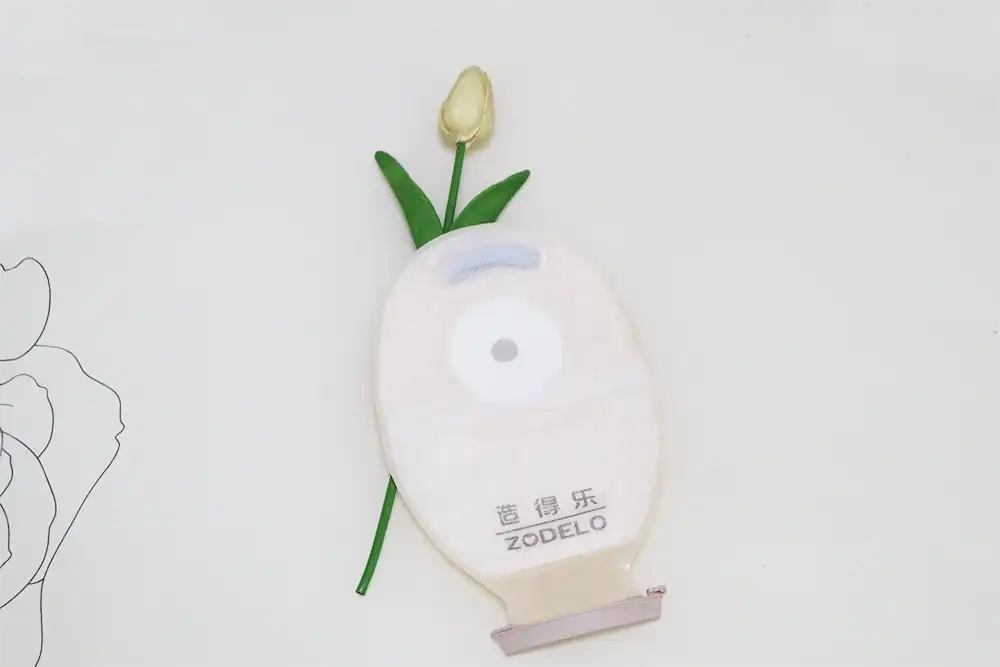
If any of the following situations occur, contact a doctor or stoma therapist immediately:
- The color of the stoma darkens, turns purple or pale.
- The output suddenly stops or surges.
- The skin is severely eroded and bleeding.
- Repeated leakage cannot be improved.
- The mental state of the newborn has deteriorated significantly.
Conclusion about newborn colostomy bag

The Newborn colostomy bag is not merely a simple medical consumable; it is also an important tool for newborns to live comfortably, grow healthily, and wait for the recovery of intestinal function. At the same time, the stoma and skin of newborns are fragile and require meticulous and correct care from parents to ensure a comfortable life for the baby and help it regain its health.
Zodelo is committed to providing best newborn colostomy bag for neonatal stoma patients worldwide. We are constantly researching and upgrading stoma care solutions, strictly adhering to medical safety standards, and providing all stoma patients with a reassuring, comfortable and reliable ostomy care experience.
More Resources about newborn colostomy bag
- Nursing a Baby with a Colostomy– lllusa
- Colostomy: Care at Home– childrensmn
- Babies with a stoma: Harry’s Story– colostomyuk
- Having a stoma bag after birth– zodelo
- Ostomy: Day-to-day activities for babies from birth to 12 months– aboutkidshealth
- Colostomy– nationwidechildrens
- How To Care For Colostomy Pouch– zodelo
- Adjusting to Life with an Ostomy Bag– zodelo

Top 10 Colostomy Bag Manufacturers In India 2026
top 10 colostomy bag

Top 10 Stoma Bag Suppliers Uk 2026
Top 10 Stoma Bag Sup

The Ultimate Guide To Sex With A Colostomy Bag
The Ultimate Guide T

Top 10 Colostomy Bag Manufacturers And Suppliers In China 2026
Top 10 Colostomy Bag