

Closed Ostomy Pouch: Definition, Uses, Benefits, and How to Choose
Table of Contents
For distributors and medical supply buyers, choosing the right ostomy products can be challenging. Closed ostomy pouch is widely used for colostomy patients, but understanding their features, market demand, and usage scenarios is crucial before placing bulk orders. This guide explains everything you need to know about closed ostomy pouch to make informed procurement decisions.
What Is a Closed Ostomy Pouch?
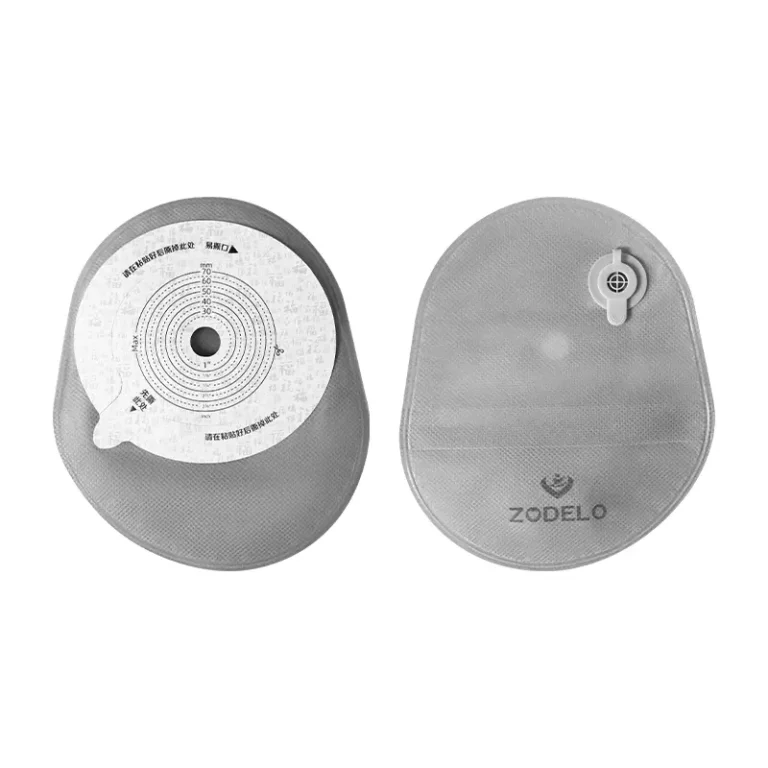
The closed pouch is a type of ostomy care medical product that cannot be emptied and needs to be completely replaced after each use.
It is mainly used for patients with colostomies and those whose excretions are relatively well-formed. Unlike drainable pouch, closed ostomy pouch is designed for single-use replacement. Offering a hygienic and convenient option for patients with relatively formed output.
The basic structure of a closed ostomy pouch:
- Pouch body:Used to collect the excretions discharged from the stoma.
- Skin barrier / baseplate:This is used to be adhered to the skin around the ostomy to fix the entire ostomy bag in place. It also serves the function of protecting the skin.
- Exhaust valve:Used to discharge the gas inside the bag, quickly resolving the bag expansion issue.
- Disposable closed ostomy pouch has no outlet. This is the core of the closed pouch.
The closed pouch is a type of ostomy care medical product that cannot be emptied and needs to be completely replaced after each use.
It is mainly used for patients with colostomies and those whose excretions are relatively well-formed. Unlike drainable pouch, closed ostomy pouch is designed for single-use replacement. Offering a hygienic and convenient option for patients with relatively formed output.
The basic structure of a closed ostomy pouch:
- Pouch body:Used to collect the excretions discharged from the stoma.
- Skin barrier / baseplate:This is used to be adhered to the skin around the ostomy to fix the entire ostomy bag in place. It also serves the function of protecting the skin.
- Exhaust valve:Used to discharge the gas inside the bag, quickly resolving the bag expansion issue.
- Disposable closed ostomy pouch has no outlet. This is the core of the closed pouch.
Types of Ostomies Suitable for closed ostomy pouch
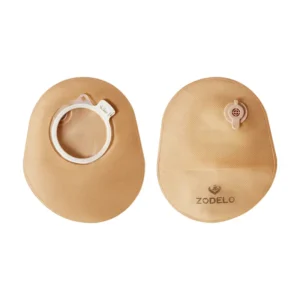
Colostomy
The colostomy is the most suitable type for using a closed ostomy pouch. It is suitable for daily home care, as well as for use when going out, traveling, socializing, and for elderly people or those with weak hand dexterity.
Characteristics of colostomy excretions:
- The excretions are relatively formed or semi-formed.
- The moisture content is low, and they do not accumulate quickly.
- The odor is relatively stable and can be effectively controlled through activated carbon filter membranes.
- The frequency of excretion is low.
Most colostomy patients excrete 1-2 times per day, and some patients can establish a regular defecation time.
There is no need to frequently replace the pouch, and the use of a closed pouch offers more advantages in terms of economy and convenience.
Ileostomy
The excretions from the ileostomy are usually in liquid form, with a high frequency of discharge and containing digestive enzymes, which are highly irritating. If a closed ostomy pouch is used, it will require frequent replacement of the pouch, causing skin irritation and increasing the cost of skin care.
In most cases, it is not recommended for patients with ileostomy to use closed ostomy pouches. However, when the discharge volume significantly decreases or when they are out at night or for a short period of time, it can be used as a short-term or supplementary option. For ileostomy patients, a drainable pouch (Drainable Pouch) should be the main choice, and the closed type can only be used as a supplementary plan for special scenarios.
Key Features of Closed Ostomy Pouch
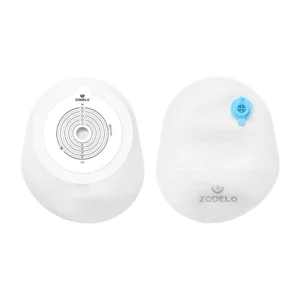
1.Disposable Design
The closed ostomy bag is of a non-retractable structure. When the excrement reaches its capacity, the entire bag is replaced and discarded. There is no need for opening the bottom, cleaning or reusing. This can significantly reduce the complexity of the operation and minimize human errors during the care process.
Suitable for:
Patients with colostomy
Those with low frequency of excretion and regular bowel movements
The elderly or people in the post-operative recovery period
2.Hygienic Use
More hygienic, avoiding repeated contact with excrement
The replacement process is simple, with a shorter contamination path
Helps to reduce the risks of cross-contamination and odor diffusion
Applicable scenarios
Going out, traveling
Limited public health conditions environment
Medical institutions providing centralized care scenario
3. Exhaust Valve
The exhaust valve is designed to quickly expel gas, thereby resolving the bag expansion issue.
One-piece vs two-piece Closed Ostomy Pouch systems

The one-piece system emphasizes simplicity of operation and concealment, while the two-piece system focuses more on skin protection and long-term stability. The specific differences between the one-piece and two-piece closed ostomy bags are as follows:
| One-piece Closed Pouch | Two-piece Closed Pouch |
System structure | The bag body is integrated with the base plate. | The bag body is separated from the base. |
Replacement method | Each replacement requires the entire unit to be removed. | The bag body can be replaced separately, while the base can be continuously worn. |
Complexity of operation | The lowest, with the fewest steps. | Slightly higher, requires a correct connection system. |
Concealment of wearing | Thinner and more fitted. | Slightly thicker, with a connection structure. |
Skin protection | Moderate (risk increases with frequent replacements). | Better, reduces repeated tearing of the adhesive area. |
Comfort of use | High (short-term, low-frequency replacements). | High (more stable for long-term wearing) |
Cost structure | The unit has a low price, but the replacement frequency affects the total cost. | One-piece closed pouch costs are slightly higher, but the base can be reused. |
Target population | Low frequency of excretion and good skin tolerance. | For users with sensitive skin and those requiring long-term care. |
Benefits of Closed Ostomy Pouch systems
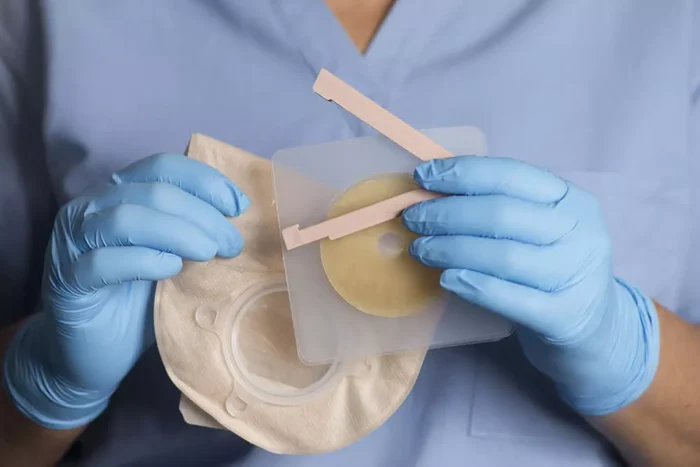
1. Simple to use
No need to empty, rinse or repeatedly open.
Replace the entire bag when it is full, and the operation process is intuitive.
It is particularly friendly for elderly patients, patients in the post-operative recovery period, and those with limited hand dexterity.
Significantly reduces the probability of usage errors and reduces the risks of leakage or contamination caused by improper operation.
2. More hygienic, less prone to infection
Disposable design, preventing repeated contact with excreta
Perfectly suitable for scenarios with limited public health conditions (such as travel, outings, hospital wards)
Reduces the possibility of contact contamination during care, making it more hygienic and safe.
3. Better concealment and smooth appearance
- The bag body is usually thinner and the structure is simpler
- There are no bottom discharge ports, reducing the bulging of the clothing
- Enhancing social interaction, self-confidence and psychological comfort
- Suitable for use during daily work and social activities
4. Particularly suitable for patients with colostomy
- It perfectly matches the physiological characteristics of colostomy, which involves “low-frequency and formed excretion”.
- It is one of the standard options recommended in the guidelines for colostomy care in multiple countries.
Limitations and Risks of Closed Ostomy Pouches

1. Inapplicable for high excretion volume or liquid excretions
The closed ostomy pouch cannot be emptied and has limited capacity. Frequent replacement not only increases costs but also: increases the risk of skin separation and irritation, and raises the probability of leakage.
2. The cost may be higher
Closed ostomy pouches are discarded after a single use. A slight increase in the frequency of excretion will significantly increase the consumption. For patients requiring long-term care, disposable ostomy pouches offer a more economical option.
3. Frequent replacement is not friendly to the skin
- Repeatedly removing the base or the adhesive area may damage the skin barrier. This can lead to problems such as redness and swelling of the skin around the stoma or contact dermatitis.
- At the same time, the adhesion strength of the skin barrier gradually decreases, creating a vicious cycle.
4. Limited usage scenarios
- The closed-end ostomy bag is not suitable for:
- Urinary diversion (continuous urine discharge)
- Patients with high output during the night
- Environments where the ostomy bag cannot be replaced in time
- In these scenarios, the use of closed bags significantly increases the risks of leakage, reflux and skin complications.
5. Higher requirements for ostomy condition
- Closed ostomy pouches are more suitable for:
- Stable ostomy position
- Flat skin with no obvious folds
- Moderate ostomy height and good outward extension
- If the ostomy condition is not ideal, the risk of leakage is higher than that of the disposable bag.
Closed Ostomy Pouch vs Drainable Ostomy Pouch
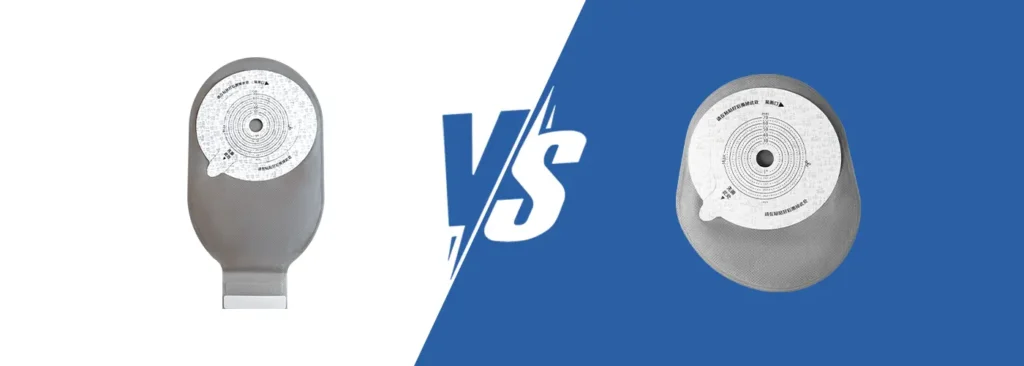
The closed ostomy pouch addresses the “operation and concealment issues”. The drainable ostomy pouch solves the “high output and continuous excretion problems”. These two are not substitutes but rather complementary solutions based on the type of stoma, excretion characteristics, and usage scenarios.
Comparison Item | Closed Ostomy Pouch | Drainable Ostomy Pouch |
Usage Method | Single-use, replaced after use | Reusable for multiple emptying cycles |
Recommended Ostomy Type | Colostomy | Ileostomy / Colostomy |
Output Condition | More formed or semi-formed output | Liquid or high-volume output |
Convenience | Simple handling, easy disposal | Requires regular emptying |
Odor Control | Filter optional, basic odor management | Filter commonly required due to frequent gas release |
Leakage Risk Management | Relies on sealing structure and material quality | Relies on outlet closure and sealing system |
Patient Education Requirement | Lower | Higher |
OEM / Customization | Limited, not positioned as heavy OEM | More customization options commonly requested |
Purchasing Consideration (B2B) | Stability, predictability, low risk | Function flexibility, drainage reliability |
How to Use a Closed Ostomy Pouch
1.Clinical Assessment Before Use
Before wearing the closed ostomy bag, a basic assessment should be conducted, which is the first step in professional care.
- Type of stoma: Primarily applicable to colostomy
- Excretion status: Firm / Semi-firm
- Excretion frequency: Low, relatively regular
- If the excretion is in liquid form or occurs frequently, a disposable ostomy bag should be chosen first.
- The color of the stoma should be rosy and moist.
- The skin around the stoma should be intact and without any damage.
- If there is redness, exudation or pain, the skin problem should be dealt with first.
2. Required Supplies
Closed ostomy bag (with appropriate size)
Measurement card / template
Skin cleaning supplies (warm water or non-irritating cleanser)
Ostomy scissors (for cutting if necessary)
Clean towel or gauze
3.Step-by-Step Instructions
Step 1: Clean the stoma and the surrounding skin
Use warm water to gently clean
Avoid using irritating liquids such as alcohol or iodine
Thoroughly dry the skin to ensure it is dry
Step 2: Measure and cut the bag opening
Use a measuring card to measure the diameter of the stoma
Cut the opening slightly larger than the stoma (about 1–2 mm)
Avoid making it too large to prevent excretions from contacting the skin
Step 3: Put on the closed ostomy bag
Remove the protective film from the adhesive area, align the opening with the center of the stoma. Gently press the adhesive area from bottom to top to ensure a perfect fit. Press with your hand for 30-60 seconds to enhance the adhesion. Body temperature helps activate the adhesive and improve the sealing performance.
Step 4: Check for sealing and comfort
Confirm that there are no loose edges or wrinkles.
Check again after standing, sitting, and performing light movements.
Ensure that the bag body naturally hangs down without being pulled.
4. Nursing Tips:
When to change the closed-end ostomy bag?
Replace the bag when it is about 1/2 – 2/3 full.
If there is any unpleasant smell or leakage, replace it immediately.
Precautions for the activated carbon filter device:
Avoid prolonged exposure to water (such as swimming or taking a bath)
If the filter membrane fails, the bag expands or there is an increase in odor, the bag should be replaced.
Skin protection:
Avoid frequent changes
Use skin protection films or barrier products when necessary
Regularly monitor the skin condition
Common Clinical and Care Settings of Closed Ostomy Pouch

1.Hospitals
In a hospital setting, closed ostomy pouches are mainly used for:
Patients with colostomy (especially during the post-operative stabilization period)
Those with a reduced frequency of excretion and a more mature output
Patients in wards requiring rapid and more standardized nursing procedures
Advantages of closed ostomy pouch:
The operation process is standardized, reducing the nursing time.
It lowers the exposure risk for nurses during the emptying process.
It helps to implement infection control and aseptic management standards.
2.Long-term Care Facilities
In long-term care facilities, the majority of patients are elderly or those with chronic diseases. The ratio of caregivers to patients is limited. Therefore, greater emphasis is placed on safety and stability in care. Closed ostomy pouches are suitable for patients with regular defecation, stable output volume, or those with uncoordinated hand movements for colostomy.
Advantages of closed ostomy bags:
Simplifies the nursing process and reduces the difficulty of operation training
Reduces the frequency of direct contact of nursing staff with excrement
Helps to unify the management of consumables and replacement cycles
3.Home Care
Family usage background
Patients care is either self-administered or assisted by family members
The environment is diverse, and the nursing conditions are not fully controllable
More focus is placed on ease of operation, concealment, and psychological comfort
The advantages of closed ostomy pouches at home:
- Simple to operate
- Reduces emptying steps and reduces the pressure on home care
- Smooth appearance, conducive to restoring daily life and social confidence
- Typical application scenarios
- During daytime activities or when going out
- Social, work settings
- Short-term travel or use in public places
FAQs about Closed Ostomy Pouch
Q1. Who is a closed ostomy pouch best suited for?
Closed ostomy pouches are primarily suitable for colostomy patients with predictable bowel movements. They are also widely used in hospital settings, long-term care facilities, and home care environments where simple, hygienic pouch changes are preferred.
Q2. Is a closed ostomy pouch reusable?
No. Closed ostomy pouches are designed for single-use and should not be reused. Reusing a closed pouch may increase the risk of leakage, odor, and skin irritation, and is not recommended in clinical or home care settings.
Q3. What types of ostomies can use closed ostomy pouches?
Closed ostomy pouches are most commonly used for colostomy. In selected cases, they may be used by ileostomy patients with low and stable output. They are generally not suitable for urostomy, which requires continuous drainage.
Q4. What is the difference between a closed ostomy pouch and a drainable pouch?
The main difference lies in how waste is managed. A closed ostomy pouch is removed and replaced after use, while a drainable pouch can be emptied multiple times before replacement. Closed pouches are better suited for formed stool, whereas drainable pouches are preferred for liquid or high-output stomas.
Q5. Are closed ostomy pouches suitable for hospital and care facility use?
Yes. Closed ostomy pouches are widely used in hospitals and long-term care facilities due to their hygienic design, ease of use, and reduced handling requirements. They support standardized care protocols and help minimize contamination risks.
Q6. What specifications should buyers distributors when sourcing closed ostomy pouch?
Key specifications include pouch size, flange diameter, one-piece or two-piece system, optional filter availability, barrier material, and shelf life. Buyers should also consider regulatory compliance, packaging options, and supply stability when selecting a supplier.
Conclusion - Closed Ostomy Pouch

The closed ostomy pouch is not merely a simple medical consumable; it is an essential tool for ostomy patients to regain their confidence and maintain a normal life. Only by correctly understanding the drainable pouch system can one scientifically and correctly care for the stoma. Regain a healthier and more comfortable life.
Zodelo is committed to providing high-quality Closed Ostomy Pouch and ostomy accessories for stoma patients worldwide. We are constantly researching and upgrading ostomy care solutions, strictly adhering to medical safety standards, and providing all distributors with a reassuring, comfortable and reliable stoma care experience.
If you have any needs or questions, please feel free to contact us or Get our product catalog!
More Resources about Closed Ostomy Pouch
- A Guide to Ostomy Bags and Pouching Systems– uchicagomedicine
- Ostomy – clevelandclinic
- Closed-End Pouches– badgut
- Types of Pouching Systems– ostomy.org
- Fact or fiction? 8 truths about ostomy pouching systems– crohnscolitisfoundation
- Closed Colostomy Bags Explained: Medical Definition, Indications– zodelo
- Adjusting to Life with an Ostomy Bag– zodelo

Top 10 Colostomy Bag Manufacturers In India 2026
top 10 colostomy bag

Top 10 Stoma Bag Suppliers Uk 2026
Top 10 Stoma Bag Sup

The Ultimate Guide To Sex With A Colostomy Bag
The Ultimate Guide T

Top 10 Colostomy Bag Manufacturers And Suppliers In China 2026
Top 10 Colostomy Bag