

Ostomy Wafer Sizes: A Complete Guide to Choosing the Right Fit
Table of Contents
Ostomy wafer is an essential component of a patient’s daily ostomy care routine. Ostomy wafer is aligned with the stoma and adhered to the abdomen, connecting the stoma to the collection pouch. This ensures that waste is collected more effectively. Since patients’ stoma diameters, shapes, and skin conditions vary, stoma baseplates of different sizes and shapes are required.
An improper fit may result in gaps between the stoma and the wafer, leading to leakage of waste and skin irritation. Based on our 25 years of manufacturing experience, you need to first understand the principles behind wafer sizing in order to select the appropriate wafer.
This article explains how to measure ostomy wafer sizes, common specifications, selection methods, and key factors manufacturers consider in size design and quality control.

What Is an Ostomy Wafer?
An ostomy wafer is also known as a skin barrier. It consists of a hydrocolloid layer, an adhesive layer, and a protective structure.
The hydrocolloid layer acts as a barrier against ostomy output. It also absorbs a small amount of sweat, protecting the skin from irritation. The size of the opening, diameter, adhesive performance, and flexibility of the wafer all affect the patient’s experience.
The Role of an Ostomy Wafer in Ostomy Care
1. Protect Peristomal Skin
The most important function of an ostomy wafer is to protect the skin around the stoma. Through physical barriers and the unique properties of its materials, it isolates waste from the skin surrounding the stoma, thereby reducing skin irritation.
Many ostomy wafers contain hydrocolloid dressing components that absorb moisture—such as skin exudate or sweat—to form a soft gel, helping to maintain a moist environment on the skin.
2. Provide Secure Adhesion
The hydrocolloid pressure-sensitive adhesive formula and skin preparation technology ensure that the ostomy baseplate remains securely adhered even during sweating or physical activity, while minimizing skin damage caused by forceful removal.
The pressure-sensitive adhesive layer at the base of the ostomy baseplate contains hydrocolloid particles. These particles absorb trace amounts of skin exudate or sweat from the skin’s surface, forming a soft gel. This gel layer anchors the baseplate to the skin.Hydrocolloid materials can absorb moisture and maintain adhesion performance under normal daily conditions, helping support longer wear time.
3. Support for Different Stoma Sizes and Shapes
A stoma is not static; it changes over time due to factors such as postoperative recovery and weight fluctuations. The adaptability of the baseplate is therefore crucial.
To determine the correct size for the baseplate, the diameter at the base of the stoma should be measured regularly. It is recommended that the opening be 1–2 millimeters larger than the stoma. If the opening is too large, waste may come into contact with and irritate the skin. If the opening is too small, it may rub against the stoma and cause discomfort.
For patients whose stoma has retracted and is flush with the skin, a convex baseplate should be used. The convex baseplate applies moderate pressure to the skin, which helps the slightly retracted stoma protrude and directs waste into the pouch.
Ostomy Wafer:This authoritative institution points out the part of the pouching system that adheres to the skin around the stoma. The faceplate can be separate from a pouch in a two-piece system or a pouch and faceplate can be one unit in a one-piece system. Also known as a wafer.
How Are Ostomy Wafer Sizes Measured?
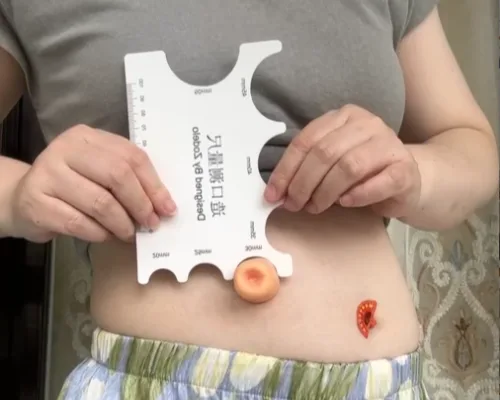
Before cutting the stoma baseplate, measure the base of the stoma using a stoma ruler. The correct size helps reduce leakage of waste and improves comfort.
Cut-to-Fit Ostomy Wafer Sizes
- In the early postoperative period, the stoma changes daily as swelling subsides and it gradually shrinks. Therefore, it is necessary to measure the stoma with a stoma ruler before each change. For round stomas, measure the diameter; for oval or irregular stomas, measure the longest and shortest dimensions.
- When cutting the wafer, leave a 1–2-millimeter margin. For example, if your stoma measures 35 mm, cut the wafer to 36–37 mm. This prevents leakage while ensuring the wafer does not constrict the stoma.
- After cutting, use the pads of your fingers to gently rub along the cut edges a few times to round and smooth them, reducing the risk of rough edges causing injury to the stoma.
Pre-Cut Ostomy Wafer Sizes
Pre-cut wafers are already cut to fixed sizes. This eliminates the need for manual cutting.
When selecting a pre-cut wafer, match the ostomy wafer size to the measured dimensions of the stoma base. For example, if the stoma measures less than 35 millimeters, a 40-millimeter wafer is typically used; for stomas between 35 and 45 millimeters, a 50-millimeter wafer is used; and for stomas larger than 45 millimeters but smaller than 55 millimeters, a 60-millimeter wafer is used.
The opening size of pre-cut base plates is fixed. As the patient recovers post-surgery, stoma swelling subsides, or body weight changes, the size of the stoma may change. In such cases, the patient needs to be remeasured periodically and the stoma base plate replaced with a properly fitting one.
Skin Barrier Size vs Cut Opening Size
When selecting the size of a stoma baseplate, it is important to first understand the difference between the overall dimensions of the baseplate and the size of the central opening, as the two serve completely different functions:
| Key Comparison | Skin Barrier Size | Cut Opening Size |
|---|---|---|
| Definition | The total adhesive area of the wafer that covers the skin around the stoma, commonly available in sizes such as 60mm, 70mm, and 85mm. | The opening in the center of the wafer designed for the stoma, allowing direct contact with the stoma base. |
| Primary Function | Provides secure adhesion by distributing pressure and preventing the wafer from lifting or loosening due to body movement or abdominal folds. | Creates a physical seal around the stoma, guiding output into the pouch while preventing adhesive edges from irritating the stoma. |
| Selection Principle | Should be large enough to cover sufficient flat skin around the stoma and provide reliable adhesion. | Should match the actual stoma size with an additional 1–2mm gap to allow natural stoma movement. |
| Incorrect Size Risks |
Too small: Insufficient adhesive area may cause edge lifting and early leakage. Too large: Extending beyond flat skin areas may create wrinkles during movement and reduce sealing performance. |
Too large: Exposed skin around the stoma may come into contact with output, causing irritation and skin damage. Too small: The opening may compress the stoma, leading to mucosal injury, bleeding, or granulation tissue growth. |
| Shape & Adaptation | Flat wafers are suitable for level abdominal surfaces. Convex wafers are recommended for recessed or uneven stomas to apply gentle pressure and improve sealing. | Round openings are suitable for regular stomas. Oval or irregular stomas require accurate measurement and careful cutting to achieve a proper fit. |
Common Ostomy Wafer Sizes Available

| Wafer Size Category | Common Size Range (Outer Diameter) | Primary Clinical Applications |
|---|---|---|
| Small Wafer | 40 - 50 mm |
1. Infants and pediatric ostomy patients 2. Stomas located near the rib margin, spine, or groin area 3. Thin patients with limited abdominal space |
| Medium Wafer | 50 - 70 mm |
1. Most standard adult stomas 2. Colostomy patients with relatively formed output 3. Patients with moderate activity levels and flat abdominal surfaces |
| Large Wafer | 70 - 100 mm+ |
1. Ileostomy patients with liquid output containing digestive enzymes 2. Patients with obesity, abdominal fat accumulation, or skin folds 3. Highly active patients or those prone to heavy sweating |
How to Choose the Right Ostomy Wafer Size?

Measure the Stoma Diameter Correctly
The stoma is subject to change and will vary in the early postoperative period as swelling subsides. It is recommended to establish the habit of measuring the stoma daily 4–6 weeks after surgery, once the swelling has completely subsided.
Use a professional stoma measuring ruler, placing the transparent ruler snugly against the base of the stoma. When measuring, align the edge of the ruler closely with the junction between the stoma and the abdominal skin. Only by measuring the stoma correctly can you select the appropriate stoma baseplate.
Consider Stoma Shape and Position
Stoma shapes vary from person to person; each patient’s stoma is unique, ranging from round to oval to irregular. Observing the stoma’s shape is also helpful in selecting the appropriate stoma baseplate.
Round Stoma: Use a specialized stoma measuring ruler. Press the transparent ruler firmly against the base of the stoma and read the corresponding diameter directly from the scale.
Oval Stoma: Measure both the longest and shortest diameters of the stoma. When cutting the stoma baseplate, mark the top, bottom, left, and right boundary points based on the length and width measurements, then use curved scissors to smoothly connect the edges.
Irregular Stoma: If the stoma shape is extremely irregular, place a sheet of transparent plastic over the stoma and trace the outline of its base. Cut out the template and use it to trace directly onto the back of the wafer to ensure a precise fit.
Select Flat or Convex Wafer Sizes
Flat Wafer:
Recommended for: Stomas that protrude above the skin surface, with flat skin around the stoma and no noticeable folds or scars.
Clinical Considerations: The flat wafer adheres to the skin via a hydrocolloid adhesive. For stomas with an ideal shape, the flat wafer provides sufficient support.
Convex Wafer:
Indications: The stoma is flush with the skin, has mild retraction, or the skin around the stoma has noticeable folds, depressions, or fat deposits.
Professional Considerations: The inward curvature of the convex wafer applies moderate pressure to the skin around the stoma, flattening folds and filling in depressions. It also helps slightly retracted stomas protrude outward, allowing waste to flow directly into the pouch.
Tip: If there are depressions or scars around the stoma, you can slightly enlarge the opening of the baseplate by 1 mm when cutting it; additionally, use barrier paste or a barrier ring to fill any gaps and minimize leakage of output.
Ostomy Wafer Size Options for Different Ostomy Types

Ostomy wafer sizes vary. Different types of ostomies differ in location, stool characteristics, and shape, resulting in varying requirements for baseplate size, opening design, and barrier structure. Understanding these differences can help you select the product best suited for different applications.
| Ostomy Type | Typical Wafer Size Considerations | Key Product Requirements |
|---|---|---|
| Colostomy | Standard cut openings with a variety of barrier diameter options | Secure adhesion, comfort, and effective odor control |
| Ileostomy | Smaller and flexible openings with enhanced sealing performance | Leak prevention and moisture resistance |
| Urostomy | Reliable sealing around the stoma with drainage-compatible designs | Anti-reflux protection and secure fit |
Selecting an Ileostomy Wafer
Characteristics of Stool: Contains active digestive enzymes and can cause severe skin irritation.
Size and Shape Strategy: We recommend selecting a Large Wafer (70–100 mm+). A larger wafer provides a wider area of separation between the stoma and the skin, creating a buffer zone for the skin. If the stoma is flush with the skin or retracted, a convex wafer should be used to prevent leakage of fecal matter.
Colostomy Wafer Selection
Characteristics of Stool: Stool is relatively formed, contains less moisture, and has low chemical corrosiveness to the surrounding skin.
Size and Shape Strategy: A Medium Wafer (50–70 mm) is recommended. If the stoma is located low on the abdomen or near the groin, a Small Wafer (40–50 mm) or a narrow-edge wafer may be selected.
Urinary Stoma Wafers
Characteristics of output: The output consists of continuous, highly alkaline urine, and the patient lacks voluntary control.
Sizing and Shape Strategy: The stoma opening in the wafer must fit precisely; there should be no excessive gaps.
Selecting Wafer Sizes for Children and Infants
Physiological Characteristics: Children have a smaller abdominal area and a thinner stratum corneum; they are highly active and sweat profusely, making them prone to sweat maceration.
Sizing and Shape Strategy: It is recommended to use mini-sized wafers (Small Wafer, outer diameter approximately 60 mm) designed specifically for children. These wafers are made of hypoallergenic, skin-friendly hydrocolloid material that effectively protects young children’s skin.
What Size Options Should Distributors Consider When Buying Ostomy Wafers?

Offer Multiple Size Options
Patients have varying needs, and a single-size product cannot meet market demands. When establishing your product line, you should consider a diverse range of sizes with different outer diameters and wafer heights (flat, slightly raised, and deeply raised).
For patients with limited abdominal space, a low stoma location, or pediatric patients, consider the Small Wafer.
For adult patients, the Medium Wafer is the core product category. However, patients with ileostomies or significant abdominal fat accumulation require the Large Wafer. A wide range of size options can help you enhance your market competitiveness.
OEM Customization for Ostomy Wafer Sizes
Although many products on the market can meet the needs of most patients, some patients with highly irregular stoma shapes struggle to find a suitable stoma wafer.
We recommend exploring OEM customization services for wafer sizes. These include outer diameter dimensions, special connection ring diameters, and adjustable cutting ranges. By partnering with source factories capable of high-precision manufacturing, you can provide tailor-made solutions for patients with special needs.
Maintain a Consistent Supply of Popular Sizes
Clinical data shows that Medium Wafers (50–70 mm) and standard pre-cut sizes account for the vast majority of the market share. For these sizes, you should establish a safety stock alert system to minimize the loss of end customers due to stockouts.
For special sizes with relatively low consumption, you can adopt a flexible supply chain strategy to reduce the risk of excess inventory while ensuring the completeness of your product line.
Common Mistakes When Selecting Ostomy Wafer Sizes

Mistake 1: Choosing a Wafer Opening That Is Too Large
Consequences:
- Fecal dermatitis: Direct contact between feces and the skin around the stoma causes redness, swelling, and ulceration.
- Adhesion Failure: Increased exposed skin area allows sweat and waste to penetrate the adhesive layer, causing the baseplate to detach frequently.
- Increased Psychological Burden: Frequent leakage disrupts the patient’s daily life.
Correct Method: Use a stoma measuring ruler regularly to accurately measure the diameter at the base of the stoma. Leave a 1–2-millimeter safety margin when cutting. This reduces friction between the baseplate edge and the stoma and protects the skin.
Mistake 2: Ignoring Stoma Changes
Consequences:
- Mucosal ischemia or lacerations: If the stoma baseplate size is not adjusted promptly after postoperative edema subsides, an opening that is too small can constrict the stoma like a tourniquet, potentially leading to mucosal necrosis.
- Chronic leakage: Significant weight gain or abdominal fat accumulation may cause the stoma to retract, rendering the original flat baseplate unsuitable.
- Increased care costs: The cost of treating complications resulting from a poor fit exceeds the value of the ostomy baseplate itself.
Correct Approach: The stoma changes over time. The 6–8 weeks following surgery are a critical period for edema resolution, during which remeasurement is necessary.
Remeasurement is also required when a patient’s weight fluctuates by more than 5% or there is a significant change in waist circumference. For ileostomies, it is recommended to measure the stoma every time the baseplate is changed.
Mistake 3: Selecting Based Solely on Wafer Diameter
Consequences:
- Poor comfort: Ignoring the stoma location; an oversized outer diameter may press against the bone or restrict lower limb movement.
- Inadequate seal: Focusing solely on the outer diameter while neglecting the choice of convexity level; a flush-fitting stoma cannot form an effective seal.
- Waste of resources: Selecting a large base for a small stoma increases the cost per stoma care session.
Correct Approach: When selecting a base size, comprehensively consider the stoma shape, protrusion height, and abdominal flatness. In addition to measuring the diameter, assess whether to choose a narrow-rim or custom-shaped base based on the stoma location to avoid bony prominences. Determine whether reinforced adhesive is needed based on the characteristics of the stool.
Based on our experience, a switch to a convex baseplate may be necessary if the patient gains weight (e.g., an increase of 5 kg) or experiences an increase in abdominal fat. If frequent leakage occurs or a hollow sensation is felt upon pressing, the size must be re-measured and adjusted.
How Manufacturers Ensure Ostomy Wafer Size Accuracy?
1.Precision Cutting Process
1. In modern smart manufacturing, manufacturers use high-precision CNC cutting equipment or laser cutting technology to achieve micron-level dimensional accuracy for the central opening in the chassis and the overall exterior shape.
2. For the chassis forming and welding processes, companies strictly control key parameters on automated production lines. For example, on automated production lines, welding temperature deviations are strictly controlled within ±2°C, deviations between the mold and the blueprint are kept within 0.2 millimeters, and overall product dimensional deviations are maintained within ±1 millimeter.
3. This state-of-the-art manufacturing process improves the flatness of the chassis edges, effectively enhances the fit and strength between the chassis and the bag body, and ensures consistent product quality.
2.Quality Control Testing
1. The manufacturer has implemented multiple lines of defense in the quality inspection process. AI-powered vision inspection systems are widely used on automated production lines. These systems can identify and reject non-conforming products with air bubbles, wrinkles, dimensional deviations, or edge defects in real time.
2. Given the unique multi-layer composite structure of ostomy bases, the manufacturer incorporated ultrasonic welding and visual positioning systems during the R&D phase to ensure the seamless bonding of materials such as the backing, hydrocolloid, and silicone gel, thereby preventing dimensional deformation caused by material separation.
3. Before shipment, each batch of products undergoes rigorous physical performance testing, including adhesion testing, tensile strength testing, and biocompatibility verification, ensuring dimensional accuracy as well as long-term safety and stability.
3.Consistent Manufacturing Standards
1. The manufacturer has established a Class 300,000 clean production environment and implemented digital management throughout the entire production process.
Every stage—from raw material input to precision molding and finished product packaging—is carried out in accordance with standardized procedures. This deep integration of digital technology and standardization ensures that the dimensional tolerances of the chassis are maintained within specified limits.
2. In terms of material formulation and process design, the multi-layer composite structure has been optimized to enhance the chassis’s corrosion resistance and sealing performance. This ensures that patients experience a uniform and consistent cutting feel when trimming the product by hand.
Frequently Asked Questions About Ostomy Wafer Sizes
Q1. What is the most common size for an ostomy baseplate?
The most common size range for stoma baseplates is 50 mm to 70 mm, which meets the daily care needs of the vast majority of adult patients.
Among pre-cut baseplates, 40 mm, 50 mm, and 60 mm are the most common standard sizes.
Q2. Do ostomy baseplates come in different sizes?
Yes, ostomy baseplates are available with various barrier diameters and opening sizes.
Q3. Can ostomy baseplate sizes be customized?
Yes. OEM manufacturers can customize chassis sizes, opening ranges, product structures, and packaging solutions according to market demands.
Q4.What is the difference between skin barrier size and cut opening size?
The overall size of the baseplate determines the skin coverage area, while the size of the central opening determines the fit to the stoma; both affect the seal.
Q5. How often should ostomy wafer size be measured?
Stomy size needs to be measured regularly, especially during postoperative recovery, weight changes, or changes in stoma shape.
Q6. Are larger ostomy wafers always better?
Larger baseplates are not always better; excessively large ones can lead to leakage. The appropriate baseplate should be selected based on stoma size, abdominal condition, and sealing requirements.
Q7. Can one ostomy wafer size fit all types of stomas?
A single size cannot be suitable for all stomas. Different stoma types and shapes require different chassis sizes.
Q8.What ostomy wafer size is suitable for ileostomy?
The opening size of the ileostomy baseplate should be 1–2 mm larger than the actual size of the stoma base. For the overall dimensions of the baseplate, a standard specification with an outer diameter of 50–70 mm is typically selected.
Conclusion: Choosing the Right Ostomy Wafer Size

Choosing the right size ostomy baseplate isn’t just a matter of measuring the stoma diameter and selecting the corresponding size; it’s more important to consider the shape, height, and location of your stoma, as well as the condition of the surrounding skin. A properly sized baseplate should fit snugly against the skin around the stoma. When cutting the baseplate, use the correct measurement method, and ensure the opening is 1–2 mm larger than the stoma. An opening that’s too large can allow waste to come into contact with the skin, while one that’s too small can cause friction against the stoma.
The right baseplate size helps reduce skin issues, extend wear time, and improve comfort. It frees you from constraints, allowing you to face life with confidence.
Zoldelo is committed to visiting patients in person to gather their needs and feedback, continuously upgrading and improving our products to bring you better ostomy care solutions.

Top 10 Colostomy Bag Manufacturers In India 2026
top 10 colostomy bag

Top 10 Stoma Bag Suppliers Uk 2026
Top 10 Stoma Bag Sup

The Ultimate Guide To Sex With A Colostomy Bag
The Ultimate Guide T

Top 10 Colostomy Bag Manufacturers And Suppliers In China 2026
Top 10 Colostomy Bag