

Ostomy Flange vs Wafer: What’s the Difference and Are They the Same Thing?
Table of Contents
In ostomy care, the wafer and the flange are distinct components. They work together to protect the skin and secure the ostomy. Their names and structural focuses also differ.
How should you refer to and select these items for your ostomy care regimen? This article will provide a detailed comparison of these two terms to help you choose the ostomy supplies that best suit your needs.
Key Components of an Ostomy System

Do you know how an ostomy pouch connects to the stoma? In an ostomy care system, the ostomy pouch, flange, and skin barrier work together to manage waste, each serving its own specific function.
1.Ostomy Pouch
Core Function: Collects waste discharged from the stoma.
Structural Features: Made of multi-layered composite materials, it is leak-proof and prevents odor from escaping. The bottom is equipped with a clip or Velcro closure for easy emptying or replacement.
2.Flange / Coupling Ring
Core Function: Connects the ostomy pouch to the baseplate.
Applications: This design is found in two-piece ostomy pouches. It allows the ostomy pouch to be removed and replaced separately without detaching the baseplate, offering great convenience and flexibility.
Wafer / Skin Barrier
Core Function: Adheres to the skin around the stoma using an adhesive material.
Key Role: Secures the ostomy pouch to the skin. It isolates waste, forming a safe barrier that protects the skin from irritation.
ostomy wafer:In this video, ostomate and certified patient and family support navigator Stephanie Rouse demonstrates how to cut and fit an ostomy wafer, or skin barrier, for a stoma.
What Is an Ostomy Wafer?

This refers to the flat, flexible adhesive wafer in a stoma care system that is applied directly to the skin surrounding the stoma. It is made of medical-grade hydrocolloid and comes into direct contact with the skin. Whether in one-piece or two-piece systems, this component that contacts the skin is referred to as a “wafer.”
Functions:
- Skin Protection: A key function of the wafer is to act as a barrier against waste. It helps reduce direct contact between urine or feces and the skin surrounding the stoma.
- Secure Adhesion: The wafer must provide long-lasting adhesion to support the patient’s daily activities and lifestyle, reducing the likelihood of the ostomy pouch detaching.
- Leakage Prevention: Made of a soft hydrocolloid material, it fills microscopic gaps between the stoma and the skin, reducing the risk of leakage.
What Is an Ostomy Flange?
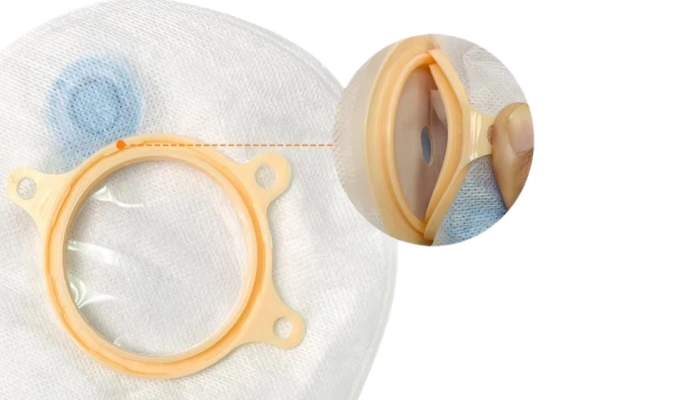
In the field of ostomy care, “ostomy flange” is a core term with both functional and structural significance. To gain a professional and in-depth understanding of it, we must begin by examining the evolution of its role across different ostomy systems.
Simply put, an ostomy flange refers to the mechanical or adhesive interface on the baseplate of a two-piece ostomy system that connects to the ostomy pouch.
Core Definition: The Connecting Structure
The term “flange” originates from engineering and refers to a protruding edge used for connection and securing.
Structural Interface: It does not refer to the entire base plate, but rather to the specific structure on the base plate responsible for “docking” with the ostomy pouch.
Connection Method: This connection is typically achieved through mechanical clips or adhesive rings, ensuring the pouch is securely attached to the baseplate and can be easily removed and replaced.
Therefore, when you hear the term “flange,” you should understand it as a connection point, not the entire skin protection barrier.
Ostomy Flange vs Wafer: Are They the Same?

1. Mechanical Connection Structure
In a two-piece ostomy system, the “flange” refers to the connecting ring or coupling interface on the base. Its primary function is to provide a secure mechanical locking point that allows the ostomy pouch to be attached to the base.
2. Material Adhesion and Sealing
The “wafer” refers to the adhesive pad that is applied directly to the abdominal wall. It is made of flexible materials such as hydrocolloid and forms a tight bond with the skin surface through pressure-sensitive adhesive.
3. Functional Pathways
In the ostomy system, the wafer serves a protective role, isolating the skin from the corrosive effects of waste and maintaining adhesion.
The flange serves a securing function, supporting the weight of waste inside the ostomy pouch and withstanding the tensile forces generated by daily activities, thereby preventing the pouch from detaching.
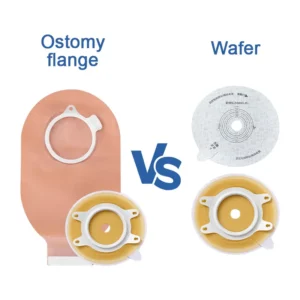
What exactly is the difference between an ostomy flange and a wafer?
| Comparison | Wafer (Skin Barrier) | Flange (Coupling Ring) |
|---|---|---|
| Core Definition | The adhesive base component that attaches to the skin and provides a secure seal around the stoma. | The mechanical interface in a two-piece ostomy system that connects the wafer and pouch. |
| Main Function | Protection and sealing: isolates output, absorbs moisture, and protects peristomal skin from irritation. | Connection and fixation: locks the pouch securely onto the wafer through snap-on or rotating mechanisms. |
| Key Materials | Hydrocolloid, pressure-sensitive adhesive, and non-woven backing. Designed for skin friendliness and moisture absorption. | Rigid plastics (such as ABS or POM) or flexible polymers. Designed for strength, durability, and secure locking performance. |
| Contact Area | Directly contacts the skin around the stoma. | Connects the ostomy pouch and wafer together. |
| Replacement Frequency | Usually replaced every 1–7 days, depending on skin condition and output characteristics. | May be replaced with the pouch or remain attached depending on the system design. |
| Applicable System | Used in both one-piece and two-piece ostomy systems. | Mainly used in two-piece ostomy systems. |
| Terminology Note | In some markets, "flange" may be used as another name for wafer or skin barrier. | In engineering terminology, flange refers specifically to the physical coupling structure, not the adhesive barrier. |
Based on our 25 years of industry experience, “wafer” is a term more commonly used in clinical and patient-facing contexts, whereas “flange” leans more towards engineering and manufacturing terminology.
How Does an Ostomy Wafer Work in Different Ostomy Systems?
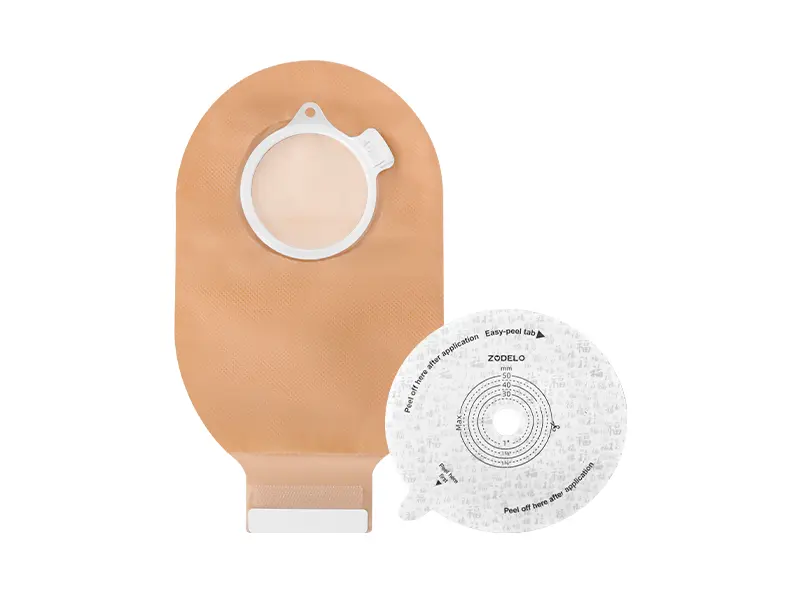
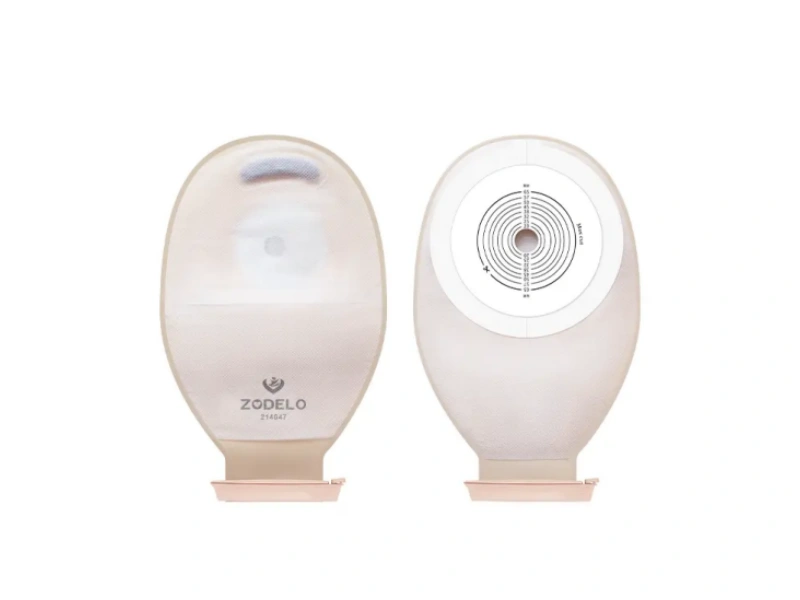
1. One-Piece Ostomy System
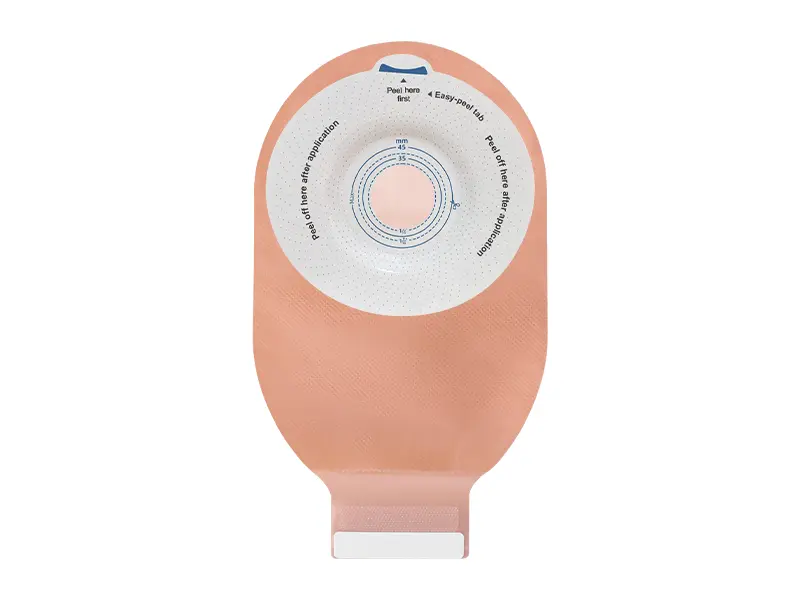
How It Works: The wafer and pouch are permanently bonded together using hot-melt technology at the factory, forming a single, non-separable unit.
Advantages:
- Ultra-thin: With no mechanical connecting ring, the overall thickness is minimal, ensuring excellent concealment and making it virtually unnoticeable under tight-fitting clothing.
- Easy to Use: Simply peel off the backing paper and apply directly; suitable for elderly patients and those new to ostomy care.
2. Two-Piece Ostomy System
How It Works: The wafer is a separate base that adheres to the skin and mechanically connects to a separate ostomy pouch via a flange. The pouch can be removed and replaced.
Advantages:
- Flexible Maintenance: The ostomy pouch can be replaced individually while retaining the wafer, reducing frequent tugging on the skin.
- Easy Inspection: After removing the pouch, healthcare providers or patients can directly inspect the stoma and the condition of the surrounding skin.
Types of Ostomy Wafers Available
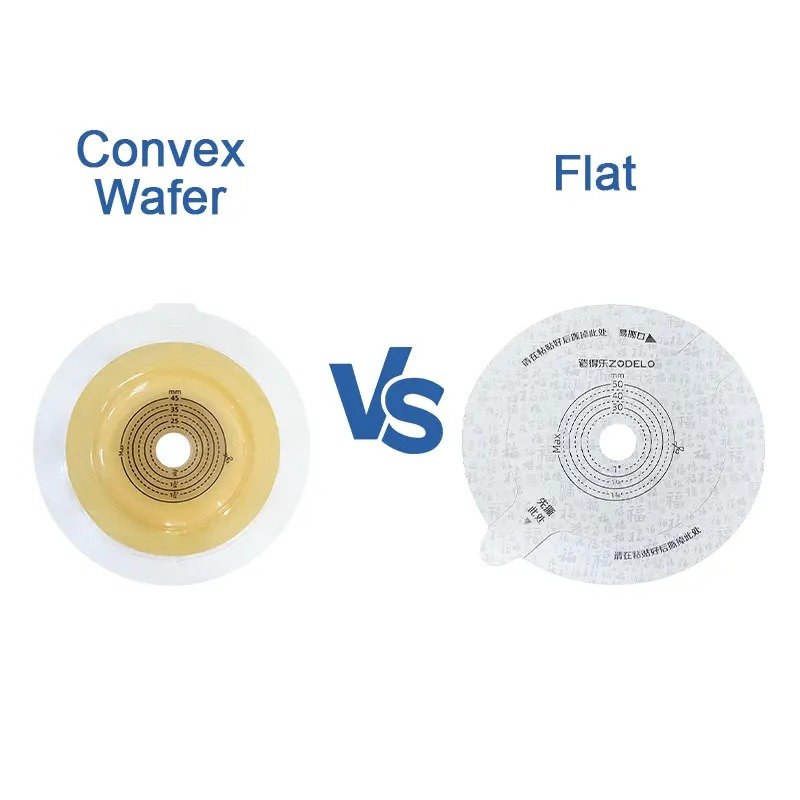
There are many different types of ostomy wafers. Since each person’s stoma shape, abdominal contour, and stool consistency vary, the choice of wafer will differ accordingly.
Flat Wafer
- Design Principle: The contact surface is flat, allowing it to adhere to smooth abdominal skin.
- Suitable for: Patients whose stoma protrudes more than 1 cm above the skin surface and whose peristomal skin is flat and free of folds.
- Advantages: High comfort level and minimal sensation of a foreign body.
Convex Wafer
- Design Principle: The center of the wafer curves outward toward the skin in an arc. The convex surface gently compresses the soft tissue around the stoma inward, causing the stoma to protrude outward.
- Indications: Suitable for patients with retracted stomas, flush stomas, parastomal hernias, or skin folds.
- Advantages: Fills the recessed area between the stoma and the abdomen, reduces the accumulation of stool at the wafer edges, and helps prevent fecal dermatitis.
Cut-to-Fit Wafer
- Design Principle: The wafer has no pre-cut opening in the center and is printed with concentric circle markings indicating different sizes. Patients must manually cut the wafer with scissors based on the actual measurements of their stoma.
- Indications: Suitable for early postoperative stages and irregularly shaped stomas.
- Key Advantage: Offers excellent flexibility, allowing patients to manually cut the wafer to fit their stoma as it changes over time.
Pre-Cut Wafer
- Design Principle: Features pre-cut openings of a fixed size, with smooth edges.
- Applications: Suitable for patients in the late recovery phase whose stoma size is stable and shape is regular.
- Key Benefits: Simplifies the procedure and reduces the risk of inaccuracies from manual cutting or edge abrasions to the stoma mucosa.
How to Choose the Right Ostomy Wafer?
Selection Based on Stoma Shape and Abdominal Contour
Flat Abdomen with Protruding Stoma: If the stoma protrudes above the skin surface and the surrounding skin is smooth with no scarring, a flat baseplate is recommended.
Complex Abdominal Contours: If the stoma is recessed or flush with the skin, or if the patient has a peristomal hernia or deep abdominal folds, a convex wafer is recommended. The convex design applies gentle pressure to make the stoma protrude while also filling in skin creases.
Selection Based on Stoma Size and Shape
Irregular or Dynamically Changing Stomas: For stomas in the early postoperative period or those with irregular shapes, a “Cut-to-Fit” baseplate is the best choice. It can be freely trimmed to accommodate changes in the stoma. Each time it is trimmed, the opening should be only 1–2 mm larger than the stoma to minimize skin exposure.
Stable and Regular Stomas: If the stoma size has stabilized, a pre-cut baseplate is more convenient.
Select Based on Stool Characteristics and Wear Duration
Highly corrosive or frequent output: For ileostomies or urinary ostomies, we recommend long-wear bases. The enhanced hydrocolloid formula provides stronger adhesion.
Regular stool: For colostomies with formed stool, we recommend standard hydrocolloid bases.
Selecting Based on Skin Sensitivity and Special Needs
Fragile or Damaged Skin: If the skin around the stoma is already red, swollen, or showing signs of irritation, it is recommended to choose a gentle base with an additional skin protection coating or one specifically designed for sensitive skin.
High activity levels or heavy sweating: For patients who enjoy exercise, it’s important to choose pads with good moisture-wicking properties and an anti-curl design. We recommend using a leak-proof ointment or talcum powder.
Based on feedback from offline customers, we have found that both barrier paste and ostomy barrier rings significantly enhance the adhesion of the baseplate. Therefore, we recommend using them for complex abdominal contours.

Common Problems Caused by Incorrect Wafer Selection
Leakage
Leakage is a very common issue in stoma care and may be caused by gaps between the baseplate and the skin or the stoma.
If the opening in the baseplate is cut too large, waste can seep in and irritate the skin. If the opening is too small, the edges of the baseplate will constantly rub against the stoma mucosa.
Based on our experience, we do not recommend using flat baseplates for patients with abdominal scars or stoma retraction.
Skin Irritation
The skin around the stoma is extremely delicate.
Some patients have sensitive skin and may experience rashes, blisters, or itching. Pulling too hard during a change can severely damage this already fragile skin.
Short Wear Time
If the base plate curls up or detaches, it not only causes leakage but also significantly shortens the wear time. This increases the financial burden on the patient.
The adhesive on the stoma base plate loses much of its adhesion when exposed to alcohol and oils. If the patient sweats heavily or the stoma continuously secretes intestinal fluid, these fluids will seep out through the gaps, causing the adhesive to hydrolyze and lose its stickiness.
Common Misunderstandings About Ostomy Flange vs Wafer
Misunderstanding 1: Ostomy Flange vs Wafer are two completely different components.
In most ostomy systems, they refer to the same core component expressed in different ways.
Wafer (Baseplate / Skin Barrier)
Emphasizes direct contact with the skin, providing a skin barrier.
Absorbs exudate and protects the skin around the ostomy.
Flange
Emphasizes the connection structure with the pouch.
Misunderstanding 2: As long as the Flange sizes are the same, they can be used across different brands.
Fact: The Flange size being the same does not mean that the connection system is compatible.
In a two-piece ostomy system, the factors that truly determine compatibility include:
Connection method: mechanical coupling, adhesive coupling.
Locking structure design
Brand-specific interface standards, etc.
Misunderstanding 3: One-piece systems also have Flange
Fact: One-piece pouch systems usually do not have an independent flange interface.
One-piece pouch system: The wafer and the pouch are formed as one piece. There is no detachable flange connection structure.
Two-piece: The wafer (with flange) + pouch can be separated. The flange is the connection point between the wafer and the pouch.
What Should Distributors Consider When Selecting an Ostomy Wafer Supplier?
1. Product Portfolio
System Architecture: Offers both one-piece and two-piece systems to meet the needs of different consumer groups.
Shape Adaptability: Flat and convex wafer are available, providing a complete range of convex options—including shallow and deep convex—to accommodate various complex abdominal conditions.
Size Coverage: Stoma shapes vary from person to person. Edema subsides 6 to 8 weeks post-surgery, resulting in noticeable changes in size. Basins should cover a full range of sizes—large, medium, and small.
2. Customization Capability
OEM/ODM R&D Support: Possesses independent R&D capabilities ranging from material formulation to mold design, enabling the development of differentiated products based on market demand.
Private Label: Can incorporate your brand identity, logo, or exclusive colors into product appearance and packaging design.
Customized Packaging: We provide packaging designs that align with the aesthetics of your target market, as well as multi-size combo packaging solutions.
3. Manufacturing Capability
Production Capacity: Fully automated production lines and ample production capacity ensure a stable supply during peak seasons, reducing the risk of stockouts.
Factory Facilities: Equipped with cleanrooms that comply with medical device standards and utilize high-precision automated equipment, ensuring consistent quality across every batch.
R&D: A team of professional materials engineers drives advancements in cutting-edge technologies, such as the erosion resistance of hydrogels and the mechanical properties of convex lens bases.
4. Quality System
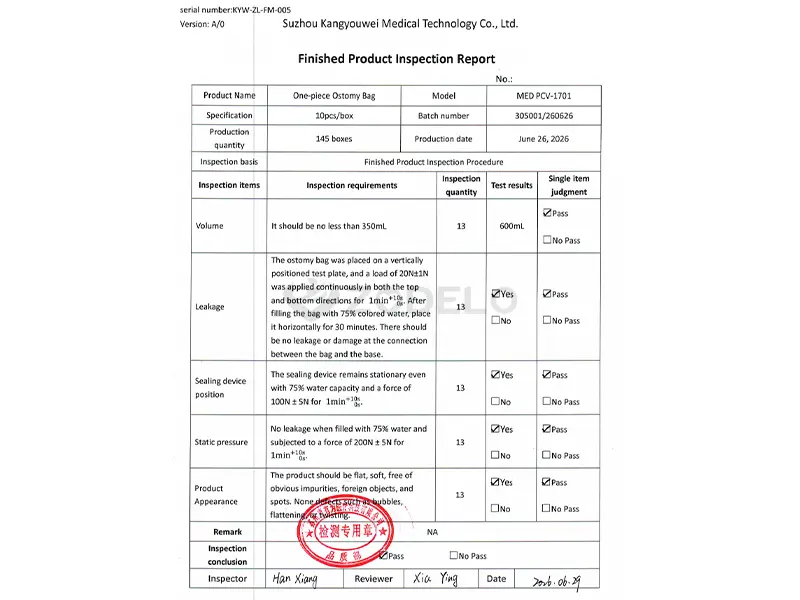
ISO 13485 Certification: Certified under the international medical device quality management system, ensuring quality control from raw material procurement to finished product shipment.
CE MDR Certification: For Europe and countries adopting EU standards, products must comply with the latest medical device regulations; we can provide clinical evaluation and biocompatibility test reports.
FDA Registration: For the North American market, registration with the U.S. Food and Drug Administration (FDA) is required to ensure smooth customs clearance.
5. Export Experience
International Markets: We recommend prioritizing factories with a proven track record of successful shipments to mature markets such as Europe, the Middle East, or Southeast Asia, as they have a deeper understanding of market demands.
Regulatory Support: A reputable supplier can assist you with registration applications in target countries, translation of technical documentation, and clinical data support.
Frequently Asked Questions about Ostomy Flange vs Wafer
Q1. Is an ostomy flange the same as a wafer?
They are different. An ostomy wafer is primarily used to protect the skin around the stoma and secure the device to the abdomen via an adhesive, whereas an ostomy flange refers to the connecting structure—found in two-piece ostomy systems—that joins the baseplate to the ostomy pouch.
Q2. Does the terminology affect product compatibility?
No. Compatibility depends on size, coupling system, and material, not on whether the component is called a flange or a wafer.
Q3. Do all ostomy brands define flange and wafer in the same way?
No. Definitions may vary slightly between brands, which is why professional suppliers focus on technical specifications instead of terminology alone.
Q4. How Ostomy Wafers Are Usually Sold?
- Separate sale (common in two-piece systems): The base plate and the ostomy bag are sold separately. This makes it convenient for users to replace different components as needed.
- Combined sale with the ostomy bag: Common in one-piece systems. It simplifies the purchasing and usage process. It is suitable for beginners or retail channels.
Q5.Does ostomy flange vs wafer terminology affect patient use or comfort?
No. Patient comfort is determined by fit, seal quality, and skin barrier material. Not by the terminology used to describe the component.
Q6. Is wafer more commonly used in the U.S. market?
Yes. Wafer is the more commonly used term in the U.S. clinical and retail market. While “flange” is often seen in manufacturing and international documentation.
Q7. What information matters more than terminology when ordering ostomy flange or wafer?
Key factors include diameter, wear time, skin barrier formulation, system type, and compatibility requirements. Which professional manufacturers typically confirm during the sourcing process.
Q8.Do one-piece ostomy pouch systems also have a separate “flange”?
Generally, no. In a one-piece system, the wafer and the pouch are permanently bonded together, so there is no detachable mechanical connection (i.e., a separate flange structure). Flanges are primarily found in two-piece systems, where they are used to connect the wafer and the pouch.
Conclusion: Understanding Ostomy Terminology Helps Better Product Selection

The choice between “Ostomy Flange” and “Wafer” depends on your system architecture, clinical needs, and the communication context of your target market.
If your product is a one-piece ostomy system, you can use “wafer” in certain market contexts to refer to the hydrocolloid barrier that comes into direct contact with the skin. The wafer protects the skin and provides stable adhesion. In a two-piece ostomy system, the mechanical connection point between the baseplate and the ostomy pouch can be called a “flange.” The flange secures the baseplate and ostomy pouch in place via a snap-lock mechanism, allowing for flexible removal and replacement of the pouch.
If you are unsure how to accurately convey the differences between these components to your customers or end users, or if you are looking for a source manufacturer that can provide a full specification matrix and in-depth OEM/ODM customization solutions, Zodelo can tailor professional ostomy supply procurement and brand empowerment solutions to meet your specific needs.

Top 10 Colostomy Bag Manufacturers In India 2026
top 10 colostomy bag

Top 10 Stoma Bag Suppliers Uk 2026
Top 10 Stoma Bag Sup

The Ultimate Guide To Sex With A Colostomy Bag
The Ultimate Guide T

Top 10 Colostomy Bag Manufacturers And Suppliers In China 2026
Top 10 Colostomy Bag