

What Is an Ostomy Flange? Complete Guide for Medical Distributors
Table of Contents
Leakage complaints, skin irritation, and product returns are common challenges faced by ostomy distributors worldwide. In many cases, the root cause is not the pouch itself. But the component that attaches it to the skin — the ostomy flange.
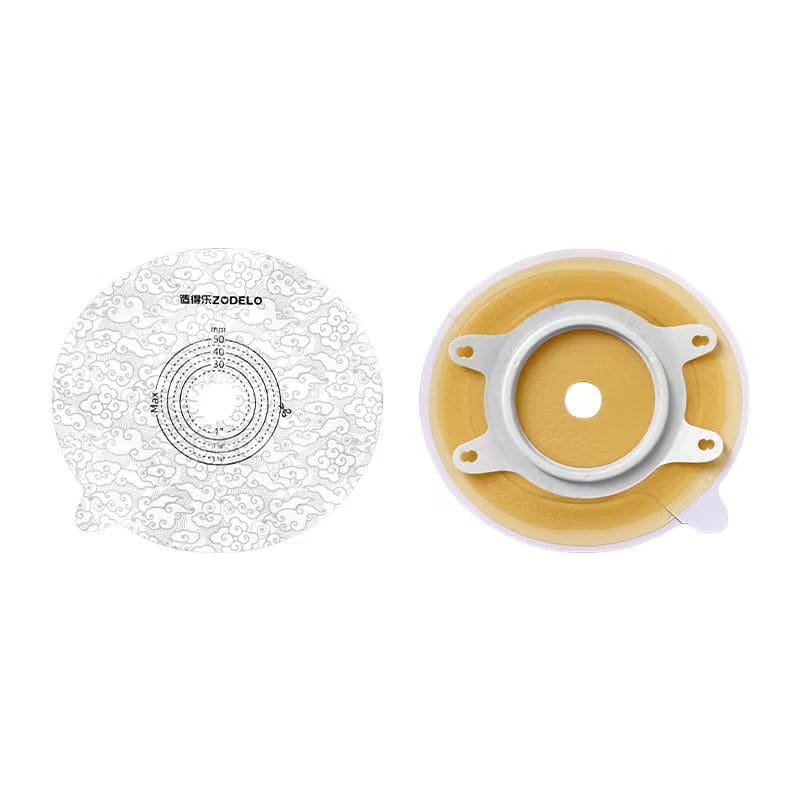
The ostomy flange, also known as a skin barrier or ostomy wafer. Playing core component directly attached to the skin in the ostomy system. The main function of the ostomy flange is to form a reliable seal around the ostomy and hold the entire ostomy bag in place. It also protects the peristomal skin from irritation and leakage.
For medical distributors and private label brands. Understanding what is an ostomy flange is essential for product selection and customer satisfaction.
In this guide, we will explain what is an ostomy flange, the different types, materials used. And how flange quality impacts long-term performance.
What Is an Ostomy Flange?
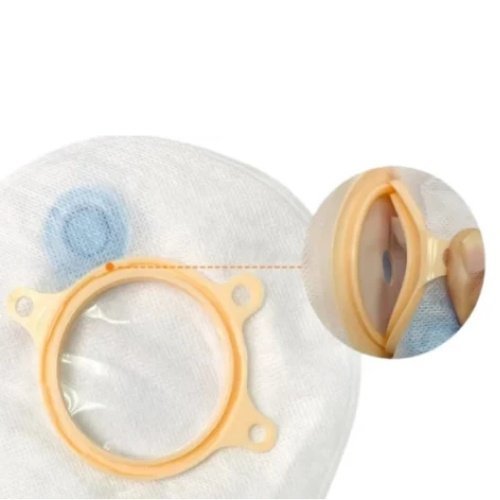
Ostomy flange, also known as skin barrier or flange. Which is an adhesive component used in the ostomy system to fix the collection bag to the skin surface. Its core structure typically consists of a hydrocolloid adhesive layer and a waterproof breathable substrate. It is used to form a reliable sealing barrier around the ostomy, preventing leakage and reducing skin irritation. The sealing performance and adhesion stability of the flange directly affect the safety and comfort of the entire ostomy system.
What Does an Ostomy Flange Do?
Just knowing what is an ostomy flange is not enough. We also needs to understand what an ostomy flange does. Its functions are mainly divided into the following three parts.
1.Protects Peristomal Skin
The ostomy flange forms a physical barrier around the ostomy through a medical hydrocolloid adhesive layer. Effectively preventing contact between excretions and the skin. It absorbs a small amount of exudate while maintaining the stability of the skin microenvironment. This helps prevent skin redness, maceration, even ulceration. Thereby reducing the incidence of skin complications.
2.Creates a Leak-Proof Seal
One of the core functions of the ostomy flange is to form a continuous and stable sealing structure around the edge of the ostomy. The adhesion strength, extensibility and edge fit degree determine the sealing effect. High-quality hydrocolloid materials can adapt to the minor movements of the skin and the changes of the body surface curvature. This reduces the formation of gaps and effectively prevents leakage.
3.Secures the Pouch in Place
In a one-piece pouch system, the ostomy flange and the bag body are integrated into a single structure. In a two-piece pouch system, the ostomy flange is connected to the bag body through mechanical fasteners or connecting rings. Regardless of the structural form, the chassis is responsible for fixing the weight and dynamic stress of the bag. Its adhesion durability and connection structure strength must be able to withstand the tensile and torsional forces during daily activities to prevent detachment or accidental separation. Connection stability is a key factor in ensuring the safety and comfort of the patient during daily activities.
Types of Ostomy Flanges
To understand what is an ostomy flange, one must first know all the types of ostomy flanges.The ostomy flange can be classified based on the system structure, surface shape and opening method. Different designs are intended to accommodate various types of stoma shapes, skin conditions and usage requirements, while also reducing the risk of leakage and skin complications.
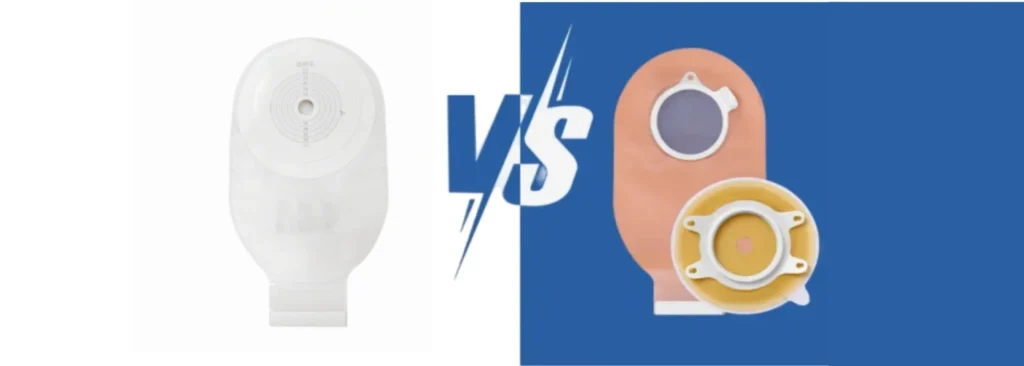
One-Piece vs Two-Piece Pouch Systems
One-Piece Pouch System
In a one-piece system, the ostomy flange and the ostomy bag are integrated into a single structure and cannot be separated. The base is directly adhered to the skin to secure the bag. The overall design is much lighter and more discreet. It is suitable for patients who have high requirements for wearing comfort or stable ostomy shapes.
Two-Piece Pouch System
In the two-piece system, the ostomy flange and the ostomy bag are separated. The ostomy flange can be used continuously for several days, and only the bag needs to be replaced. This design helps to reduce repeated skin pulling. It is suitable for patients with sensitive skin or those who need frequent discharges.
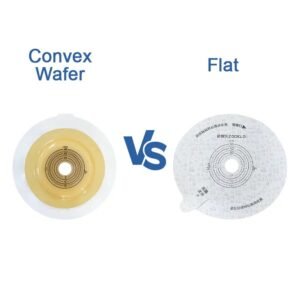
Flat vs Convex Flanges
Flat Flange
Flat fange is suitable for protruding or normal-height stomas. Or patients with a flat abdominal wall without obvious folds or depressions.
Advantages: Light and thin wearing experience, high comfort level.
Defect: Limited sealing performance for retractable stomas or irregular abdominal walls.
Convex Flange
The center of the flange protrudes outward, exerting a gentle pressure on the flange. It has stronger sealing performance. It can significantly reduce the risk of leakage.
It is suitable for retracting stomas, which are flush with the skin. The abdominal wall is uneven and sunken after the operation.
Deep Convex Flange
Provide stronger support and external thrust.
It is suitable for people with severe retraction or high leakage risk.
It is usually recommended to use it in combination with an ostomy belt.
Careful assessment is needed to avoid excessive pressure on the stoma.
Pre-Cut vs Cut-to-Fit Flange
Pre-Cut Flange
The opening size is fixed, eliminating the need for additional cutting and making replacement simpler and more convenient. It is suitable for long-term users with stable stoma dimensions.
Cut-to-Fit Flange
It can be cut according to the shape of the stoma. It is suitable for patients with irregular stoma shapes or those who have just undergone surgery.
Materials Used in Ostomy Flanges

To understand what is an ostomy flange, we also needs to know the materials of Ostomy Flanges.The standard ostomy flange usually consists of three parts: an adhesive layer, a supporting substrate, and (in a two-piece system) a connecting structure.
1. Hydrocolloid Adhesive
The hydrocolloid adhesive layer is the core functional material of the ostomy flange and directly comes into contact with the skin around the ostomy. Its typical formulation consists of an elastic matrix (such as rubber or synthetic polymer) and hygroscopic particles (such as carboxymethyl cellulose CMC). It mainly has the functions of absorbing moisture and providing adhesion.
2. Non-Woven Backing
The non-woven fabric flange layer is located on the back side of the adhesive layer and serves as a structural support. Its material is usually medical-grade polypropylene or polyester non-woven fabric.
The high-quality flange material should have certain breathability (moisture vapor transmission rate, MVTR) to reduce the problem of moisture soaking caused by a damp skin environment. At the same time, the interlayer bonding strength between the flange material and the hydrocolloid must be stable to avoid delamination during cutting or use.
3. Plastic Coupling Ring
In the two-piece ostomy system, the plastic connecting ring is used to mechanically connect the flange with the ostomy bag. Its material is usually medical-grade polypropylene (PP) or other high-strength thermoplastic polymers.
How to Choose the Right Ostomy Flange?
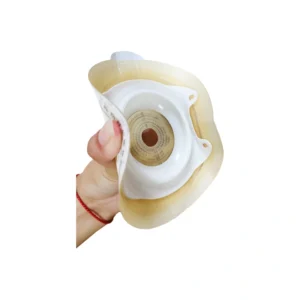
Correctly understanding what is an ostomy flange, so that we can choose the appropriate ostomy flange.Choosing the appropriate ostomy tray requires comprehensive consideration of the shape of the ostomy, the condition of the skin, and the excretion characteristics. Incorrect selection may lead to problems such as leakage, skin damage, or unstable wearing.
1. For Protruding Stomas
When the stoma is significantly higher than the skin surface (usually more than 2 cm above), and the surrounding skin is flat. It is more suitable to choose the flat flange. In this case, no additional pressure structure is required. Excessive use of the convex flange may cause unnecessary skin compression.
2. For Retracted Stomas
When the stoma is lower than the skin surface or there is a abdominal wall depression, a flat flange often cannot form an effective seal. Excretions tend to spread towards the bottom of the skin. In such cases, it is usually recommended to use a Convex flange. Its central convex structure can apply moderate pressure to the surrounding tissues of the stoma, causing the stoma to protrude outward. This improves the direction of excretion and enhances the sealing effect.
3. For Sensitive Skin
For patients with damaged skin barrier, prone to redness and swelling, or those who frequently need to change the product, a two-piece pouch system should be given priority. This is because the pouch can be replaced without removing the flange, thereby reducing repeated pulling on the skin.
4. For High-Output Patients
High-volume ostomies (such as ileostomies) usually have liquid-like excretions that contain strong digestive enzyme activity and are highly irritating to the skin.
Liquid excretions are more likely to penetrate the sealed edges, so the moisture absorption capacity and continuous adhesion strength of the adhesive layer are particularly important. In necessary cases, a convex-shaped structure can be combined to reduce the risk of bottom leakage.
Why Flange Quality Matters for Distributors?

1. Adhesive Strength Testing
The performance of the hydrocolloid adhesive layer determines whether the flange can maintain stable adhesion under conditions of body temperature, moisture, and dynamic movement.
If the adhesion force is insufficient, it may cause premature detachment. If the adhesion force is too strong, it may increase the risk of skin damage. Therefore, the adhesive performance needs to be precisely controlled between safety and stability. For distributors, stable adhesion test data means lower after-sales risks and more predictable product performance.
2. Leak Prevention
Leakage is one of the most common customer complaints regarding ostomy products. A high-quality flange should maintain a complete sealing structure under dynamic activities and remain structurally stable even after absorbing a small amount of exudate.
From a distribution perspective, the leakage problem not only affects a single order but may also damage the long-term trust of end-users in the brand. Therefore, the stability of the sealing performance is an important indicator for evaluating the quality system of the supplier.
3. Skin Protection Standards
Since the chassis directly comes into contact with the skin, the material must meet relevant biocompatibility and medical safety standards.
In addition, the material’s breathability is also extremely important. Insufficient breathability may cause skin saturation, which can affect the adhesion stability.
For distributors, products that comply with international medical standards can reduce compliance risks. And also help enter markets with higher regulatory requirements.
4. OEM Manufacturing Capability
In actual supply chain management, a single sample’s performance being good is not sufficient to indicate long-term stability. For distributors that adopt OEM or private label models, the manufacturer’s process control ability and batch consistency management are particularly important.
FAQs about what is an ostomy flange
Q1. How long can an ostomy flange be worn?
Usually, the wearing time of the ostomy tray is 3 to 5 days. This duration varies depending on the adhesive formula, the type of excretion, and the condition of the skin.
Q2. What causes an ostomy flange to leak?
Inappropriate size matching of the stoma, incorrect selection of the flange structure. Insufficient adhesion strength or material aging.
Q3.What is the difference between flat and convex ostomy flanges?
Flat flange is suitable for situations where the ostomy protrudes naturally and the abdominal skin is smooth.
Convex flange applies structural bulges to exert gentle pressure on the surrounding skin of the ostomy.
Q4. What materials are used in ostomy flanges?
The standard ostomy tray usually consists of a hydrocolloid adhesive layer, a non-woven fabric support substrate, and (in a two-piece system) a plastic connecting ring. The hygroscopicity and adhesive stability of the hydrocolloid material are the key factors affecting the sealing effect. The material must meet the biocompatibility standards, such as ISO 10993.
Q5. Are all ostomy flanges compatible with every pouch?
Not all wafer and bag bodies are interchangeable. The two-piece pouch system usually adopts specific mechanical fastening or connection ring size standards, and the compatibility between different brands is limited.
Q6. How is adhesive strength tested in ostomy flanges?
The adhesion strength is usually evaluated through peel tests, shear tests and aging stability tests. The tests aim to verify the durability of adhesion under body temperature and moist conditions. At the same time, the risk of mechanical damage to the skin during peeling is controlled.
Q7. Can ostomy flanges cause skin irritation?
If there is frequent leakage, it may cause redness and swelling of the skin or contact dermatitis.
Conclusion - what is an ostomy flange

The ostomy flange plays a crucial role in the ostomy care system. Performing functions such as sealing, protection, and structural support. The material formulation, structural design, and manufacturing consistency of the flange directly affect the clinical performance and long-term stability. Whether it is a flat or convex flange, and whether it is a one-piece or two-piece pouch system. The adhesion performance and sealing reliability of the flange are always the key factors determining the user experience. The ostomy flange is the most critical component in any ostomy system, as it directly affects comfort, safety, and customer satisfaction.
For distributors and brand owners, choosing a mature, professional supplier with OEM manufacturing capabilities is of utmost importance. This can effectively reduce post-sale risks and enhance market competitiveness. If you need to learn more about Zodelo products or customized solutions, please contact our team.
More Resources about what is an ostomy flange:
- A Guide to Ostomy Bags and Pouching Systems— Uchicagomedicine.org
- Stoma (medicine)– wikipedia
- The ultimate guide of flange for stoma bag– zodelo
- Ostomy Flange vs Wafer: What’s the Difference and Are They the Same Thing?– zodelo
- Ostomy Wafer Sizes: A Complete Guide to Choosing the Right Fit– zodelo
- Convex Wafer vs Flat: What’s the Difference and Which One Is Better?– zodelo
- The ultimate guide of flange for stoma bag– zodelo

Top 10 Colostomy Bag Manufacturers In India 2026
top 10 colostomy bag

Top 10 Stoma Bag Suppliers Uk 2026
Top 10 Stoma Bag Sup

The Ultimate Guide To Sex With A Colostomy Bag
The Ultimate Guide T

Top 10 Colostomy Bag Manufacturers And Suppliers In China 2026
Top 10 Colostomy Bag