

how to prevent ostomy bag leakage
Table of Contents
Why is your ostomy bag leaking—even when you think you’re wearing it correctly?
Ostomy bag leakage is essentially a failure of the seal between the skin barrier and the skin around the stoma.
This is a common problem for both new and experienced stoma patients. The issue is often not with the ostomy bag itself, but rather with its size, how it’s used, and whether the appropriate accessories are being used.
This article explains how to prevent ostomy bag leakage.
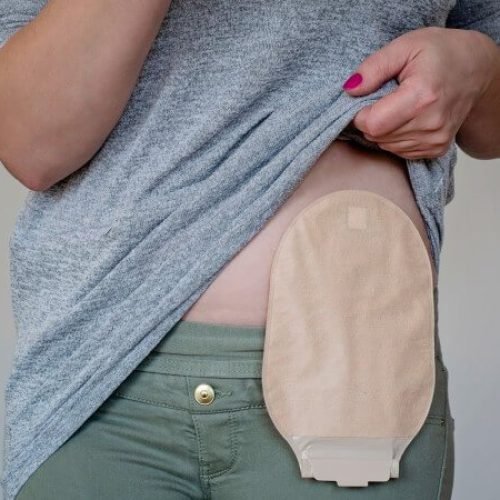
Why Does an Ostomy Bag Leak?
Ostomy bag leakage is one of the most common and troubling problems in ostomy care. It not only affects the patient’s life but can also lead to redness, swelling, and ulceration of the skin around the stoma.
Incorrect Stoma Size Cutting
Overcut
Undercut
Ignoring Shape Changes
Uneven Skin Surface
Wrinkles and Indentations
Stoma Retraction
Bone Prominences
Adhesive Performance Degradation
The adhesive layer of an ostomy baseplate has a limited lifespan. Its adhesiveness is affected by several factors. Understanding these is essential to how to prevent ostomy bag leakage.
- Chemical Dissolution: Direct contact of excrement with the adhesive layer causes the adhesive to whiten, bubble, and eventually dissolve.
- Physical Factors: High temperatures and sweaty environments accelerate the hygroscopic expansion of the hydrocolloid. This reduces its adhesiveness.
- Product Lifespan Limit: Even the highest quality baseplates typically maintain effective adhesion for only 3-5 days.
Improper Handling Techniques
Even with perfect products and ideal ostomy conditions, incorrect handling can lead to leakage.
- Inadequate Skin Preparation: If the skin is not thoroughly cleaned or completely dried when changing the baseplate, the adhesiveness will be significantly reduced.
- Lack of Pressing and Preheating: After applying the baseplate, if it is not warmed and pressed with the palm of the hand for 15-30 minutes, the adhesive will not soften sufficiently. It will not embed into the skin texture.
- Improper Use of Accessories: Failure to remove loose powder after applying stoma powder can create a barrier. The use of cleansers containing alcohol or oil also creates a barrier between the skin and the baseplate. This leads to adhesion failure.
Product Quality and Fit Issues
Not all ostomy bags are suitable for all patients. The characteristics of the product itself and the appropriateness of its selection are also key factors. This is a crucial part of how to prevent ostomy bag leakage.
- Low Product Fit: Different brands of baseplates have different adhesive properties, hardness, and shape designs. If the product characteristics do not match the patient’s body shape, the leakage rate will increase significantly.
- Manufacturing Defects: In rare cases, the product may have manufacturing defects. These include uneven adhesive application or incomplete sealing.
- Missing Accessories: For skin with depressions or folds, it is difficult to achieve zero leakage with a flat baseplate alone. Leak-proof rings or leak-proof paste are needed to fill the gaps.
How to Prevent Ostomy Bag Leakage
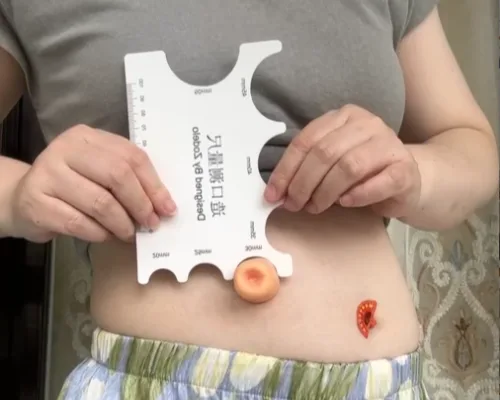
Measure Your Stoma Correctly
- Dynamic Measurement Principle: Do not rely on a single measurement. It is recommended to remeasure every time the ostomy bag is changed. This is especially important during the postoperative recovery period.
- Golden Ratio Cut: The opening of the stoma baseplate is the core technology for preventing leakage. The opening should be 1-2 mm larger than the actual size of the stoma.
- Too Large: This will cause the skin around the stoma to be exposed. Excrement will directly contact the skin. This causes irritant dermatitis and damages the adhesiveness.
- Too Small: This will rub against or cut the stoma mucosa. It leads to bleeding, pain, or stoma stenosis.
- Shape Fit: The stoma may be round, oval, or even irregular in shape. The outline must be precisely replicated during cutting. Do not simply cut a round hole.
Ensure Clean and Dry Skin
The skin is the “foundation” for the stoma baseplate adhesion. Oil, sweat, old adhesive residue, or moisture can all cause adhesive failure. Digestive enzymes in excrement are corrosive. Once leaked into the skin, they can quickly cause dermatitis and lead to skin ulceration. This is a critical step in how to prevent ostomy bag leakage.
- Gentle Cleaning: Clean the skin around the stoma with lukewarm water. You may also use a mild, oil-free, moisturizing soap.
- Absolute Dryness: Moisture is the enemy of sticky materials. After cleaning, gently pat the skin dry. Use a dry gauze or soft cotton towel. Ensure complete dryness.
- Hair Management: Hair around the stoma should be trimmed or removed regularly. Hair can obstruct close contact between the baseplate and the skin. It can also cause severe pain and skin damage during removal.
Use Barrier Rings or Paste
The abdominal surface is often not perfectly flat. Scars, folds, the navel, or stoma retraction can all contribute to leakage. Therefore, the use of auxiliary products is crucial.
- Filling Depressions:
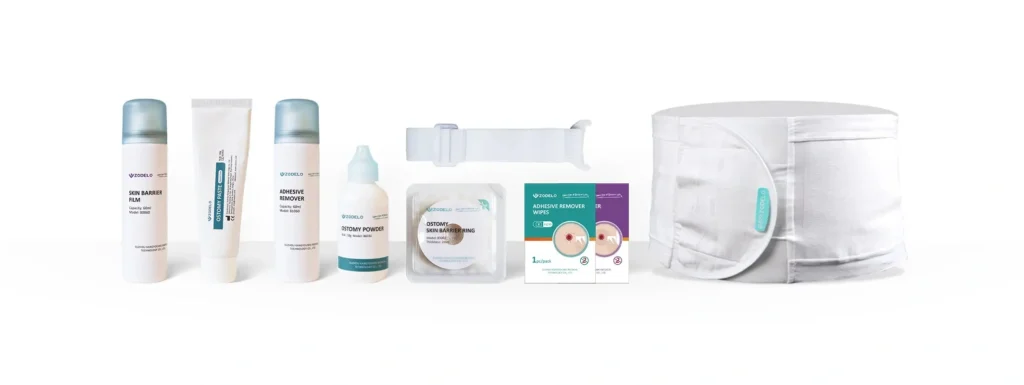
- Barrier Rings: These are malleable. Like putty, they are placed around the stoma base. They fill deeper folds or depressions. This provides support for the baseplate.
- Paste: This is similar to caulking compound. It is used to fill skin texture or minor unevenness. Allow it to dry and form a thin film before applying the baseplate.
- Application of Convex Surface Technology: For patients with stoma retraction or skin folds, a simple flat baseplate may not be sufficient. In such cases, a convex baseplate should be considered. It applies gentle pressure to the abdomen. This pushes the stoma outward. It guides excrement directly into the bag. This prevents it from accumulating under the baseplate.
- Skin Protective Film: Spray or apply a skin protective film (liquid bandage) before application. This forms a transparent protective layer between the skin and the baseplate. It enhances adhesion. It also reduces physical damage to the epidermis during removal.
Apply the Bag Properly
Correct application technique activates the heat-sensitive adhesive of the baseplate. This ensures a durable seal.
- Apply from Bottom to Top: After peeling off the backing paper of the baseplate, align it with the lower part of the stoma. Apply it from bottom to top. This sequence facilitates visual observation. It prevents excrement from contaminating the baseplate adhesive.
- Warm Pressure Activation: After application, use the thenar or hypothenar eminence of your palm. Press the baseplate for 30 seconds to 2 minutes.
- Check for a Tight Seal: After pasting, gently press from the center outwards. This removes air bubbles. Check the edges of the base plate for any lifting. Ensure a seamless fit against the skin.
Choose the Right Ostomy System
There is no “best” ostomy bag. There is only the “most suitable” system. Choosing the appropriate product is key to long-term leak prevention. It depends on the type of stoma, the shape of the excrement, and personal habits. Understanding how to prevent ostomy bag leakage involves making these right choices.
- One-piece vs. Two-piece:
- One-piece: The base plate and bag are integrated. They have a low profile and good concealment. They are suitable for patients with poor vision or limited hand dexterity.
- Two-piece: The base plate and bag are separate. Changing the bag does not require tearing off the base plate. This reduces frequent removal and skin irritation. It also facilitates observation of the stoma. It is suitable for those with sensitive skin around the stoma.
- Excrement Management:
- Empty the Bag Promptly: The ostomy bag should be emptied when it is 1/3 or 1/2 full. Excessive excrement will create a downward pulling force. This compromises the base plate seal.
Best Products to Prevent Ostomy Bag Leakage
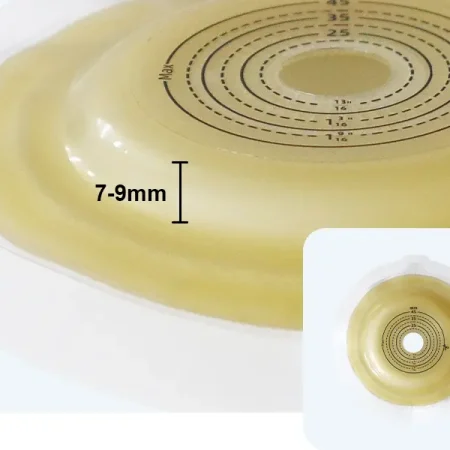
Convex Baseplate
A convex baseplate is key to solving leakage problems in complex stoma shapes. It is a vital tool in how to prevent ostomy bag leakage. Unlike a regular flat baseplate, a convex baseplate has a dome-shaped bulge in the center.
How it works
When applied to the abdomen, the convex surface applies gentle, continuous pressure. It targets the skin around the stoma. This action pushes a retracted or flattened stoma outwards. This physical action ensures the stoma root is deeply embedded in the bag. It guides waste directly into the bottom of the bag.
Suitable for
This is for patients with retracted stomas. It is also for those with flat stomas, abdominal folds, or loose skin.
Selection advice
Convex baseplates are available in soft, hard, and different depths. For first-time use, guidance is recommended. Choose under the guidance of a stoma therapist. This helps avoid excessive pressure and skin damage.
Leak-Proof Ring
A leak-proof ring fills in uneven areas of skin. It is usually made of pectin or other hydrophilic materials. It has excellent plasticity.
How it works
It can be stretched and shaped like clay. Place it around the stoma root. It effectively fills in scars, depressions, folds, or the navel around the stoma. This provides a smooth adhesive surface for the baseplate. It prevents excrement from seeping through gaps to the baseplate.
Suitable for
This is for patients with surgical scars on the abdomen. It fits those with deep skin folds. It is also for those with highly irregular stoma shapes.
Advantages
It offers benefits beyond preventing leakage. It absorbs small amounts of exudate. It swells to form a gel. This reinforces the seal further. It usually leaves no residue upon removal.
Ostomy Abdominal Binder
Ostomy abdominal binders are often overlooked. However, they are actually a “reinforcement” of the leak-proof system. They are especially useful when used with convex bases.
Working Principle
The abdominal binder provides additional external support. It supports the stoma base through its elasticity around the waist. It prevents the edges of the base from curling. It stops them from lifting due to friction from clothing or vigorous body movement.
Suitable Scenarios
These are for patients using convex bases. The abdominal binder enhances the convexity’s protrusion effect. They are for those with loose and sagging abdomens. They are for those who need to engage in physical activity or exercise.
Advantages
It increases the sense of security. It prevents leakage when turning over at night. It provides some support to the abdominal muscles. This reduces the risk of parastomal hernia.
To meet the needs of all patients, Zodelo has upgraded and developed all series of ostomy bags,such as: Airlora Series, Calmlora Series, Mellora Series, Joylora Series and Ostomy Product Accessories.
Common Mistakes That Cause Ostomy Bag Leakage
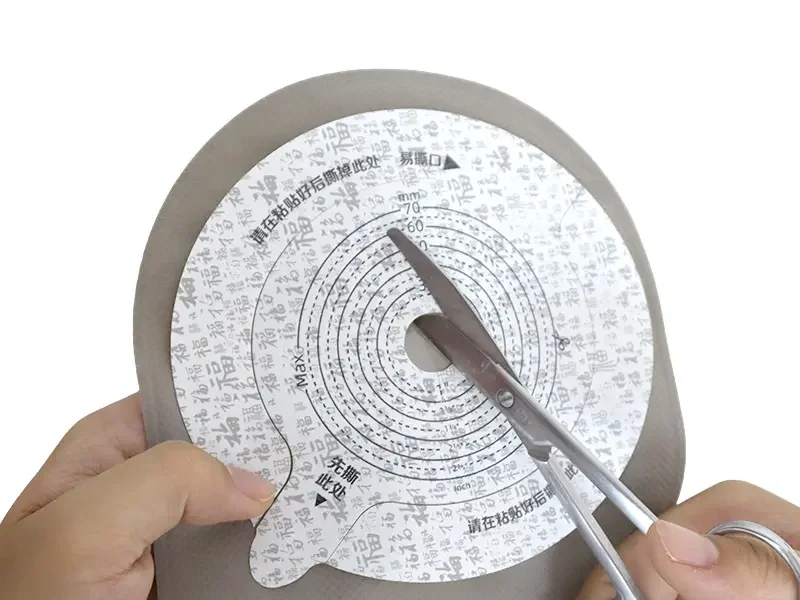
Excessive Incision Cutting
This is the leading cause of leakage. Many patients cut the baseplate opening too large. They do this for “safety’s” sake or for convenience. This results in exposed skin around the stoma. Exposed skin is continuously eroded by excrement. This causes dermatitis and ulceration. It in turn damages the baseplate’s adhesiveness. The correct approach is to measure precisely. Cut the opening 1-2 mm larger than the stoma root. This ensures “zero skin exposure.” This is the first step in how to prevent ostomy bag leakage.
Neglecting Sealing Accessories
The abdomen often has folds, scars, or stoma retraction. It is difficult to achieve a perfect seal with a flat baseplate alone. Not using a leak-proof ring or sealant is like laying a carpet on an uneven surface. Gaps are inevitable. Properly using a leak-proof ring fills depressions. Using a convex baseplate with an abdominal binder also helps. This effectively fills skin texture. It builds a leak-proof barrier. Using these accessories is a key part of how to prevent ostomy bag leakage.
Wearing for Too Long
Patients often extend the baseplate’s wearing time. They do this to save money or for convenience. They may wear it for more than 5-7 days. This is a common cause of leakage. The adhesive on the chassis will gradually dissolve. It turns white under the influence of sweat and excrement. It eventually loses its stickiness. Once its tolerance limit is exceeded, leakage is inevitable. It is recommended to replace it every 3-5 days. Do not wait until there is obvious itching or peeling. Replace it before that happens. Timely replacement is essential to how to prevent ostomy bag leakage.
How to Prevent Leakage in Different Situations

Nighttime Protection: Sleeping Position and Emptying the Ostomy Bag
Nighttime leakage is often caused by pressure from sleeping position or an overfilled bag. Empty the ostomy bag before sleeping to reduce gravitational pull. Adopt a side-lying position and avoid lying prone to compress the stoma. Mastering these habits is the first step in how to prevent ostomy bag leakage.
Exercise Protection: Fixation and Relief
Abdominal muscle contraction and sweat during exercise can easily damage the adhesive. Wear an ostomy abdominal binder or waist belt before exercise to secure the base plate edge and prevent curling due to vigorous movement. Wear loose cotton clothing to reduce friction. Empty the ostomy bag before exercise.
High Temperature Protection: Sweat Resistance and Cooling
In hot weather, sweat is the main cause of base plate detachment. Shorten the replacement cycle when sweating heavily. Ensure the skin is absolutely dry before applying the adhesive. Avoid prolonged exposure to direct sunlight and choose a breathable base plate. Managing heat and moisture is essential for how to prevent ostomy bag leakage.
Quick Tips to Prevent Ostomy Bag Leakage
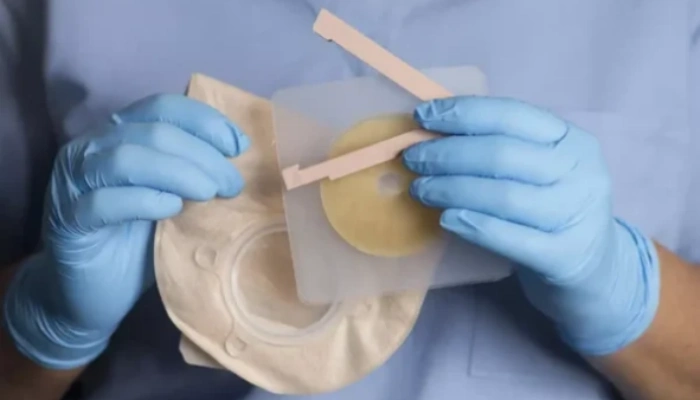
Ensure Precise Fit
- Precise Measurement: Measure the stoma before each change. Ensure the base plate opening is 1-2 mm larger than the stoma root.
- Standard Procedure: Apply from bottom to top. Press for 30 seconds with the warmth of your palm. This activates adhesion.
Utilize Sealing Accessories
- Fill Depressions: Use leak-proof rings or sealant. Fill scars and wrinkles. This creates a smooth adhesion surface.
- Reinforce Support: Use a convex base plate for retracted stomas. A stoma abdominal band is also recommended. This enhances the push-out effect.
Prefer High-Quality Products
- Material Selection: Choose a base plate with strong corrosion resistance. Ensure a high fit. Avoid using inferior or expired products.
- System Adaptation: Select a one-piece or two-piece system. Base this on the characteristics of the excrement. Use an anti-backflow device if necessary.
Strictly Scheduled Replacement
- Timely Emptying: Empty the ostomy bag when it is 1/3 full. This prevents excessive pulling.
- Replace on Time: Generally, replace the chassis every 3-5 days. Replace immediately if itching, odor, or edge lifting occurs.
These steps are the foundation of how to prevent ostomy bag leakage. Proper fitting is the first step in how to prevent ostomy bag leakage. Strict scheduling is the final key to how to prevent ostomy bag leakage.
FAQs about how to prevent ostomy bag leakage
Q1. Why does your ostomy bag leak at night?
This is usually because when lying flat, the loose abdominal skin forms wrinkles, causing the seal to fail. Additionally, the weight of the bag at night can strain the base and weaken its adhesive properties. Understanding these mechanics is the first step in how to prevent ostomy bag leakage.
Q2. How often should I change my ostomy bag?
It’s generally recommended to change it every 3 to 5 days. If itching, stinging, edge lifting, or leakage occurs, change it immediately. Do not extend its use. This is a key part of how to prevent ostomy bag leakage.
Q3. Which type of ostomy bag is best for preventing leaks?
For flat or retractable stomas, convex-faced ostomy bags are preferred, as they use pressure to push the stoma outwards to prevent leaks. Two-piece ostomy bags reduce the risk of skin damage from frequent removal and minimize the risk of seal failure.
Q4. Why does it start leaking shortly after changing the ostomy bag?
This is often due to incomplete skin cleaning and drying, or an overly large opening in the base, exposing the skin. Excrement quickly erodes the adhesive, causing the seal to fail rapidly.
Q5. Can redness and broken skin around the stoma cause leakage?
Yes, this creates a vicious cycle. Damaged skin cannot provide a strong adhesive surface, making it more prone to leakage; and the leaked excrement can further corrode the skin, worsening the damage.
Q6. Why does your ostomy bag always bulge and leak?
This is usually due to poor air drainage, causing excessive gas buildup inside the bag, creating pressure that pushes open the baseplate and breaks the seal. This often happens when consuming gas-producing foods or when the filter becomes clogged. Addressing these pressure issues is a key step in how to prevent ostomy bag leakage.
Q7. What to do if your ostomy bag easily falls off in the summer due to excessive sweating?
Sweat dissolves the baseplate’s adhesive, reducing its stickiness. In hot and humid environments, it is recommended to shorten the replacement cycle and ensure the skin is absolutely dry before applying the bag; use antiperspirant products if necessary.
Q8.Why does the ostomy bag leak easily during exercise?
During exercise, the contraction and stretching of abdominal muscles changes the shape of the skin, causing the baseplate to curl; combined with the centrifugal force and friction generated by body movement, this accelerates the baseplate peeling off. This is a common challenge in how to prevent ostomy bag leakage.
Q9.Why does the ostomy bag still leak after it has been emptied?
This may be related to the nature of the excrement. Thin, watery excrement (such as from an ileostomy) has extremely high permeability, easily seeping into the tiny gaps in the baseplate and dissolving the adhesive from within.
Q10.Why does the sealant leak even faster after application?
This is often due to improper application. If the sealant is applied to the base before it has fully dried and formed a thin film, the sealant will act as a lubricant, preventing the adhesive from making proper contact with the skin and resulting in reduced adhesion. Understanding this process is crucial for how to prevent ostomy bag leakage.
Conclusion - how to prevent ostomy bag leakage

Living with an ostomy doesn’t mean living in fear of leaks. While mastering how to prevent ostomy bag leakage takes time and patience, it is a skill that you can conquer. Remember, the journey to a secure seal begins with precise preparation—measuring correctly, ensuring skin is dry, and choosing the right products for your unique body.
Choosing a reliable ostomy bag with strong adhesion and a secure fit can significantly reduce leakage risks.
At Zodelo, every step from material selection to research and development adheres to one belief: to reduce users’ troubles and enhance their comfort. Zodelo will always be by your side, providing you with the most comfortable, safe and reassuring stoma care products.
More Resources about how to prevent ostomy bag leakage
- Leakage, Bleeding, Irritation and Other Common Ostomy Pouching System Issues-uchicagomedicine
- Ostomy Bag Leaking? Why Your Seal Fails and Medically Approved Next Steps-ubiehealth
- what to do when ostomy bag keeps leaking-zodelo
- Living With an Ostomy: FAQs— Mayoclinic
- Colorectal Cancer: Tips for Living with a Colostomy— Rochester

Top 10 Colostomy Bag Manufacturers In India 2026
top 10 colostomy bag

Top 10 Stoma Bag Suppliers Uk 2026
Top 10 Stoma Bag Sup

The Ultimate Guide To Sex With A Colostomy Bag
The Ultimate Guide T

Top 10 Colostomy Bag Manufacturers And Suppliers In China 2026
Top 10 Colostomy Bag