

colostomy bag food restrictions - foods to avoid with colostomy bag
Table of Contents
Quick Answer
In reality, patients with a stoma are not restricted from eating a wide variety of foods. There is no need for excessive anxiety. Although certain foods may trigger gas, unpleasant odors, diarrhea, or blockages, most patients can gradually return to a normal diet. This happens once their bodies have recovered. Every individual’s intestinal adaptation process is unique. The key lies in discovering a dietary rhythm that best suits your own body.
Here are some practical guidelines to help you navigate your colostomy bag food restrictions:
- Foods to consume in moderation: Be mindful of gas-producing foods (such as onions, legumes, and carbonated beverages). You should also watch out for high-fiber foods that are difficult to digest (such as corn, nuts, and celery), as well as foods that are excessively spicy or irritating.
- Foods recommended for increased consumption: Focus on low-fiber, easily digestible foods (such as white rice, noodles, and white bread). It is also good to eat high-quality protein sources (such as eggs, fish, and skinless chicken) along with cooked vegetables.
- Core Principle: Personal tolerance is paramount. Understanding your specific colostomy bag food restrictions is essential. It is recommended to introduce only one new food at a time. Start with a small portion and observe your body’s reaction. This will help you decide whether to consume larger quantities.

What is a Colostomy and Why Diet Matters
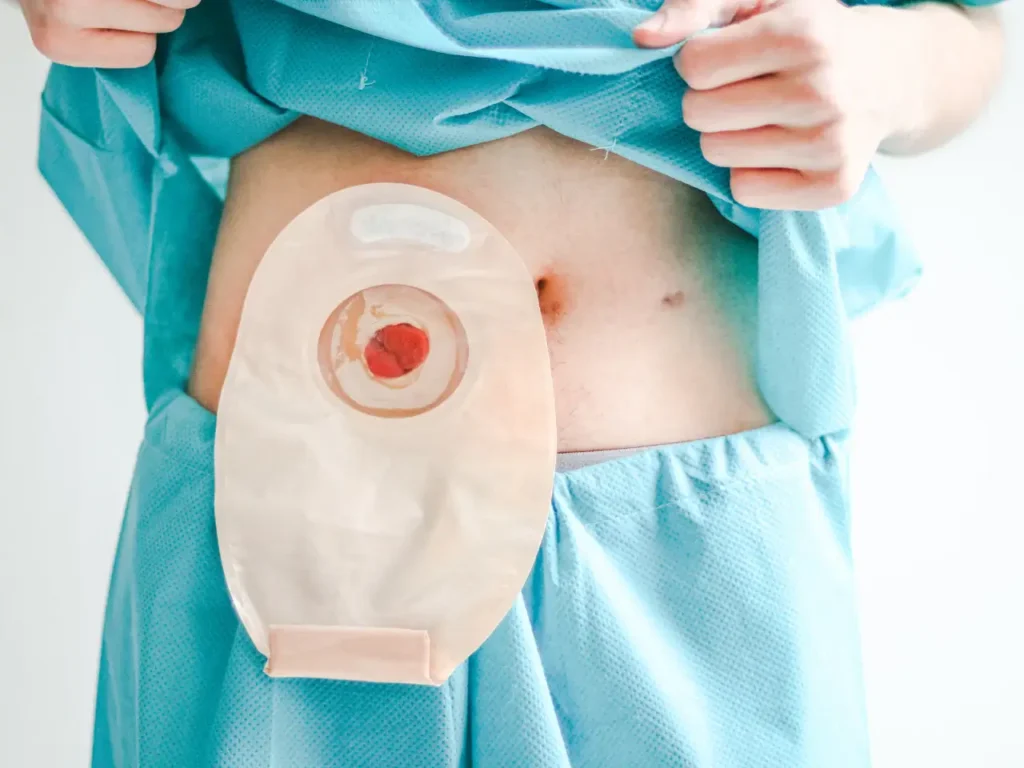
Having a stoma is not actually as frightening as it might seem. Essentially, it is a “new outlet” surgically created by a doctor on the abdominal wall. It is often referred to as an “artificial anus.” This procedure is typically performed to treat intestinal diseases. It diverts waste so that it no longer passes through the original anus. Instead, it exits through this small opening in the abdominal wall. The waste then collects in a specially designed stoma pouch.
This means that your digestive system has undergone a minor alteration. Previously, food waste would travel the entire length of the intestines. It would finally be expelled through the rectum and anus. Now, however, waste bypasses the diseased or surgically removed section of the intestine. It is rerouted to exit directly through the stoma instead.
Consequently, dietary choices become very important. It is crucial to understand your colostomy bag food restrictions. Consuming foods that are excessively greasy or spicy may cause waste to become very loose or watery. This could potentially irritate the skin surrounding the stoma.
Eating too many high-fiber foods could also be an issue. Foods like celery or corn might lead to a blockage at the stoma opening. Conversely, consuming gas-producing foods like onions or beans may cause the stoma pouch to distend with gas. Keeping these colostomy bag food restrictions in mind will help you manage your daily life much more comfortably.
How Food Affects Colostomy Bag Output
Every bite of food you consume directly impacts your waste products. To provide you with a more intuitive understanding of this relationship, we have compiled the four most common influencing mechanisms into the table below.
| Problem | Common Causes / Foods | Result |
|---|---|---|
| Gas | Beans, onions, cabbage, sweet potatoes, carbonated drinks, beer | The pouch inflates like a balloon (ballooning), which may cause embarrassing noises. |
| Odor | Eggs, fish, asparagus, garlic, onions, certain spices | Strong odor in the stool, leading to discomfort or embarrassment in social/public settings. |
| Stool consistency | Spicy/greasy foods (cause diarrhea); bananas, white rice, applesauce (firm stool) | Too loose can irritate skin and cause leaks; too dry makes it difficult to pass. |
| Blockage risk | Nuts, popcorn, corn, celery, mushrooms, fruit skins, glutinous rice products | Undigested food blocks the stoma, causing abdominal pain/bloating, and may require emergency care. |
foods to avoid with colostomy bag

While everyone’s physical reactions vary, certain foods are widely recognized by ostomy patients as “items requiring special attention.” During the post-operative recovery period, or before heading out for social engagements, it is advisable to avoid these foods as much as possible. At the very least, consume them in small quantities to see how your body reacts.
Here is a breakdown of common colostomy bag food restrictions to keep in mind:
Gas-forming foods
- Beans
- Cabbage
- Broccoli
These foods are particularly prone to generating gas during the digestive process. This causes your ostomy pouch to balloon up, a phenomenon known as “ballooning.” It is not only physically uncomfortable but can also lead to embarrassing noises in public settings.
High-odor foods
- Eggs
- Fish
- Garlic
These types of foods tend to give waste a strong, distinct odor. If you are heading out on a date, going to work, or visiting crowded places, it is recommended that you minimize or completely avoid consuming them. Being aware of these colostomy bag food restrictions can help you feel more confident in social situations.
Blockage-risk foods
- Corn
- Nuts
- Seeds
These foods are typically hard in texture or contain a high amount of coarse fiber. This makes them difficult to digest completely. They can easily get lodged at the stoma opening, preventing waste from passing through. This may cause abdominal bloating and pain. In severe cases, medical intervention at a hospital may be required.
Diarrhea triggers
- Spicy food
- Fried food
- Alcohol
Irritating foods can overstimulate your intestines. This causes waste to become very loose or even watery. This not only makes managing your ostomy pouch difficult but can also lead to redness and skin irritation around the stoma.
Understanding your personal colostomy bag food restrictions is key to comfort. By avoiding these common triggers, you can better manage your daily life.
Best Foods for Colostomy Patients
Now that we’ve covered which foods to avoid, let’s look at the foods that serve as “good friends” to ostomy patients. Consuming more of these foods will help regulate your stool consistency to an ideal state. It will also provide your body with a robust supply of energy.
Here are some excellent dietary choices that go beyond the usual colostomy bag food restrictions:
Stool-thickening foods (Foods that help form solid stool)
- Banana: Ripe bananas are rich in pectin. This nutrient absorbs excess fluid in the intestines, making loose stool easier to manage.
- Rice (Cooked Rice/Porridge): White rice or soft, well-cooked rice porridge is highly digestible. It provides energy while simultaneously helping to thicken and firm up stool.
- Toast (White Toast/Toasted Bread): Low-fiber white bread or toast is gentle on the digestive system and non-irritating. It helps stabilize bowel movements and reduce watery stool.
Gentle foods (Mild and easily digestible foods)
- Yogurt: Yogurt features a smooth texture that is easily absorbed. Its probiotics help regulate gut flora, thereby reducing unpleasant odors and bloating.
- Eggs: Boiled eggs or steamed egg custard are excellent sources of high-quality protein. They are very gentle on the intestines and aid in rapid post-operative recovery.
- Chicken: Skinless chicken breast or plain stewed chicken is low in fat and easy to digest. It provides the body with essential nutrients without placing an undue burden on the intestines.
Simply put, by making these two categories of food the foundation of your daily diet, your ostomy condition will become much more stable. While it is important to know your colostomy bag food restrictions, focusing on these beneficial foods is equally crucial. Your life will feel significantly easier and more comfortable!
Foods That Help Reduce Gas and Odor

In addition to avoiding foods that tend to cause gas and odors, there are actually several proactive strategies you can employ. These can help prevent awkward situations. Incorporating these items appropriately into your daily diet can make your life with a stoma feel fresher and more confident.
Here are some helpful items to consider alongside your usual colostomy bag food restrictions:
- Peppermint tea: Drinking a cup of warm peppermint tea after meals can be very soothing. It alleviates bloating, freshens your breath, and promotes overall relaxation.
- Yogurt: As mentioned previously, the active probiotics found in yogurt are excellent aids for regulating gut flora. Consuming it in moderation over the long term can effectively reduce odors generated within the intestines.
- Parsley: Add a sprinkle of parsley to your salads or cooked dishes. The natural chlorophyll in these herbs acts as an excellent “internal deodorizer.” It helps neutralize the distinct odors associated with waste.
- Cranberry juice: Drinking cranberry juice in moderation can also help reduce waste-related odors. This makes your daily stoma care routine much easier.
Of course, in addition to making internal adjustments through your diet, external physical aids are equally important. If you frequently experience anxiety regarding gas or odors, we recommend using stoma pouches equipped with activated charcoal filters or gas release valves. Zodelo’s Airlora Series, Calmlora Series, and Mellora Series stoma pouches are all designed to help you avoid such awkward moments.
By combining these proactive dietary tips with your knowledge of colostomy bag food restrictions, you can feel much more at ease. Using the right products alongside the right foods will help you avoid awkward moments and live with confidence.
Diet Tips by Recovery Stage
The dietary recovery after ostomy surgery is like giving the intestines a “retraining” process. One must be patient and not rush. Following the principle of gradual progression is key. Adjusting the diet according to the recovery of the body in stages helps avoid complications. It also helps you quickly return to a normal life.
Stage 1: Post-surgery (Early Recovery Period after Surgery)
- Low fiber diet (Low-fiber Diet): During this stage, the intestines have just undergone surgery and are very fragile. The diet should strictly follow a step-by-step transition: “clear liquid -> liquid -> semi-liquid -> soft food”. It is recommended to eat more white rice, soft noodles, white bread, steamed egg soup, peeled fish meat puree, and chicken puree. Be sure to avoid coarse grains, high-fiber vegetables, and fried spicy foods. This is a crucial part of initial colostomy bag food restrictions, as you want to try not to put any burden on the intestines.
Stage 2: Adjustment (Adaptation Adjustment Period)
- Slowly introduce foods (Slowly Introduce New Foods): When the intestinal function gradually stabilizes, you can start to try more types of food. It is recommended to introduce only one new food at a time. Start with a small amount for tasting. Observe for 2 to 3 days. If there are no uncomfortable reactions such as abdominal distension, diarrhea, or blockage, gradually increase the portion or try the next type. This process can help you precisely figure out your personal “food blacklist” and “safe zone” within your colostomy bag food restrictions.
Stage 3: Long-term (Long-term Stable Period)
- Normal diet possible (Return to Normal Diet Possible): Most patients can gradually transition to a normal diet after complete recovery. You can achieve balanced nutrition and a rich variety of foods. As long as you adhere to the good habits of “chewing slowly, eating small meals frequently, and not overeating”, you can still enjoy various delicacies. You can have a high-quality life like an ordinary person, while still keeping your colostomy bag food restrictions in mind!
Common Mistakes Colostomy Patients Make

During the recovery period after ostomy surgery and in daily life, many patients tend to fall into common pitfalls. This is often due to excessive nervousness or impatience. By avoiding these misconceptions, you can avoid many detours in your ostomy life:
Eating too much fiber too early : The intestinal tract is still very fragile after surgery. If you consume corn, celery, nuts, and other indigestible rough fiber foods too early, it is very likely to cause an ostomy blockage. You must give the intestinal tract enough time to adapt. Strictly following the principle of gradually transitioning from a low-fiber diet is one of the most important colostomy bag food restrictions to remember.
Drinking carbonated drinks : Cola, beer, soda water, and other carbonated beverages produce a large amount of gas. This causes the ostomy bag to bulge. Additionally, if you drink too fast, the swallowed air will also aggravate bloating.
Ignoring hydration : Many patients are afraid of having a large amount of excretion and thus avoid drinking water. This is a huge mistake! Especially for patients with an ileostomy, the body loses more water and salt. You must ensure adequate water intake every day. Staying hydrated is a vital part of managing your overall colostomy bag food restrictions.
Not tracking food reactions: Everyone’s body tolerance is different. What is a sweet treat for one person may be poison for another. If you don’t develop the habit of recording your diet, it is very difficult to figure out exactly what you can eat and what you can’t. It is recommended that everyone prepare a small notebook. Record what you ate and the reactions of the ostomy to better understand your personal colostomy bag food restrictions.
Practical Daily Eating Tips
In addition to knowing “what to eat”, mastering “how to eat” is equally important. By developing the following simple and practical daily eating habits, you can make your ostomy condition more stable. Your life will become more relaxed and comfortable:
Chew food slowly : For each mouthful of food, make sure to chew thoroughly before swallowing. Chewing the food thoroughly significantly reduces the burden on the digestive system. It also effectively prevents undigested food residues from blocking the ostomy. This is the simplest and most important step in protecting the intestines and a key part of managing your colostomy bag food restrictions.
Eat small meals : It is recommended to change the three meals a day to five to six small meals a day. Avoid overloading the intestines with one large meal. Eat regularly in small portions. This will make the excretion of ostomy products more stable and reduce the fluctuations. Consequently, daily management becomes much easier.
Drink enough water : Ensure adequate water intake every day (about 1500-2000 milliliters). Adequate water intake prevents dehydration. It also helps soften the excretions, allowing the intestines to function more smoothly. It is the foundation for maintaining bodily functions.
Keep a food diary : Prepare a small notebook. Jot down what you ate, what you drank, and the subsequent reactions of your ostomy (such as bloating, odor, or diarrhea). This exclusive “dietary manual” will help you quickly understand your eating pattern. It will also eliminate the frustration of making choices when eating in the future, helping you easily navigate your colostomy bag food restrictions.
FAQs about colostomy bag food restrictions
Q1. Can I eat salad with a colostomy bag?
It is not recommended to eat raw vegetables in the early postoperative period. The fibrous texture of raw vegetables is too coarse and can easily cause blockage. Once the body has recovered, you can chop the vegetables very finely and chew them thoroughly before having a small amount of them.
Q2. What foods cause blockage?
Corn, nuts, popcorn, celery, mushrooms and foods made from glutinous rice are the most likely to cause blockage. These foods are difficult to digest, so it is recommended to eat them as little as possible or avoid them altogether.
Q3. Can I drink alcohol?
You can drink in moderation, but alcohol can irritate the intestines and cause diarrhea or dehydration. When drinking alcohol, remember to drink plenty of water and never drink on an empty stomach.
Q4. How to reduce gas in ostomy bag?
Consume less of beans, onions, and carbonated beverages. Chew your food slowly. Chew it thoroughly. Drinking some mint tea or yogurt can also help. It reduces gas production in the intestines. Keep these colostomy bag food restrictions in mind.
Q5. Can I eat spicy food?
It can be too spicy, which may irritate the intestines and cause diarrhea as well as redness on the skin. It is recommended that during the recovery period, one should avoid spicy food completely. Once the body has fully adapted, one can try a little spiciness occasionally.
Q6. Is coffee safe?
Coffee can accelerate intestinal peristalsis. It may cause diarrhea. If you really want to drink it, limit yourself to one cup per day. Remember to drink plenty of plain water as well. This is one of the key colostomy bag food restrictions to keep in mind.
Q7. Can I eat popcorn or nuts?
It is strongly advised against consuming them. These two substances are the “number one killers” of stoma blockage. To avoid abdominal pain and the risk of seeking medical treatment, it is best to completely give them up.
Q8. How can I control odor?
Consume less of onions, garlic, and fish. Eat more yogurt. Meanwhile, use an ostomy bag with activated carbon filter sheets. This can effectively absorb the unpleasant smell. Remember, these are helpful colostomy bag food restrictions to manage odors.
Q9.What should I eat if I have diarrhea?
Have some bananas, apple puree, white rice, or white toast. These foods help form your stool. At the same time, avoid raw, cold, and greasy foods. This gives your intestines a rest. Understanding these colostomy bag food restrictions will help you feel more comfortable every day.
Q10.Do I need to drink more water?
It is extremely necessary. Patients with ostomies are prone to losing water. Therefore, it is recommended that they drink at least 1500-2000 milliliters of water every day. This helps prevent dehydration. It also helps to soften the excretions. Just as you learn about colostomy bag food restrictions, staying hydrated is another key part of your daily care routine.
Conclusion - colostomy bag food restrictions

When it comes to ostomy care, it’s normal to feel confused or worried. But please believe in yourself. You are fully capable of regaining control of your life.
An ostomy is not the end of life. It is a brand new beginning. You can still embrace everything you once loved. You can continue to work. You can enjoy delicious food, travel, and exercise. Modern care technologies are very advanced. Just master the correct methods. An ostomy can definitely become a part of your body.
Regarding diet, remember this. Dietary adjustments are made to make you more comfortable. They are not meant to limit your happiness. Everyone’s body reaction is unique. You will find the rhythm that suits you best through gradual experimentation. For example, you might worry about colostomy bag food restrictions at first. But don’t over-restrict yourself out of fear. Take it slow. You will get there.
At Zodelo, every step from material selection to research and development adheres to one belief: to reduce users’ troubles and enhance their comfort. Zodelo will always be by your side, providing you with the most comfortable, safe and reassuring stoma care products.
More Resources about colostomy bag food restrictions

Top 10 Colostomy Bag Manufacturers In India 2026
top 10 colostomy bag

Top 10 Stoma Bag Suppliers Uk 2026
Top 10 Stoma Bag Sup

The Ultimate Guide To Sex With A Colostomy Bag
The Ultimate Guide T

Top 10 Colostomy Bag Manufacturers And Suppliers In China 2026
Top 10 Colostomy Bag