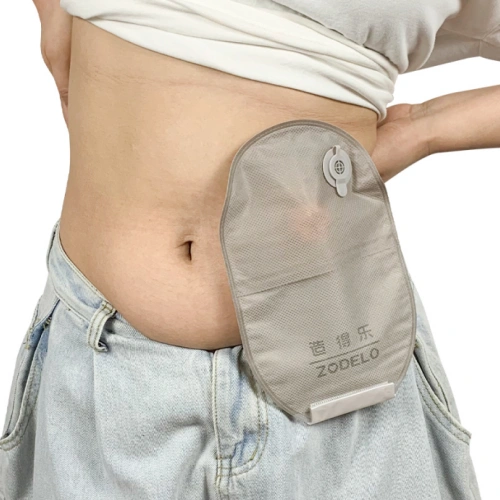
Convex Wafer vs Flat: What’s the Difference and Which One Is Better?
Table of Contents
If you are selling ostomy products, you may have encountered such situations: some customers complain about leakage problems with the products. While others inquire whether you offer convex gaskets. However, adding a new product line means additional costs, inventory pressure, and market uncertainties.
For distributors and medical suppliers, understanding this difference: Convex Wafer vs Flat is crucial. It can effectively avoid leakage issues and enhance customer satisfaction. This article will provide you with a detailed explanation of convex wafer vs flat.
Quick Overview – Convex Wafer vs Flat Comparison Table
In the field of ostomy care, the difference between Flat Wafer vs Convex Wafer does not lie in which one is better. Instead, it lies in the degree of matching between the ostomy shape and the sealing requirements.
Flat Wafer is suitable for situations where the ostomy protrudes naturally and the abdominal skin is smooth.
Convex wafer applies structural bulges to exert gentle pressure on the surrounding skin of the ostomy, thereby improving the sealing effect for depressed or level ostomies and reducing the risk of leakage.Here is the convex wafer vs flat comparison table.
| Flat Wafer | Convex Wafer |
Structural Design Working principle | The base surface is flat. | The central area protrudes outward in an arc shape. |
Skin pressure | It forms a seal by naturally adhering to the skin through adhesive. | By applying a slight pressure, the depressed stoma is “pushed out” to enhance the seal. |
Applicable ostomy types | There is almost no additional pressure. | Generate controllable and evenly distributed pressure. |
Leakage control capability | Protruding Stoma (outwardly projecting stoma) | Retracted / Flush Stoma |
Requirements for skin morphology | Regular sealing effect | Seal Integrity |
Usage risks | Requires a relatively flat abdomen | Can adapt to mild skin folds or depressions |
Manufacturing complexity | Lower risk | If not selected properly, it may cause pressure-induced skin damage |
Market positioning | Relatively simple structure | Higher precision of the mold and pressure control are required |
Structural Design Working principle | Mainstream in entry-level and price-sensitive markets | The growth of mature markets and leak-proof demand groups is significant. |
What Is a Flat Ostomy Wafer?
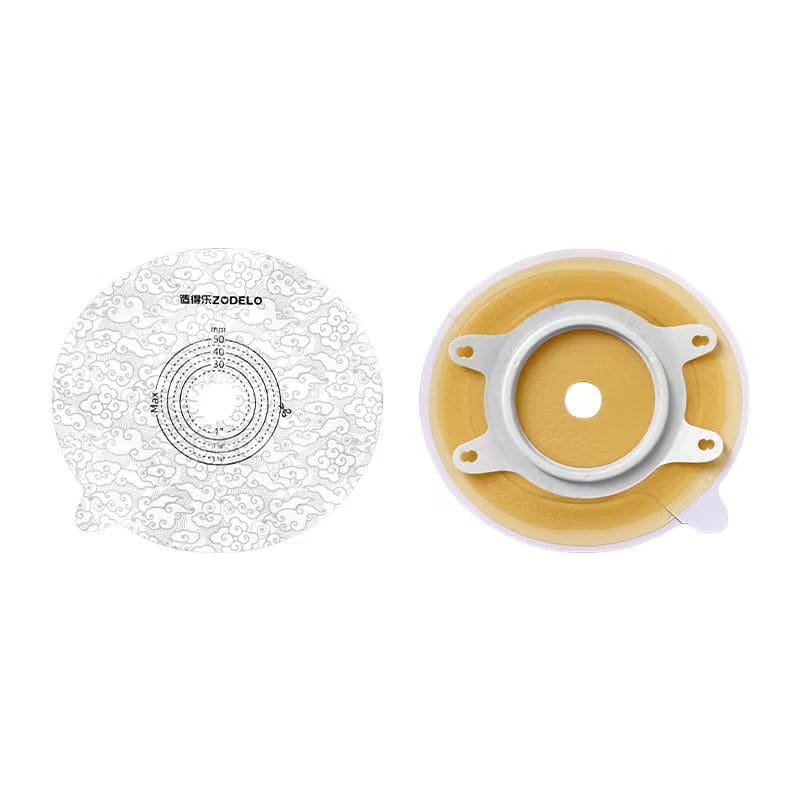
To understand convex wafer vs flat, we should first understand what is a flat ostomy wafer. This is the most common type of skin barrier. The surface of the flat skin barrier is smooth and can be directly adhered to the skin. It is suitable for cases where the stoma protrudes and the surrounding skin is flat without any depressions.
The core structure of Flat Wafer includes:
- Flat bonding interface
- Medical-grade hydrocolloid or composite adhesive layer
- Cutting aperture (pre-cut or cuttable)
- Outer ring support layer (usually non-woven fabric or PE film)
How Flat Ostomy Wafer works?
The sealing mechanism of Flat Wafer is based on:
The adhesive layer forms a physical adhesion with the skin. It uses hydrocolloid to absorb a small amount of exudate to enhance the stability of the adhesion.
It relies on the natural protrusion of the stoma to form a “natural drainage”.
Applicable population:
- Protruding stoma.
- The height of the stoma is over1 cm.
- The skin around the stoma is flat.
- No history of frequent leakage.
- Good postoperative recovery and normal tissue tension.
What Is a Convex Ostomy Wafer?
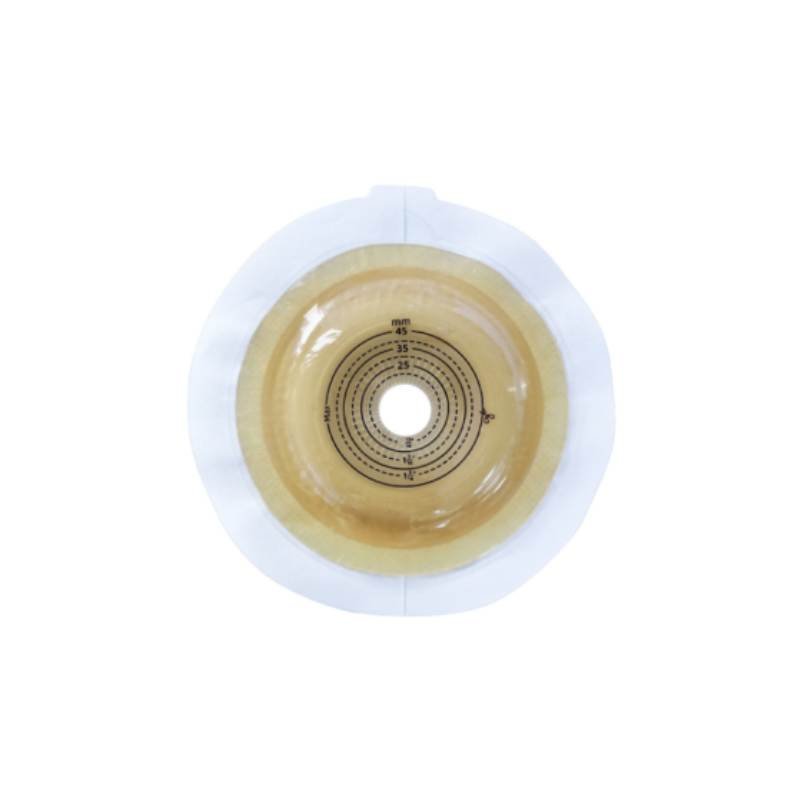
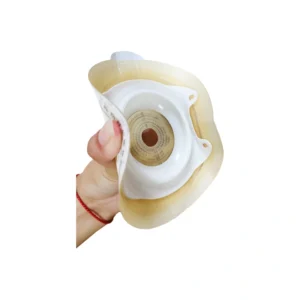
To understand convex wafer vs flat, we also needs to understand what a convex wafer is. The raised part in the middle exerts light pressure on the skin around the stoma. It helps to enhance the sealing between the stoma base and the skin, preventing leakage. Convex ostomy wafer is suitable for patients with flat stoma, slight depression, and uneven or wrinkled skin around the stoma.
Why convex ostomy wafer matters?
When the stoma is level with the skin, sunken inward, or has skin folds around it, the excrement is less likely to directly enter the ostomy bag. The convex ostomy wafer can slightly compress the surrounding tissue of the stoma inward. This makes the stoma stand out more, improving the flow of excrement. By changing the contact angle, the sealing degree is enhanced to prevent leakage.
Pressure mechanism
The central raised area exerts directional pressure on the skin around the stoma.
The pressure causes the edge of the stoma to slightly outwardly protrude.
This enhances the sealing fit between the adhesive and the skin.
It reduces the infiltration of excretions into the skin gap.
Light vs Deep convex
The convex wafer is not a single type. It is usually classified based on the height of the convexity and the degree of pressure:
Light Convex Wafer:
- Less convex
- Milder pressure
- Suitable for mild level-anastomosis
- Relatively low risk
Moderate / Deep Convex Wafer:
- The curvature is more pronounced
- It provides stronger directional pressure
- It is suitable for obvious depressed ostomy
- It has higher requirements for pressure tolerance
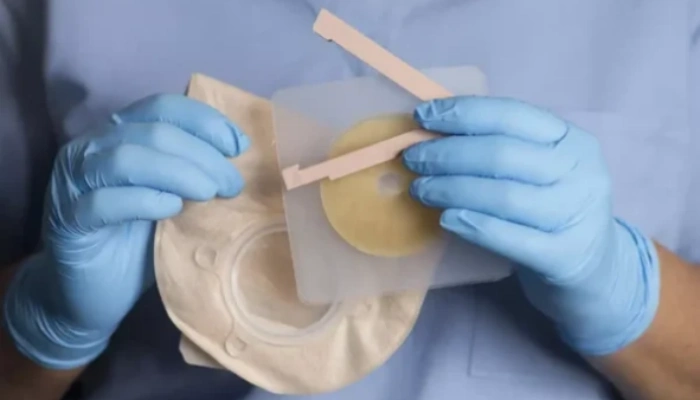
When Should You Use a Convex Wafer?
1. Retracted stoma
When the stoma is lower than the skin surface or significantly retracts inward, it is called Retracted Stoma.
In this case: Excrement is prone to spreading on the skin surface. The adhesive edge is easily eroded, leading to leakage.
Using convex wafer for retracted stoma can apply directional pressure through the convex structure.
This promotes the stoma to outwardly protrude relatively, improving the flow of excrement. Enhancing the sealing integrity.
2. Flush stoma
Flush Stoma refers to the situation where the stoma is level with the skin surface, without any natural protrusion. This structural issue can prevent excretions from directly entering the pouch. At the same time, it causes leakage around the stoma, increasing the risk of skin irritation and allergies.
In such cases, the Light Convex wafer is usually sufficient to improve the sealing effect. By adjusting the tension of the skin around the stoma, the contact angle of the adhesive is improved. The sealing block is strengthened, reducing the risk of leakage.
3. Frequent Leakage Problems
If the patient experiences frequent leakage when using the Flat Wafer, it will significantly shorten the service life of the ostomy skin barrier. The skin around the stoma will repeatedly be irritated and become red and swollen.
After excluding factors such as incorrect size selection and improper application method, it is usually recommended to switch to the Convex Ostomy Wafer. This can effectively improve the stability of the edge seal and prevent the adhesive from losing its stickiness, thereby extending the service life of the ostomy wafer.
4. Uneven skin
Abdominal folds, obesity or scar tissue can cause gaps between the ostomy wafer and the skin, resulting in loose adhesion.
The convex ostomy wafer can to some extent fill in minor depressions, balance pressure distribution and improve overall fit.
Pros and Cons of convex wafer vs flat
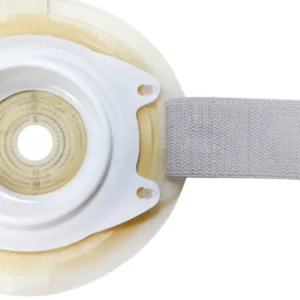
In ostomy care product market, merely comparing “sealing effect” is not sufficient. Factors such as comfort, risk, manufacturing complexity, and market positioning should all be taken into consideration comprehensively.Pros and cons of convex wafer vs flat are as follows:
Advantages of Flat Wafer
- Low pressure, high comfort
No additional mechanical pressure is exerted on the surrounding tissues of the stoma.
- Wide range of applications
Suitable for most protruding stomas.
- Lower risk
The probability of pressure-induced skin damage is lower.
- Relatively simple manufacturing structure
Lower mold requirements and more stable cost control.
Disadvantages of Flat Wafer
Limited sealing ability for depressed or flush stomas
The fitting stability decreases when the skin is uneven.
The incidence of leakage problems may be higher.
Advantages of Convex Wafer
- Enhance sealing performance
Improve adaptability to depressions or complex skin shapes.
- Reduce leakage risk
Especially suitable for retracted stomas.
- Extend the lifespan of ostomy wafers
The lifespan of ostomy wafers is more stable.
Disadvantages of Convex Wafer
- Risk of pressure injury
If the convexity is not chosen appropriately, it may cause skin damage.
- Not suitable for all patients
It should be used with caution for patients in the early postoperative period or those with fragile skin.
- Higher manufacturing complexity
Higher requirements for mold precision and pressure distribution control are needed.
- Slightly higher cost
It is more difficult to promote in the price-sensitive market.
Can You Switch from Flat to Convex wafer?
1. When can a change be considered?
Generally, in the following situations, the nursing staff will recommend switching from Flat to Convex:
- Frequent leakage occurs when using Flat
- The stoma height gradually decreases (such as changes during the postoperative recovery period)
- Weight changes cause changes in the abdominal contour
- The stoma is flush with or slightly retracted against the skin
- In these scenarios, the pressure structure of Convex may improve the sealing integrity (Seal Integrity).
2. Key factors to be evaluated before replacement
- The height of the stoma is greater than 1 cm
- The shape of the stoma (Protruding / Flush / Retracted)
- The integrity of the skin around the stoma
- Whether there is a history of pressure injuries in the past
- Whether the current leakage is related to the fitting method
Is Convex Better Than Flat?
Convex wafer vs flat: Is a convex wafer superior to a flat wafer? This is one of the most common misconceptions in ostomy care. From a professional perspective, Convex is not a “better” product; rather, it is a solution that is “more tailored to specific structural issues”.
The core difference between Flat and Convex lies in the principles of structural mechanics, not in the quality level.
The core difference between Flat and Convex is that Flat relies on natural protrusion to form a seal, while Convex relies on a pressure mechanism to improve the seal.
Their indications are completely different.If used in the wrong scenario, using a deep convex base in a protruding stoma may cause unnecessary pressure. Using a flat base in a significantly depressed stoma may result in continuous leakage.
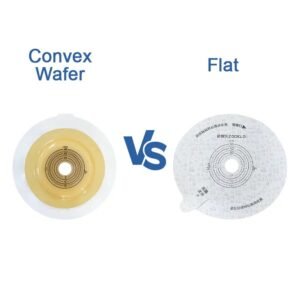
From the perspective of sealing effect:
When the convex part is placed in a concave or flush-shaped stoma, the sealing effect is usually more stable.
When the flat part is placed in a normal protruding stoma, the sealing is equally reliable and more comfortable.
Therefore, “better” depends on:
- The height of the stoma
- The skin contour
- The pressure tolerance
From the perspectives of comfort and risk analysis
| Flat Wafer | Convex Wafer |
Comfort level | Higher | Dependent on the degree of convexity |
Risk of stress | Extremely low | There is a risk of pressure |
Wide applicability | Higher | Subject to the limitations of the indications |
From the perspective of market and product positioning
The proportion of convex usage has been increasing year by year.
Medical care personnel place greater emphasis on controlling fluid leakage.
But in price-sensitive markets:
- Flat remains the mainstream product.
- Excessive promotion of Convex may increase the cost pressure.
- Therefore, from the perspective of product planning, the two should form a complementary structure rather than an alternative relationship.
FAQs about convex wafer vs flat

Q1. Is the convex base definitely more leak-proof than the flat base?
Not necessarily. The leak-proof effect depends on the individual’s stoma condition.
For cases with depressed or flush stomas, the convex wafer usually enhances Seal Integrity to prevent leakage. However, for naturally protruding and flat stomas, a flat base can also provide a stable seal.
Q2. Under what circumstances must convex wafer be used for retracted stoma?
When the stoma is significantly lower than the skin surface (Retracted Stoma), excretions are prone to spread on the skin surface, resulting in continuous leakage.
Q3. Can the convex wafer be used for a long time?
Yes, but regular assessment is required.
Some patients may experience changes in the height of the stoma after recovery or body shape alteration. If the stoma returns to a natural protrusion, the deep convex底盘 may not be necessary to continue using.
Q4. Will the convex base cause skin damage?
With the correct selection of the degree of convexity and the fitting method, it will not cause skin damage.
However, if the induration of the stoma is too deep, the skin has poor tolerance, or if there is continuous pressure on the stoma for a long time, local compressive injuries may occur.
Q5. Is it necessary for the dealer to offer both flat chassis and raised chassis at the same time? Yes. Different types of ostomy structures have different requirements. Nursing staff usually recommend different structures based on the condition of the ostomy. A single product line may not be able to meet all the needs.
Q6. What are the differences between Light Convex and Deep Convex?
The difference lies in the height of the convexity and the intensity of the pressure.
Light Convex: Suitable for mild levelled ostomy
Deep Convex: Suitable for significantly depressed ostomy
Q7. How is the trend of convex base plates in the global market?
In mature markets such as Europe and the United States, the usage rate of convex wafers has been increasing year by year. The main reasons are:
The popularization of nursing education
Greater emphasis on liquid leakage control
More specialized product structure segmentation
Q8. As a brand or distributor, how should you plan the Flat and Convex product lines?
Suggested strategy:
- Entry-level market: Focus on flat wafers
- Mid-to-high-end market: Flat + Light Convex wafers
- Mature market: Complete product line
At the same time, attention should be paid to:
- Production stability
- Certification support
- Sample testing feedback
Conclusion - convex wafer vs flat
There is no absolute answer as to which is better between convex wafer vs flat. The key lies in the matching degree of the patient’s stoma condition and the stoma wafer. The flat wafer is suitable for stoma environments where the stoma naturally protrudes and the skin is smooth.The convex wafer improves the sealing effect of depressed or level stomas through structural pressure.
For distributors and brand owners, correctly understanding convex wafer vs flat wafer. Can not only reduce liquid leakage complaints but also enhance customer satisfaction and the stability of repeat purchases. In mature markets, the demand for Convex wafer is increasing. In price-sensitive markets, Flat skin barrier remains the mainstream choice.
If you are evaluating whether to expand the Convex product line or wish to optimize your existing ostomy product portfolio, we can offer:
- Different convexity structure solutions
- OEM / Private Label support
- Sample testing and market matching suggestions
- Certification and production stability guarantees
Welcome to cooperate with us. Zodelo will assist you in formulating more suitable Ostomy pouch and Ostomy wafer strategies.
More Resources about convex wafer vs flat:

Top 10 Urostomy Bag Brands in 2026
Top 10 Urostomy Bag

Top Ileostomy Bag Brands in 2026
Top Ileostomy Bag Br

Ostomy Paste vs Ring: What’s the Difference
Ostomy Paste vs Ring
Ostomy Wafer Sizes: A Complete Guide to Choosing the Right Fit
Ostomy Wafer Sizes: