Open-Ended Ostomy Pouch vs Closed: Key Differences Every Distributor Should Know
Table of Contents
Choosing the right Ostomy Pouch is not merely a matter of product selection. It directly affects customer satisfaction, repeat purchase rate, and long-term business development.
For many medical distributors and wholesalers, they will encounter a problem. Open-Ended Ostomy Pouch vs Closed, how to balance the two in the product portfolio. This article compares Open-Ended Ostomy Pouch vs Closed. The aim is to help distributors, hospitals and suppliers make informed purchasing decisions based on actual usage.
What to Know About Closed Ostomy Pouches?
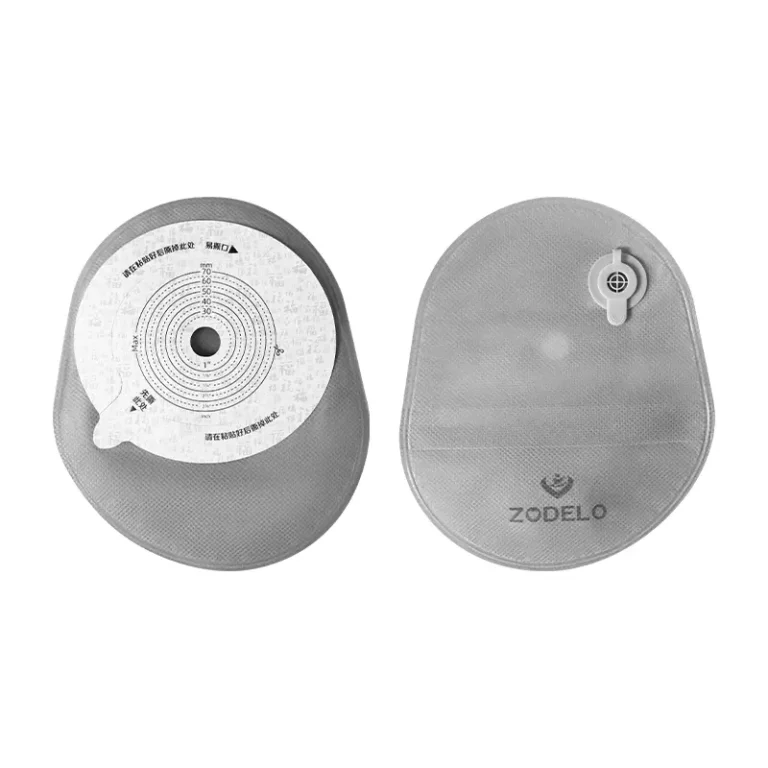
To understand Open-Ended Ostomy Pouch vs Closed, one must first understand what a closed ostomy pouch is. Closed ostomy pouches are disposable ostomy bags without discharge outlets. When the bag is full of excrement, it should be removed as a whole and discarded instead of being emptied and reused. Closed ostomy pouches consist of skin barrier and closed pouch. It has the function of protecting the skin around the stoma, preventing leakage and odor. The main groups are patients with colostomy, those with formed or semi-formed stools, those with regular bowel movements, and those who have high requirements for privacy, appearance and convenience.
Features:
- No discharge outlet.
- Single-use.
- Replace and discard, simple operation.
Suitable for:
- Colostomy patients.
- Patients with formed excreta and stable frequency.
- People who pay attention to the quality of life and privacy.
Pros of closed ostomy pouches
- More suitable for patients with high discharge frequency, reducing the frequency of replacement.
- The usage period is longer, and the long-term cost is more controllable.
- It can reduce the risk of skin irritation caused by bag replacement.
- Suitable for professional care environments, with stronger functionality. For distributors, it belongs to a high value-added product line.
Cons of closed ostomy pouches
- Higher requirements are imposed on the operational capabilities of users or caregivers.
- There is a risk of leakage and unpleasant odors.
What to Know About Open-Ended Ostomy Pouch (Drainable Pouches)?
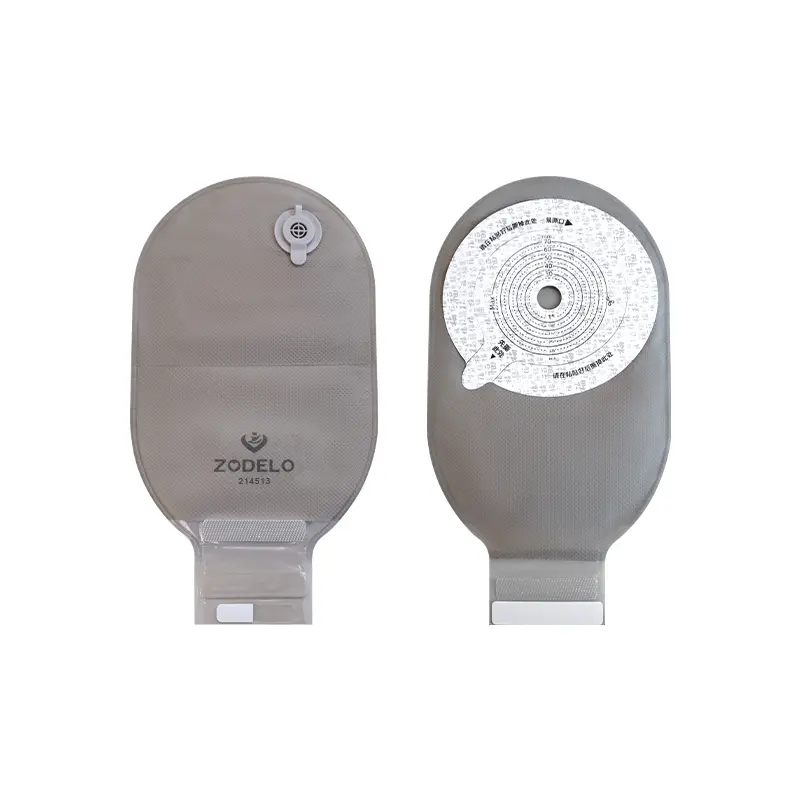
To understand Open-Ended Ostomy Pouch vs Closed, we also need to know what a drainable ostomy pouch is. The drainable pouch refers to a type of ostomy bag whose bottom can be opened and from which excrement can be repeatedly emptied. It is mainly used for patients whose excrement is in a liquid or semi-liquid state and who have a high frequency of excretion. The drainable pouch system usually consists of a pouch body, an outlet, a closure system and a coupling system.
Features:
- No discharge outlet.
- Single-use.
- Replace and discard, simple operation.
Suitable for:
- Colostomy patients.
- Patients with formed excreta and stable frequency.
- People who pay attention to the quality of life and privacy.
Pros of drainable pouch
- The usage is simple and the care burden is low.
- It is disposable and more hygienic. The risk of infection is low.
- It has high patient acceptance and is suitable for initial use.
- It has a high consumption characteristic, and for distributors and hospital supply chains, the repeat purchase is stable.
Cons of drainable pouch
- Not suitable for users with high-output ostomy.
- When used for a long time, the overall cost is higher than that of drainable pouches.
- Frequent replacements may affect skin health.
- Why Understanding Open-Ended Ostomy Pouch vs Closed Matters for B2B Buyers.
Key Differences Between Open-Ended Ostomy Pouch vs Closed
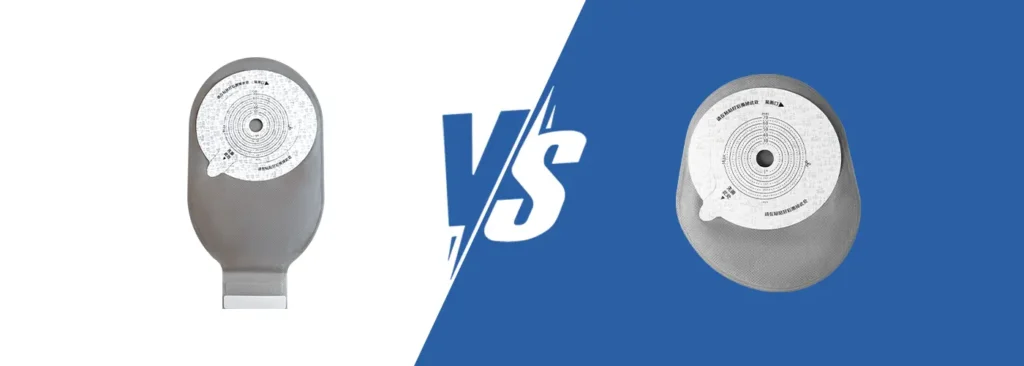
In ostomy care, Open-Ended Ostomy Pouch vs Closed are two solutions designed for different excretion characteristics, usage frequencies, and care scenarios. Understanding the differences in functionality, usage methods, and long-term care performance between the two is an important basis for medical staff, distributors, and purchasing decision-makers to make reasonable selections.
The key differences between drainable pouch and closed pouch are as follows:
Comparison dimension | Drainable Pouch | Closed Pouch |
Basic structure Usage method | The bottom is equipped with a removable outlet that can be repeatedly emptied. | Fully enclosed structure, no outlet |
Type of excrement suitable for | After emptying, it can be used continuously and the contents should be replaced periodically. | Requires overall replacement when the excrement is full |
Adaptability to excretion frequency | Liquid or semi-liquid excreta. | Formed and relatively stable solid excrement |
Replacement frequency | Suitable for high-frequency excretion needs. | More suitable for low-frequency and regular defecation |
Nursing efficiency | Relatively low cost. | Relatively high |
Long-term usage cost | The emptying operation is flexible, reducing the frequency of replacement. | Simple operation, but frequent replacements |
Skin friendliness | More cost-controllable (lower consumable consumption). | Higher long-term usage cost for consumables |
Use at night and while out | Reducing frequent replacements helps to reduce skin irritation. | Frequent replacements may increase skin burden |
Learning and operation requirements | More suitable for night and long-duration outdoor scenarios. | Requires early replacement at night for use during the day |
Typical applicable population | Requires a certain level of operation familiarity. | Intuitive operation, low learning cost |
Clinical and market application trends | Patients with ileostomy, long-term stoma patients, care institutions. | For some patients with colostomy and short-term users |
Comparison dimension | Widely used globally, the mainstream choice for long-term care. | As a supplementary product, it has existed for a long time |
Open-Ended Ostomy Pouch vs Closed Use Cases for Different Markets and Clients
In the procurement of ostomy bags, the choice between Open-Ended Ostomy Pouch vs Closed is not a matter of personal preference, but rather a professional decision directly related to the usage scenario, nursing resources, and inventory structure.
1.For Hospitals and Clinics
Closed ostomy pouch is usually more suitable for use as a regular hospital inventory:
- It is easy to use, single-use, and has low costs for training nurses.
- It reduces cleaning and secondary contact, making it more hygienic and lowering the risk of infection.
- It is more suitable for patients undergoing surgery in the early postoperative period or for short-term hospital stays.
Drainable ostomy pouches are usually kept as supplementary stock and are mainly used for:
- Patients with a high frequency of excretion.
- Long-term hospitalized patients who need to reduce the frequency of bag replacement.
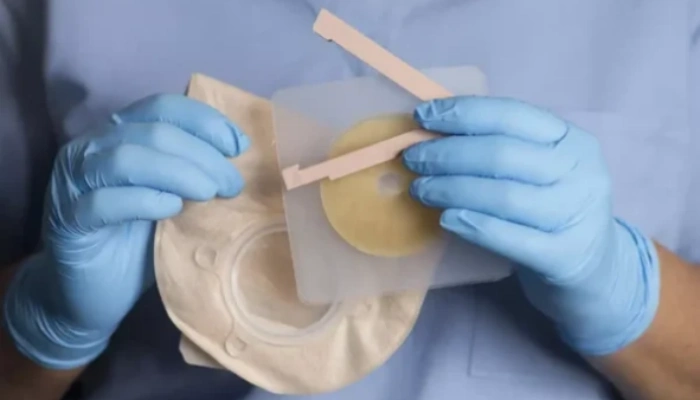
2.For Medical Distributors
Closed ostomy pouch:
- High unit consumption rate
- Stable repeat purchase frequency
- More suitable for standardized sales and large-scale distribution
Drainable ostomy pouch:
- The single-use cycle is longer.
- The unit price is usually higher than that of the closed pouch.
- It is more suitable for enhancing the overall profit structure as a high-value-added product.
3.For Home Care Suppliers
Closed ostomy pouch:
- High frequency of shipments
- Suitable for short-term care or users with low output
- Requires higher requirements for storage and logistics turnover
Drainable ostomy pouch:
- The individual bag can be used for a longer period.
- The frequency of shipments is relatively low.
- The user satisfaction and dependence are higher.
How to Decide Which Ostomy Pouch Fits Your Product Portfolio
Step 1: Identify Client and Patient Needs
From the perspective of procurement experience, the demand for ostomy bags typically comes from three types of end-users:
- Hospitals and clinics (short-term use, standardized care)
- Home care service providers (long-term use, priority given to stability)
- Retail or pharmacy channels (ease of use and versatility)
Step 2: Analyze Usage Frequency and Stoma Type
This is the key professional dimension that distinguishes open-ended ostomy pouches from closed ones.
High drainage frequency is more suitable for drainable ostomy pouches. By emptying rather than frequent replacement, it reduces the burden of use.
Low drainage frequency (common in colostomy) makes the closed ostomy pouch more efficient. The usage process is simple and easy to standardize management.
Step 3: Consider Storage and Logistics
The choice of the type of ostomy bag will directly affect your supply chain structure.
Closed Ostomy Pouch:
- High consumption rate.
- High frequency of shipments.
- High requirements for warehouse turnover.
- Suitable for mature and large-scale logistics systems .
Drainable Ostomy Pouch:
- Single-bag usage has a longer cycle.
- The delivery rhythm is more stable.
- Higher requirements for inventory forecasting.
- More suitable for long-term projects or subscription-based supply.
Step 4: Evaluate Supplier Support and OEM Capability
In medical consumables that are frequently used in surgeries, the supplier’s capabilities are often more important than the parameters of a single product.
The key evaluation points include:
- Whether they can consistently provide both open-ended and closed types of ostomy pouches.
- Whether they support different specifications, materials, or packaging combinations.
- Whether they have the ability for OEM/private label production.
- Quality consistency and batch stability.
- Technical support and completeness of product information.
Step 5: Match Product Type with Portfolio Strategy
Mature B2B purchasing usually does not “choose only one option”, but rather builds a hierarchical product portfolio: Closed ostomy pouch:
- As a basic model, it meets mainstream demands and ensures stable production and cash flow. Drainable ostomy pouch
- As a professional model or upgraded version, it covers high exhaust frequencies and long-term usage scenarios, thereby enhancing the overall product value and customer loyalty.
One-Piece vs Two-Piece closed colostomy bags
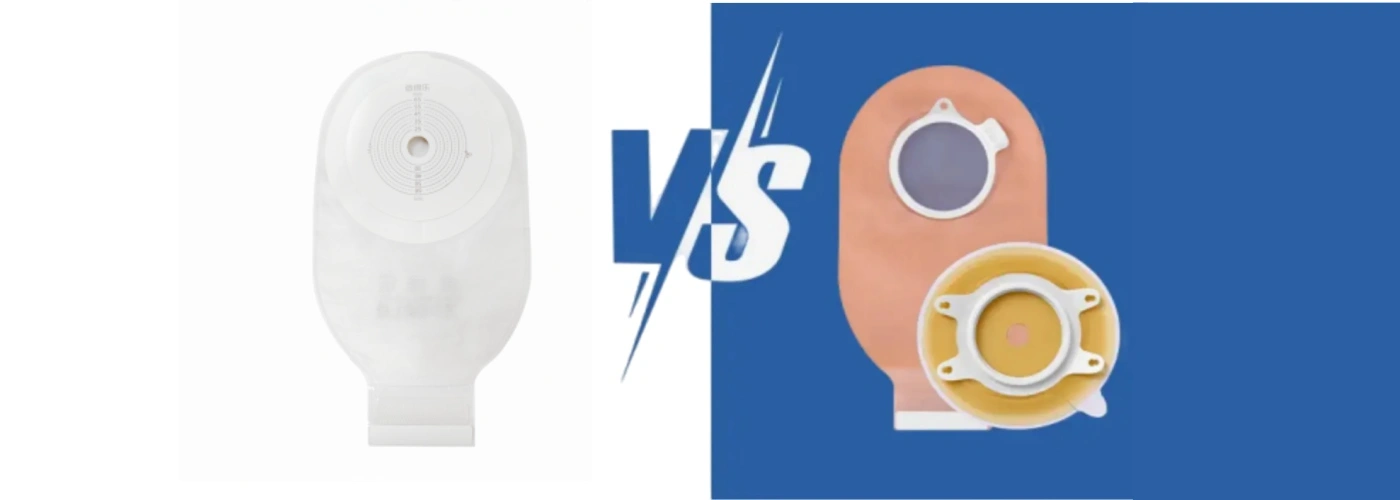
1.One-Piece Closed Colostomy Bags
The bag body and the skin barrier are an integrated structure. Each time it needs to be replaced, the whole piece must be torn off and re-pasted. It has a simple structure and is thinner and lighter overall.
2.Two-Piece Closed Colostomy Bags
The Wafer is separated from the bag body. The wafer can remain on the skin, and only the bag body needs to be replaced.
The bag body is connected to the chassis through: Mechanical coupling, Adhesive coupling.
3. The difference between One-Piece and Two-Piece closed colostomy bags
| One-Piece Closed Colostomy Bags
| Two-Piece Closed Colostomy Bags
|
Structure | The bag and the skin barrier are integrated | The bag is separated from the base |
Each time it is replaced | Overall replacement | Only replace the bag body |
Impact on the skin | Frequent tearing and pulling | The frequency of chassis replacement is low |
Concealment | good | weak |
System flexibility | low | high |
Operational complexity | low | Medium |
Partnering with a Reliable Ostomy Pouch Manufacturer

Zodelo among the numerous ostomy bag manufacturers in the world. Have 30 years of industry accumulation, professional customization capabilities, strong R&D and production capabilities, brand culture, as well as the trust and support of users, has become the first choice for many. It has now become the top and well-known brand in the field of stoma care products in China.
Whether you are hospitals, pharmacies, and home care distributors or procurement& bulk home use, Zodelo ostomy bag manufacturers is your best choise.
Get our product catalog or request an instant quote to elevate your business.
FAQs about urostomy bag vs catheter
Q1. What is the main difference between Open-Ended Ostomy Pouch vs Closed?
The bottom of the drainable ostomy bag has an openable drainage hole. You can pour out the contents multiple times before replacing the bag.
On the other hand, the closed ostomy pouch is for single use. Once it is filled, it needs to be replaced completely and cannot be reused.
Q2. Is a drainable ostomy bag reusable?
Drainable pouches are designed to be emptied and reused for a limited period, but they are not permanent products.
They should be replaced according to recommended wear time, hygiene conditions, and manufacturer guidelines to ensure skin health and reliable performance.
Q3. How do healthcare providers decide between open-ended ostomy pouch vs closed?
Healthcare providers typically consider stoma type, output consistency, patient lifestyle, dexterity, and personal preference.
There is no one-size-fits-all solution — the right choice depends on matching the pouch type to real-life usage needs.
Q4. Is the drainable ostomy pouch more suitable for long-term care programs?
The drainable ostomy pouch can be reused by emptying. This reduces the need for frequent replacement of the entire bag. It is more suitable for users who need to wear it for a long time.
Q5. For distributors, which type of ostomy bag has a more stable repeat purchase rate?
- Closed ostomy pouch: Consumes quickly, has a high order frequency, and has strong demand predictability.
- Drainable ostomy pouch:Has a longer usage period, but the users are more attached.
Q6. Open-Ended Ostomy Pouch vs Closed, which one is more suitable for OEM / Private Label?
The closed ostomy pouch is usually easier to standardize. Its structure is relatively simple, with uniform specifications, and is suitable for large-scale production and branding promotion.
Drainable ostomy pouch has higher requirements for sealing structure and process. It is more suitable for suppliers with mature manufacturing capabilities.
Q7.What types of closure systems are used in drainable pouch?
Common closure systems include clamps, Velcro-style closures, and integrated fold-up closures.
Velcro and integrated closures are increasingly preferred due to ease of use, better hygiene, and improved user experience compared to traditional clamps.
Q8. In medical procurement, how can one assess whether an ostomy pouch manufacturer is reliable?
Apart from the product itself, the following factors should be given particular attention:
- Whether they can provide a stable supply of different types of ostomy bags over the long term.
- Whether they have consistency in quality and batch stability.
- Whether they offer complete technical materials and product support.
- Whether they support product line expansion (specifications, packaging, OEM).
Conclusion - Open-Ended Ostomy Pouch vs Closed

Whether it is an Open-Ended Ostomy Pouch vs Closed, the purpose is to help patients restore their normal excretion function. For patients with an ostomy, correctly understanding the differences between Open-Ended Ostomy Pouch vs Closed is essential for better care of the ostomy and a healthy lifestyle. For hospitals, distributors, and home care providers, accurately understanding Open-Ended Ostomy Pouch vs Closed. Which is crucial for improving operational efficiency, customer satisfaction, and long-term cooperation value.
At Zodelo, from material selection to exquisite craftsmanship. Every step stems from a belief: to alleviate users’ concerns and enhance their comfortable experience. Zodelo will always be by your side, providing you with the best ostomy supply products and ostomy care service.
More Resource about Open-Ended Ostomy Pouch vs Closed
- A Guide to Ostomy Bags and Pouching Systems– uchicagomedicine
- Ostomy – clevelandclinic
- Closed-End Pouches– badgut
- Guide To Colostomy Bag With Clip– zodelo
- Closed Colostomy Bags Explained: Medical Definition, Indications– zodelo
- Drainable Pouch: What It Is, Who It’s For, and How to Choose the Right One-zodelo
- How to Choose the Best Ostomy Bag?– zodelo
- Top 10 Colostomy Bag Manufacturers And Suppliers In The World 2026– zodelo


Top 10 Urostomy Bag Brands in 2026
Top 10 Urostomy Bag
Convex Wafer vs Flat: What’s the Difference
Convex Wafer vs Flat

Top Ileostomy Bag Brands in 2026
Top Ileostomy Bag Br

Ostomy Paste vs Ring: What’s the Difference
Ostomy Paste vs Ring