Ostomy Wafer Sizes: A Complete Guide to Choosing the Right Fit
Table of Contents
Ostomy wafer sizes play a critical role in comfort, skin protection, and overall appliance performance.
However, Ostomy wafer sizes are not defined by a single measurement. It includes stoma opening size, wafer outer diameter, and flange compatibility.
This guide provides a comprehensive overview of ostomy wafer sizes. Including how they are measured, selected, and applied in ostomy care.
What is an Ostomy Wafer(Skin Barrier)?
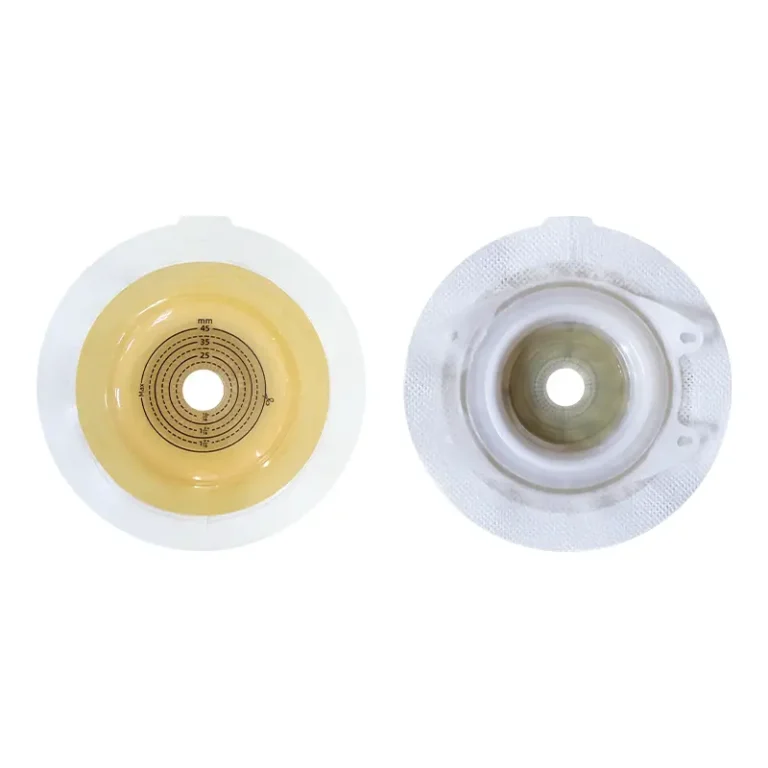
The ostomy wafer, also known as a skin barrier or baseplate. Playing core component directly attached to the skin in the ostomy system. The main function of the ostomy wafer is to form a reliable seal around the ostomy (creating a seal) and hold the entire ostomy bag in place. It also protects the peristomal skin (the skin around the ostomy) from irritation and leakage.
The ostomy wafer typically consists of the following key components:
- Skin barrier material: Usually made of hydrocolloid or composite materials, it is used to absorb moisture and reduce skin irritation.
- Adhesive layer:Responsible for firmly attaching the baseplate to the skin surface, while also balancing stickiness and comfort during removal.
- Stoma opening:Depending on the design, it can be a pre-cut hole, one that needs to be self-sewn, or a moldable structure.
- Connection area (for two-piece systems):Used for mechanical or adhesive connection with the ostomy bag.
What Ostomy Wafer Types Are Available?
1. Convex Skin Barrier
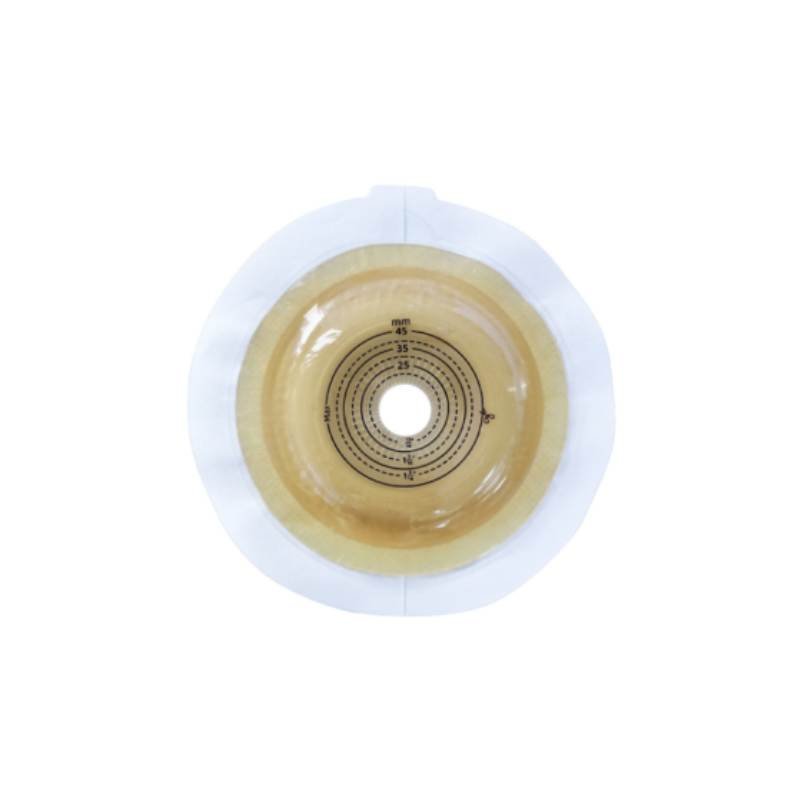
The raised part in the middle exerts light pressure on the skin around the stoma. It helps to enhance the sealing between the stoma base and the skin, preventing leakage. Convex ostomy wafer is suitable for patients with flat stoma, slight depression, and uneven or wrinkled skin around the stoma.
2. Flat Skin Barrier
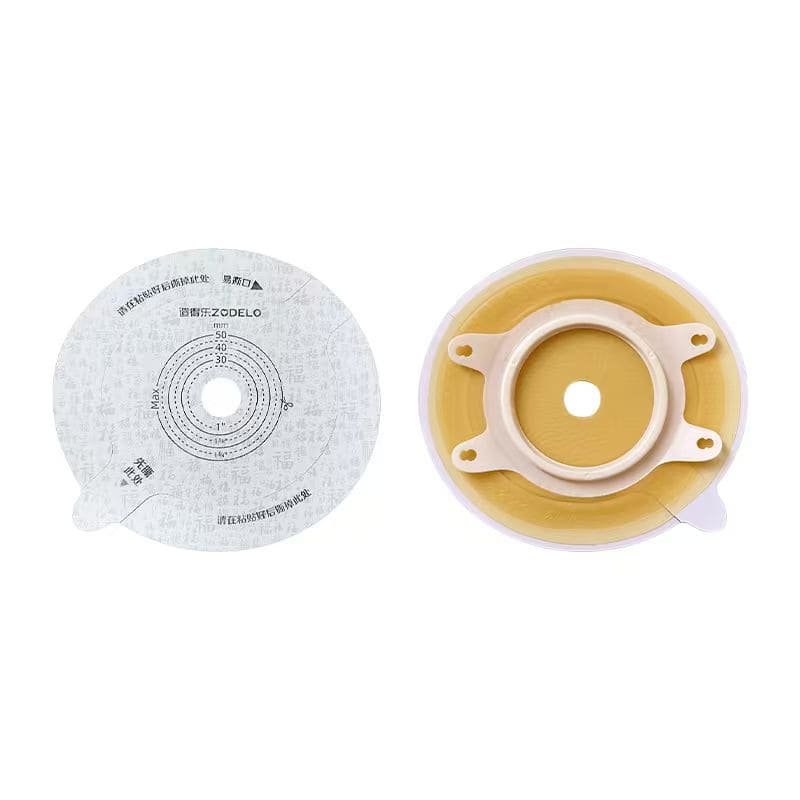
This is the most common type of skin barrier. The surface of the flat skin barrier is smooth and can be directly adhered to the skin. It is suitable for cases where the stoma protrudes and the surrounding skin is flat without any depressions.
Cut-to-Fit Skin Barrier
It can be cut according to the shape of the stoma. It is suitable for patients with irregular stoma shapes or those who have just undergone surgery.
Pre-cut Skin Barrier
The opening size is fixed, eliminating the need for additional cutting and making replacement simpler and more convenient. It is suitable for long-term users with stable stoma dimensions.
Malleable Skin Barrier
The moldable skin barrier can be stretched and shaped. For some patients, the stoma shape is irregular. This barrier can be freely shaped and perfectly fit the skin around the stoma, thereby enhancing the sealing performance, protecting the skin and reducing leakage.
What Are Ostomy Wafer Sizes?
The sizes of ostomy wafers are not typically a single dimension but are determined by the following three key dimensions:
- Stoma Opening Size:This refers to the diameter of the central opening in the wafer. The common range is approximately 10–65 mm.
- Wafer Outer Diameter: The outer diameter of the wafer determines the contact area with the abdominal skin. The common outer diameter range is 70 mm – 110 mm. The larger the outer diameter, the larger the adhesive area and the higher the stability.
- Flange Size(applicable only to two-piece systems): This determines the compatibility of the wafer with the ostomy bag. Common flange sizes include 45 mm, 50 mm, 55 mm, 60 mm, etc.
Why Choosing the Correct Ostomy Wafer Sizes Matters
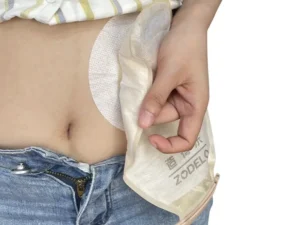
In ostomy care, the selection of ostomy wafer sizes is not merely a matter of personal preference. It directly affects skin health, wearing safety, and the core factors of long-term quality of life.
1. Impact on sealing and leak prevention
The correct ostomy wafer sizes enable the opening of the base to closely fit the edge of the ostomy. This can effectively prevent excretions from contacting the surrounding skin, reducing the risk of leakage. It also extends the duration of single wear.
Conversely, if the opening size of the wafer is improperly selected:
- The opening is too large:
Excretions are likely to come into contact with the skin, causing irritation, erosion, or even infection.
- The opening is too small:
It may cause compression to the ostomy, leading to pain, bleeding, or local damage.
2. Effects on Skin Protection and Long-Term Comfort
Proper ostomy wafer sizes can:
- Distribute the force evenly
- Reduce edge lifting
- Lower the incidence of skin allergies and inflammation
Inappropriate ostomy wafer sizes may lead to:
- Contact dermatitis
- Chronic skin damage
- Frequent product replacements, increasing the burden of care
3. Impact on Daily Activities
During daily activities, sitting, standing, bending over or exercising, the wafer needs to remain stable on the abdominal skin.
The appropriate size can enhance the adhesion strength and the sense of security during movement.
An inappropriate size may cause edge lifting and leakage, premature detachment, psychological unease and restricted movement.
How to Measure Stoma Size Correctly?
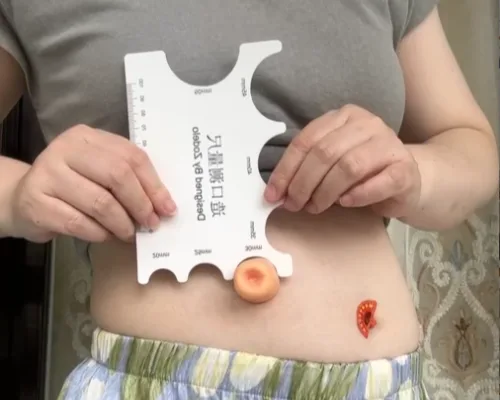
Accurate measurement of stoma size is the first step in choosing the appropriate ostomy wafer. Here are the specific operation steps for guidance.
1. Preparations before measurement
Measure when the stoma is in a relatively relaxed state
Clean and completely dry the stoma and the surrounding skin
Avoid measuring immediately after the stoma is significantly swollen or after intense activity
It is usually recommended to use a professional stoma measuring guide to ensure the accuracy of the measurement.
2. Key Steps for Accurate Measurement
- Step 1: Measure the maximum diameter
The shape of the stoma is not always completely circular.
The measurement should be taken at the widest point, not the narrowest point.
- Step 2: Reserve safety buffer space
It is generally recommended that the opening of the wafer should be approximately 1–2 mm larger than the diameter of the stoma.
To avoid creating an ulcer and at the same time reduce skin exposure
Common Mistakes When Selecting Ostomy Wafer Sizes
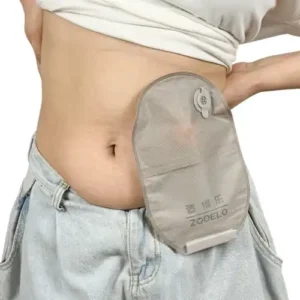
In ostomy care practice, many issues related to leakage and skin problems are not caused by the quality of the product itself. Instead, they are due to incorrect ostomy wafer sizes.
1. Size selection remains unchanged over time
The size of the ostomy may be adjusted due to changes in body weight, abdominal pressure, or skin condition. Even if the size of the ostomy body remains stable, the shape of the surrounding skin may change. Therefore, it is necessary to measure the size of the ostomy regularly.
2. Excessive emphasis on “the smaller the opening, the better”
An opening that is too small may compress the stoma
It increases the risk of local friction and irritation
In the long term, it may lead to bleeding or discomfort at the stoma
It is necessary to maintain a safety buffer space of approximately 1–2 mm while ensuring a proper fit for the stoma.
3. Failure to distinguish between the usage stages of Cut-to-Fit and Pre-Cut
During the period when the stoma is not yet stable, directly using a pre-cut wafer of a fixed size is a common and frequent mistake.
In the early postoperative stage, the size of the stoma changes significantly, and it is difficult to maintain a continuous match with the fixed opening size. Leakage or skin irritation is prone to occur repeatedly.
The early stage is more suitable for Cut-to-Fit skin barrier.
After stabilization, transition to Pre-Cut skin barrier.
4. Ignore the compatibility issues of the two-piece system
There are differences in structure and locking methods between different systems. Even if the nominal sizes are the same, they may not be able to be safely matched. The appropriate and correctly sized ostomy wafer should be selected.
5. Ignoring Wafer Outer Diameter
Many people only focus on the size of the ostomy opening, but overlook the wafer outer diameter.
If the outer diameter is too small, it will result in insufficient adhesive area.
The edge is prone to lifting during movement.
The wearing time is significantly shortened.
Do Ostomy Wafer Sizes Vary by Ostomy Type?

From the perspectives of professional nursing and product design, different types of stomas do indeed have an impact on the selection of ostomy wafer sizes.
1. Colostomy and size selection
Characteristics: The excrement is relatively well-formed, and the volume and frequency are relatively stable.
Size selection: The opening size should fit perfectly.
2. Ileostomy and size selection
Characteristics: The excrement has a high liquid content, and it is more resistant to the erosion of adhesive. The volume is relatively larger.
Size selection: An ostomy wafer with stronger sealing and stability.
3. Urostomy and size selection
Characteristics: Continuous urine discharge. There is a significant long-term wearing requirement.
Size selection: A stable and fitting ostomy skin barrier suitable for long-term use.
Ostomy Wafers in 1-Piece vs 2-Piece Pouch Systems
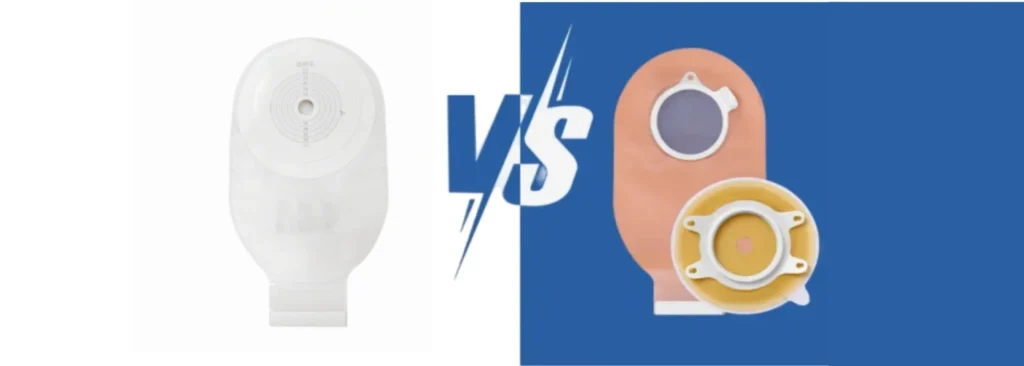
Among ostomy care products, the main difference between the 1-piece and 2-piece pouch systems lies in the ostomy wafer.
Comparison dimension | ||
Structural form | The wafer is integrated with the ostomy bag and cannot be separated. | The skin barrier is separated from the ostomy bag and connected through a flange. |
Replacement method | Each replacement requires the entire unit to be removed and replaced. | The bag body can be replaced independently without removing the skin barrier. |
Impact on skin | The replacement frequency is high, and it causes more frequent skin irritation. | This reduces the number of times the底盘 needs to be removed and is more friendly to the skin. |
Complexity of operation | The operation is simple,with fewer steps. | The operation steps are slightly more complicated and require alignment and confirmation of the connection. |
Wearing thickness and concealment | The overall thickness is thin, providing good concealment. | The structure is relatively thick and has a connection ring. |
System flexibility | The flexibility is low. | It is highly flexible and can be paired with different types of bag bodies. |
Focus on size | The main focus is on the opening size and outer diameter. | Attention should be paid to the opening size, outer diameter, and flange compatibility. |
Suitable usage stage | For initial users and those who prefer a simplified care process. | For long-term care and those who need to replace the bag frequently. |
What’s the Difference Between Flat and Convex Skin Barriers?
1. Flat Skin Barrier
- Features:
The flat skin barrier is an overall flat structure. No additional pressure is exerted on the ostomy area.
- Applicable population and scenarios:
The ostomy protrudes from the skin surface.
The skin around the ostomy is relatively flat.
The risk of leakage is low.
- Advantages:
High wearing comfort.
Simple structure, wide adaptability.
It is the basic choice in most ostomy care situations .
2. Convex Skin Barrier
- Features:
The central area of the base plate is slightly or moderately protruding outward. When worn, it exerts directional pressure on the skin around the stoma.
- Common application scenarios:
Stoma retraction or close to the skin surface.
There are depressions or folds on the skin around the stoma Repeated leakage problems occurred.
- Advantages:
Helps the stoma to “flare out” better.
Improves the fitting angle Reduce the risk of leakage.
FAQs about Ostomy Wafer Sizes
Q1. What does “ostomy wafer sizes” actually refer to?
It usually includes three key dimensions:
- Stoma opening size
- Outer diameter of the wafer
- Flange or coupling size(for two-piece pouch systems)
Q2. What are the most common ostomy wafer sizes available?
Most ostomy wafers are designed to fit stoma opening sizes ranging from 10 mm to 55 mm, with some options extending beyond this range.
Q3. Are ostomy wafer sizes universal across different brands?
No, the sizes of ostomy patches are not completely universal. Although the size of the ostomy opening may be similar, the flange size and connection system can vary depending on the brand.
Q4. What is the difference between cut-to-fit and pre-cut ostomy wafer sizes?
Cut-to-fit wafers allow users to customize the opening size by trimming it manually, making them ideal for post-surgery or changing stoma sizes.
Pre-cut wafers have fixed opening sizes and are preferred when the stoma size is stable, offering greater convenience and consistency.
Q5. What happens if the ostomy wafer sizes are too large or too small?
If the wafer opening is too large, waste may contact the skin, increasing the risk of leakage and skin irritation.
If the opening is too small, it can put pressure on the stoma, leading to discomfort or injury.
Q6. Do different ostomy types require different wafer sizes?
Yes. Patients who have undergone colostomy, ileostomy or urethrostomy usually have different excretion characteristics and wearing requirements. So different ostomy types require different wafer sizes.
Q7. Can ostomy wafer sizes be customized for specific markets or brands?
Yes. Many professional ostomy prodcuts manufacturers offer customized ostomy wafer sizes service.
Customization is commonly used for private label brands, regional market requirements, or specialized patient needs.
Q8.What should brands or distributors look for in a manufacturer regarding ostomy wafer sizes?
Brand owners and distributors should look for ostomy supply manufacturers that can offer the following:
- Awide and consistent range of ostomy wafer sizes.
- Clear sizing standards and quality control.
- Compatibility support for different systems.
- The ability to offer OEM or customized sizing solutions.
Conclusion - Ostomy Wafer Sizes

The size of the ostomy opening, the system structure (one-piece or two-piece), and the flat or convex design are interrelated with each other. Together, they determine the safety, stability and comfort during wearing.
Many leakage or skin problems may not originate from the ostomy bag itself, but from incorrect ostomy wafer sizes.
For brand owners, medical care suppliers or distributors, when evaluating an ostomy wafer product or a supplier. The completeness, clarity and sustainability of the size system are often important indicators of professionalism.
At Zodelo, every step from material selection to research and development adheres to one belief: to reduce users’ troubles and enhance their comfort. Zodelo will always be by your side, providing you with the most comfortable, safe and reassuring stoma care products.
More Resources about Ostomy Wafer Sizes
- A Guide to Ostomy Bags and Pouching Systems— Uchicagomedicine.org
- Stoma (medicine)– wikipedia
- The ultimate guide of flange for stoma bag– zodelo
- One Piece Vs Two Piece Stoma Bag: What’S The Difference?– zodelo
- The Ultimate Guide Of Colostomy Bag Size– zodelo
- Ostomy Flange vs Wafer: What’s the Difference and Are They the Same Thing?– zodelo

Top 10 Urostomy Bag Brands in 2026
Top 10 Urostomy Bag
Convex Wafer vs Flat: What’s the Difference
Convex Wafer vs Flat

Top Ileostomy Bag Brands in 2026
Top Ileostomy Bag Br

Ostomy Paste vs Ring: What’s the Difference
Ostomy Paste vs Ring