

What Is A Urostomy Bag?
Table of Contents
Urostomy bags are urine collection bags designed for patients who have undergone urinary diversion surgery. When the bladder is unable to store and expel urine normally, doctors perform surgery to create a new pathway for urine drainage. Unlike urine drainage bags, urinary ostomy bags are connected to an ostomy on the abdomen via a baseplate, allowing urine to flow into the bag.
Below, we will explain what a urinary ostomy pouch is, its purpose, and the factors you should consider when selecting urinary ostomy supplies that suit your body, daily routines, and lifestyle.
What Is the Main Purpose of a Urostomy Bag?
1.Collect Urine
The primary function of a urinary ostomy bag is to collect urine. Patients who have undergone urinary diversion surgery, such as ileostomy, are unable to store and expel urine from their bladder, resulting in a continuous flow of urine. To ensure that this does not interfere with the patient’s daily life, a urinary ostomy bag is necessary.
2.Protect the Skin Around the Stoma
Urine contains irritating substances; prolonged contact with the skin around the stoma may cause redness, swelling, stinging, and skin breakdown. The baseplate attached to the abdomen acts as a skin barrier, effectively isolating the urine from the stoma skin and protecting the skin from damage.
3. Improve Daily Comfort
Urostomy bags help patients resume their daily lives. Continuously improved to meet patients’ needs, these ostomy bags now feature lightweight materials, a soft, snug fit, anti-reflux design, and a low-noise structure, allowing users to confidently participate in work, travel, and social activities.
What Is a Urostomy?

A urostomy is a procedure in which an opening is created in the abdomen to allow urine to drain from the body. When a patient’s bladder is damaged or has completely lost function, doctors use an ileal conduit to create a permanent or temporary ostomy in the patient’s abdomen, allowing urine to drain from the kidneys and be collected in a urinary ostomy bag.
Renowned experts have proposed: A urostomy is a surgical procedure that creates a stoma (artificial opening) for the urinary system. A urostomy is made to avail for urinary diversion in cases where drainage of urine through the bladder and urethra is not possible, e.g. after extensive surgery or in case of obstruction.
Who May Need a Urostomy Bag?
| Medical Condition | Why a Urostomy Bag May Be Needed |
|---|---|
| Bladder Cancer | For patients undergoing radical cystectomy (bladder removal) due to bladder cancer, the urinary system needs a new pathway for urine drainage. A urostomy allows urine to leave the body through a stoma and be collected in an external pouch. |
| Severe Bladder Dysfunction | When the bladder loses its ability to store or empty urine effectively because of nerve damage or chronic disease, a urostomy may provide a safer and more reliable method of urine management. |
| Birth Defects Affecting the Urinary System | Some congenital conditions, such as abnormalities affecting the bladder or urinary tract development, may prevent normal urine flow and require urinary diversion from an early age. |
| Spinal Cord Injury or Neurological Disorders | Conditions that affect nerve control of the bladder, including spinal cord injuries or certain neurological diseases, can lead to urinary retention, infections, or kidney damage. A urostomy may help protect urinary function. |
| Radiation Damage or Previous Pelvic Surgery Complications | Radiation therapy or complex pelvic surgeries can sometimes damage bladder tissues and affect normal urine drainage. A urostomy may be recommended when other treatments are no longer effective. |
| Chronic Urinary Tract Problems | Patients with severe, recurrent urinary infections or conditions causing long-term urinary obstruction may require urinary diversion to reduce complications and improve quality of life. |
| Traumatic Injury to the Urinary System | Severe injuries to the bladder or urinary tract caused by accidents or trauma may require surgical reconstruction or diversion using a urostomy system. |
What Are the Main Parts of a Urostomy Bag?
The small urinary ostomy pouch consists of several components designed to meet the patient’s needs during use.
1. Skin Barrier
The baseplate is a crucial component that connects the stoma to the pouch. It is made of medical-grade hydrocolloid material. It adheres closely to the abdominal skin, forming a protective barrier. It absorbs a small amount of moisture and reduces irritation to the skin around the stoma caused by urine.
2. Collection Pouch
The collection pouch is the main component used to store urine. Since the urinary stoma continuously discharges urine, the pouch must provide reliable storage and leak-proof performance to maintain hygiene. This allows patients to remain comfortable and discreet during daily activities.
3. Anti-Reflux Valve
The anti-reflux valve is a critical safety feature of the urinary ostomy pouch, designed to minimize the backflow of urine toward the stoma. This lowers the risk of skin irritation from urine and enhances safety during nighttime use.
4. Drainage Outlet
The drainage outlet allows urine to flow out smoothly, eliminating the need to frequently replace the entire pouch. The wide, short drainage opening and threaded soft plug design prevent blockages caused by waste and reduce urine leakage, making it more convenient and efficient for elderly patients and caregivers to use.
5. Backing Film and Non-Woven Fabric
The outer layer is made of soft, breathable non-woven fabric, while the inner layer features an EVOH film, providing a comfortable wearing experience. The non-woven fabric reduces noise caused by friction against clothing, making the ostomy pouch more discreet and snug during daily wear.
What Types of Urostomy Bags Are Available?

1.One-Piece Urostomy Bags
One-piece urostomy bags consist of a baseplate and pouch that are integrated into a single unit.
Lightweight and Discreet: Without a rigid plastic connecting ring, this system is lighter and has a lower profile. This makes it very discreet under clothing.
Easy to Wear: With fewer steps involved, this system is better suited for elderly patients or those new to ostomy care.
Suitable for Daily Use: Ideal for daily wear by individuals who prefer a flat abdominal contour and do not need to change the collection bag multiple times a day.

2.Two-Piece Urostomy Bags
The two-piece system consists of a separate skin-protecting baseplate and a detachable collection bag, which are connected via a plastic coupling ring.
Separate Collection Bag Replacement: The collection bag can be easily snapped on or off without having to frequently remove the baseplate. The baseplate can be worn continuously for several days, reducing the frequency of skin contact with the adhesive.
Greater Flexibility: Different sizes or types of collection bags can be swapped out at any time as needed, while keeping the baseplate in place.
Suitable for Frequent
Changes: Ideal for patients who need to check their stoma condition frequently, as the collection bag can be removed and reattached at any time.
3.Drainable Urostomy Bag
Unlike closed bags, drainable urinary ostomy bags feature a dedicated drainage port at the bottom, equipped with a threaded soft plug. This design allows collected urine to be drained into the toilet at any time.
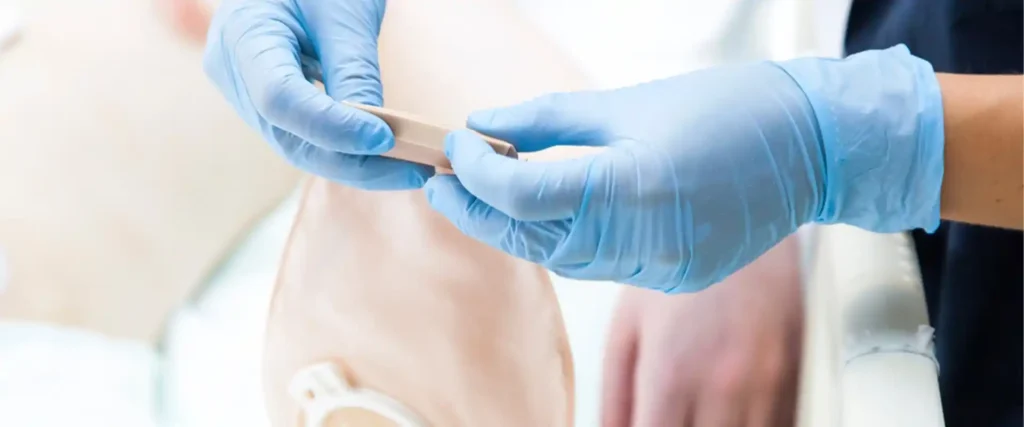
What Is the Difference Between a Urostomy Bag and a Urine Bag?
Urostomy pouches and urine collection bags are both used to collect urine, but they differ in their intended users, connection methods, and functional design.
Urostomy pouches are intended for patients who have undergone urostomy surgery. They feature a skin-protective base, a hydrocolloid adhesive layer, an anti-reflux design, and a drainage valve, allowing for long-term wear against the skin.
Urine bags, also known as collection bags, are used for patients with indwelling urinary catheters. Urine enters the bag through a catheter inserted into the urethra, rather than being drained through an abdominal stoma.
A leading medical institution has published a report:A urostomy bag is a special type of bag used to collect urine after certain types of bladder surgery.
| Comparison Item | Urostomy Bag | Urine Bag (Urinary Drainage Bag) |
|---|---|---|
| Usage Method | Connected to an abdominal stoma | Connected to a urinary catheter inserted through the urethra |
| Main Users | Patients with a urostomy | Patients requiring indwelling urinary catheterization |
| Source of Urine | Continuous urine output after urinary diversion through the ureters | Urine drained directly from the bladder through a catheter |
| Usage Duration | Designed for long-term use | Usually used for short-term or temporary urine drainage |
| Product Structure | Skin barrier (wafer) + pouch + anti-reflux valve + drainage outlet | Collection bag + catheter connector + drainage valve |
| Skin Protection | Requires a hydrocolloid skin barrier to protect the skin around the stoma | Usually does not involve stoma skin care |
| Common Applications | Bladder cancer, bladder removal surgery, urinary tract injuries, and urinary diversion procedures | Post-surgical care, bedridden patients, urinary retention, and patients requiring bladder drainage |

Urostomy Bag vs Colostomy Bag Comparison Chart
| Comparison Item | Urostomy Bag | Colostomy Bag |
|---|---|---|
| Main Purpose | Used to collect urine | Used to collect stool |
| Applicable Stoma Type | Urostomy | Colostomy |
| Common Surgical Reasons | Commonly used after bladder removal, bladder cancer treatment, urinary tract injury, or congenital urinary conditions | Commonly used after colorectal cancer surgery, intestinal obstruction, inflammatory bowel disease, or intestinal injury |
| Output Characteristics | Liquid urine that usually flows continuously | Semi-solid or solid stool with irregular discharge patterns |
| Drainage Method | Usually equipped with a bottom drainage valve for frequent urine emptying | Usually uses a clamp or drainable outlet design for convenient stool removal |
| Anti-Reflux Design | Requires an anti-reflux valve to help prevent urine from flowing back toward the stoma | Generally does not require an anti-reflux structure |
| Bag Design Focus | Focuses on liquid management, leak prevention, anti-reflux protection, and compatibility with night drainage systems | Focuses on odor control, filtration performance, and comfortable discreet wearing |
| Filter System | Usually equipped with odor-control filters to reduce urine odor | Usually equipped with activated carbon filters to help control gas and odor |
| Skin Barrier Requirements | Requires strong adhesion to prevent leakage and protect skin from continuous urine exposure | Requires skin protection while adapting to different stool consistencies |
| Common Product Types | One-piece urostomy bags, two-piece urostomy bags, and night drainage urostomy systems | One-piece colostomy bags, two-piece colostomy bags, drainable pouches, and closed-end pouches |
| Typical Users | Patients who have undergone bladder removal or urinary diversion procedures | Patients who have undergone colon surgery or have intestinal diseases |
| Key Product Advantages | Anti-reflux protection, low leakage risk, hydrocolloid skin protection, and comfortable drainage | Odor control, anti-ballooning performance, soft materials, and convenient emptying |

How to Choose the Right Urostomy Bag?
Selecting the appropriate urostomy pouch requires consideration of the patient’s stoma condition, skin condition, lifestyle, and usage needs.
1. Choose Based on the Urostomy Type and Stoma Condition
Confirm the patient’s urostomy type and size. Since the size, protrusion, and location of the stoma vary from patient to patient, the opening size of the urostomy pouch baseplate must match the stoma.
For patients with a recessed stoma, a convex baseplate can be used to increase pressure around the stoma and improve the fit. For patients with a protruding stoma and smooth surrounding skin, a flat baseplate is recommended.
2. Consider a One-Piece or Two-Piece System
Urostomy bags are categorized as one-piece or two-piece systems.
One-piece urostomy bags feature a baseplate and pouch integrated into a single unit. Their lightweight, slim design makes them suitable for elderly patients and those new to urostomy care.
Two-piece urostomy bags allow the pouch to be replaced separately, eliminating the need to frequently remove the baseplate. They are suitable for patients with sensitive skin or those who need to adjust the pouch.
3. Check the Skin Barrier Material
Urinary ostomy pouches feature a hydrocolloid protective layer that absorbs small amounts of moisture to help protect the skin around the stoma while providing stable adhesion.
When selecting a pouch, consider the following:
- Whether the adhesion lasts for a consistent period of time;
- Whether removal is likely to damage the skin;
- Whether it is suitable for long-term use on sensitive skin;
- Whether it can reduce skin irritation caused by leakage.
4. Look for Anti-Reflux and Leak Protection Features
Urine continuously flows into the ostomy pouch; the anti-reflux design is a key feature that distinguishes urinary ostomy pouches from standard ostomy pouches.
We recommend choosing products that include:
- Anti-Reflux Valve: Reduces urine backflow to the stoma, lowering the risk of infection and skin irritation
- Reliable Drain Valve: Allows patients to quickly empty urine
- Secure Sealing Design: Minimizes leakage during physical activity.
5. Select the Right Capacity and Drainage Design
Urine output and daily activities vary from patient to patient, so the pouch capacity should be selected accordingly.
- Patients with active daily routines can choose models with moderate capacity that are lightweight and discreet
- Patients with higher nighttime care needs can choose ostomy pouches that support connection to a nighttime drainage bag
- Patients with high urine output should choose products with larger capacity and smoother drainage.
How Do You Measure a Urostomy Stoma?
Step 1:Gently clean the skin around the stoma and observe its diameter, shape, and whether it is round or oval.
Step 2: Compare the circular openings on the measurement card with the stoma, and select the size that just covers the edge of the stoma.
Step 3: Based on the measurement results, cut or select an ostomy base with an opening that is approximately 1–2 mm larger than the edge of the stoma to minimize urine contact with the surrounding skin.
How Do You Apply a Urostomy Bag Correctly?
Step 1: Prepare the Ostomy Pouch and Clean the Skin
Prepare a new urinary ostomy pouch, a measuring card, scissors, warm water, and a clean towel. Clean the skin around the stoma and keep the area dry.
Step 2: Measure and Adjust the Baseplate Opening
Use a stoma ruler to measure the stoma size, then cut or select a baseplate with an appropriately sized opening.
Step 3: Remove the Protective Film and Apply the Baseplate
Peel off the protective film from the back of the baseplate, align the opening with the stoma, and gently press it into place from the bottom up.
Step 4: Press the baseplate firmly into place
Gently press the baseplate with the palm of your hand for about 30–60 seconds, using body heat to help the adhesive bond to the skin.
Step 5: Connect the pouch and check for a secure seal
If using a two-piece urinary ostomy pouch, connect the pouch to the baseplate correctly and ensure the latch or connecting ring is secure. Check that the drainage valve is closed.
How Do You Empty a Urostomy Bag?
To empty the urinary stoma bag, pinch the drainage tube with your fingers, aim it at a container or the toilet, and slowly open the soft stopper to allow the urine to drain completely. After emptying the bag, wipe the drainage opening with a paper towel or wet wipe, then reinsert the soft stopper into the drainage opening and check to ensure it seals properly.
Empty the urinary stoma bag: When the urine bag is about one-third full, you need to empty it. The urine bag typically fills up about every 2 to 3 hours. Emptying the urine bag prevents it from bulging under your clothes and helps prevent leaks and odors.
How Do You Change a Urostomy Bag?
Step 1: Gently peel back the edge and use a release agent to remove the backing.
Step 2: Check for any residual adhesive, clean the skin, and inspect the skin for redness, swelling, or breaks.
Step 3: If the skin is broken, apply a skin barrier spray around the stoma to form a protective layer on the skin’s surface.
Step 4: Use a stoma template to adjust the opening of the new baseplate, position the new urinary stoma bag precisely over the stoma, and press firmly to ensure a secure seal.

How Do You Connect a Urostomy Bag to a Night Drainage Bag?
Before connecting, verify that the outlet valve of the urinary ostomy pouch matches the size of the night drainage bag’s connector. Then, securely attach the drainage tube and check that the connection is airtight. During use, keep the drainage bag below the level of your body and the ostomy pouch to ensure that urine flows smoothly. Avoid kinking the tubing, as this can cause backflow or blockages.
How Do You Prevent Urostomy Bag Leakage?
1. Accurately measure the stoma dimensions and select a baseplate with an appropriate opening to prevent urine from coming into contact with the surrounding skin.
2. Keep the skin around the stoma clean and dry to improve the adhesion of the adhesive.
3. Choose a urinary stoma pouch with good adhesion, a hydrocolloid skin barrier, and an anti-reflux design.
Why Does a Urostomy Bag Leak?
Leaks in urinary ostomy pouches are not caused by a single factor; they are related to the fit of the baseplate, the shape of the stoma, the condition of the skin, and how the pouch is used.
1. Inaccurate stoma measurement results in a baseplate opening that is too large, allowing urine to easily come into contact with the skin around the stoma.
2. Insufficient adhesion of the baseplate causes the edges to lift during physical activity, sweating, or after prolonged wear.
3. Uneven skin, wrinkles, scars, or insufficient protrusion of the stoma around the stoma site may also affect the seal.

How Do You Protect the Skin Around a Urostomy?
1. Ensure the baseplate of the urinary ostomy pouch fits the stoma precisely. If the opening of the baseplate is too large, urine may come into contact with the skin around the stoma, causing irritation. Therefore, it is necessary to measure the stoma size regularly and adjust the baseplate opening accordingly.
2. Keep the skin around the stoma clean and dry. When changing the urinary ostomy pouch, gently clean the skin with warm water and pat it dry afterward. Do not use products containing alcohol or irritating ingredients.
3. Choose a urinary ostomy pouch with a hydrocolloid skin barrier. High-quality products use medical-grade hydrocolloid, which helps absorb small amounts of moisture and reduce friction.

Common Mistakes When Using a Urostomy Bag
- Choosing the Wrong Stoma Opening Size
Some patients believe that a larger opening in the baseplate makes it easier to apply, but an opening that is too large allows urine to come into direct contact with the skin around the stoma, leading to long-term irritation, redness, and skin breakdown. An opening that is too small will compress the stoma, causing discomfort.
The correct approach is to measure the stoma size before each change to ensure that the baseplate opening fits snugly against the edges of the stoma.
- Applying the Bag to Wet or Unclean Skin
To save time, some patients apply the urinary stoma bag before the skin is completely dry, which reduces the adhesive strength of the baseplate.
The skin around the stoma must be kept clean and dry; avoid using oil-based skincare products.
- Waiting Too Long to Empty the Urostomy Bag
A fully filled urostomy bag increases its weight, creating downward pressure on the baseplate, which makes the adhesive more likely to come loose and increases the risk of leakage.
It is recommended to empty the bag promptly when it reaches approximately 1/3–1/2 of its capacity.
- Using the Same Product Without Considering Stoma Changes
A stoma is not static. As the body heals, weight fluctuates, and abdominal contours change, both the height of the stoma and the condition of the surrounding skin may change. If the stoma protrudes normally and the surrounding skin is smooth, a flat baseplate can be used. If the stoma is recessed, a convex baseplate can be used.
- Removing the Bag Too Roughly
Removing the base plate too quickly or with excessive force may damage the skin around the stoma. For long-term wearers, repeated tugging and irritation can easily cause skin sensitivity.
When changing the bag, use a gentle adhesive remover to help remove any residual adhesive.
How Long Can a Urostomy Bag Be Worn?
There is no fixed duration for the use of a urinary ostomy bag; it varies depending on the type of bag used, the adhesive strength of the baseplate, the condition of the skin, and daily care practices.
Under normal circumstances, a urinary ostomy bag can be worn for approximately 3 to 7 days. One-piece urinary ostomy bags require more frequent replacement, whereas with a two-piece system , since the baseplate and the bag are separate, the baseplate can be used for an extended period, and only the bag needs to be replaced regularly.
It is important to note that a longer replacement interval is not necessarily better. If the base plate leaks, the edges curl up, or the skin becomes irritated, the bag should be replaced promptly to reduce the risk of irritant dermatitis caused by prolonged contact between urine and the skin.

What Features Should a High-Quality Urostomy Bag Have?
1. Reliable Leak-Proof Performance
Because urine continuously flows into the pouch, a stable seal must be maintained between the base and the skin to minimize skin irritation caused by urine contact.
High-quality urinary ostomy pouches use a highly adhesive medical-grade hydrocolloid base that conforms to the abdomen of patients of various body types, reducing the risk of edge lifting and leakage.
2. Skin-Friendly Hydrocolloid Barrier
Skin protection is also crucial during long-term use of a stoma pouch. Hydrocolloid material absorbs a small amount of moisture to form a protective layer, reducing irritation to the skin caused by urine and sweat.
The soft adhesive design minimizes tugging on the skin during changes, reducing the risk of damage to the skin around the stoma.
3. Secure and Comfortable Adhesion
A high-quality urinary ostomy pouch must strike a balance between secure adhesion and comfort. Excessive adhesion may irritate the skin during changes, while insufficient adhesion can lead to leakage.
4. Effective Anti-Reflux System
To prevent irritation of the stoma caused by continuous urine flow, the pouch must be designed to minimize urine reflux.
High-quality urinary ostomy pouches feature an anti-reflux design that reduces urine reflux while lying down at night or during physical activity, thereby enhancing safety.
5. Easy and Safe Drainage Outlet
A high-quality urinary ostomy pouch requires a drainage outlet that is easy to operate and provides a reliable seal, allowing patients to empty the pouch quickly and conveniently.
The drainage valve design must address the risk of clogging while balancing leak prevention with ease of use. For elderly patients or first-time users, it should be easy to open and close.
6. Clear Observation Window
A transparent observation window helps patients and caregivers easily monitor the stoma’s condition, urine color, and pouch capacity.
This feature is particularly useful for patients in the postoperative recovery phase or those requiring frequent stoma checks.
7. Durable and Lightweight Pouch Material
Urinary stoma pouches must withstand stretching, bending, and pressure changes during daily activities. High-quality pouches are made of soft, low-noise composite materials that reduce friction noise, enhance concealment, and improve wearing comfort.
8. Customized Options for Different Stoma Conditions
Since stoma height, abdominal shape, and skin condition vary among patients, high-quality urinary stoma pouches should offer a variety of options, such as flat and convex bases.

How to Choose a Reliable Urostomy Bag Manufacturer?
When selecting a reliable urostomy bag manufacturer, it is important to consider not only the product price but also the company’s production capacity, quality management system, product performance, regulatory certifications, and supply capabilities.
1. Check Medical Device Certifications and Compliance
Urinary ostomy bags are medical devices, so manufacturers must have a comprehensive quality management system and market access qualifications. When selecting a supplier, focus on whether they hold ISO, CE, and FDA certifications, as well as product test reports and quality control documentation.
2. Evaluate Manufacturing Capability
A reliable urinary ostomy bag manufacturer should possess stable, large-scale production capabilities. You should pay attention to the supplier’s factory size and production environment; automated production equipment; annual production capacity and delivery capabilities; and the stability of raw material supply. For you, stable production capacity is the foundation of a long-term partnership.
3. Review Product Quality and Performance
The key to reducing post-sale complaints lies in product performance. Excellent manufacturers focus on optimizing the product’s hydrocolloid base to enhance adhesion and minimize leakage. They also incorporate anti-reflux design features and safe drainage ports to prevent urine from flowing back and irritating the skin, while ensuring the drainage system remains unobstructed.
4. Confirm OEM and Private Label Capabilities
OEM/ODM capabilities are also very important.
A top-tier manufacturer can customize product logos, packaging design, product specifications, bag colors and materials, labels, and regulatory documentation.
Manufacturers with R&D capabilities can provide more flexible product solutions tailored to the market needs of different countries.
5. Investigate Quality Control System
The consistency of medical product quality depends on a comprehensive production and testing system. Reliable urinary ostomy pouch suppliers establish multi-stage quality control measures, such as: incoming raw material inspection, adhesive performance testing, seal strength testing, leak-proof testing, finished product visual inspection, and pre-shipment sampling.
6. Request Samples and Conduct Testing
Before establishing a long-term partnership, we recommend evaluating samples.
Focus on testing the base’s adhesion duration; skin comfort; drainage valve operation; anti-reflux performance; pouch softness; and stability after prolonged wear.
Actual test results provide a better indication of a manufacturer’s capabilities than simply comparing prices.
Frequently Asked Questions About Urostomy Bags
Q1. Is a Urostomy Bag the Same as a Catheter Bag?
They are different. A urinary ostomy bag is connected to an abdominal stoma and is used to collect urine drained through a urinary diversion; a urine collection bag is connected to a urinary catheter and is primarily used to temporarily collect urine drained from the bladder. The two differ in terms of their intended user groups, structure, and method of use.
Q2. How Often Should You Change a Urostomy Bag?
The replacement schedule depends on the product type, skin condition, and usage. One-piece urinary ostomy pouches must be replaced regularly, while with two-piece systems, the pouch can be replaced separately as needed. Replace the product immediately if the base becomes loose, if leakage occurs, or if skin irritation develops.
Q3. Why Does a Urostomy Bag Need an Anti-Reflux Valve?
A backflow prevention valve helps prevent urine from flowing back from the bag to the stoma area, reducing the risk of skin irritation and leakage caused by urine, and improving comfort and safety for the wearer.
Q4. Does a Urostomy Bag Always Need a Night Drainage Bag?
It is not necessary. Some patients produce less urine at night and can use a standard urinary ostomy bag.
If urine output is high at night or if you wish to reduce the number of times you get up to empty your bladder, you can connect a nighttime drainage bag.
Q5. Is Mucus in a Urostomy Bag Normal?
This is normal. In some urinary diversion procedures, a segment of the intestine is used to create a passageway, and the intestinal mucosa may produce a small amount of mucus that is excreted with the urine. A small amount of clear or white mucus is usually normal.
Q6. Can You Shower With a Urostomy Bag?
Yes. Modern urinary ostomy pouches are designed with waterproof adhesive and a sealed construction, so taking a normal shower will not affect their use. After showering, gently pat the pouch and the surrounding skin dry.
Q7. Can You Swim With a Urostomy Bag?
Yes. As long as the ostomy pouch is securely attached, most patients can swim. Before swimming, check that the base is properly sealed, and choose a lightweight, leak-proof product designed for physical activity.
Q8. Can You Exercise and Travel With a Urostomy Bag?
Yes. With proper care and the right products, patients can usually engage in daily physical activities and travel. It is recommended to have spare ostomy pouches on hand and to avoid pulling on the stoma area forcefully.
Q9.How Do You Choose the Right Urostomy Bag?
When making a selection, consider the type of stoma, stoma size, skin condition, and personal lifestyle needs. Common options include one-piece or two-piece systems, as well as flat or convex bases. Focus on adhesion, leak-proof design, anti-reflux features, and comfort.
Q10.Can a Urostomy Bag Be Used Long-Term?
No. Ostomy pouches need to be changed every few days; the exact frequency depends on the product type, the adhesive strength of the baseplate, the condition of the skin, and whether there is any leakage. If you notice that the pouch is not adhering properly, has an unpleasant odor, is leaking, or is causing skin irritation, you should replace it immediately.

Conclusion: How Does a Urostomy Bag Help Manage Urine Output?
Urinary ostomy bags help patients with urinary diversion effectively manage urine drainage. They connect to the abdominal stoma to collect urine drained from the ureters.
For you, choosing a reliable manufacturer of urinary ostomy bags is equally important. Consistent product quality, strong adhesion, leak-proof design, and a comprehensive quality control system are key factors in minimizing post-purchase issues.
Zodelo is committed to providing you with high-quality urinary ostomy bags. We continuously research, develop, and upgrade our ostomy care solutions while strictly adhering to medical safety standards, ensuring a safe, comfortable, and reliable ostomy care experience for all ostomy patients. If you have any needs or questions, please feel free to contact us or request a product catalog at any time!

Top 10 Colostomy Bag Manufacturers In India 2026
top 10 colostomy bag

Top 10 Stoma Bag Suppliers Uk 2026
Top 10 Stoma Bag Sup

The Ultimate Guide To Sex With A Colostomy Bag
The Ultimate Guide T

Top 10 Colostomy Bag Manufacturers And Suppliers In China 2026
Top 10 Colostomy Bag