

J Pouch Vs Ostomy Bag: What’S The Difference?
Table of Contents
When patients suffer from colon or rectal diseases and need to undergo intestinal resection surgery, they may face the dilemma of choosing j pouch vs ostomy bag. The differences between J pouch vs ostomy bag lie in physiological patterns, lifestyles, complication spectra, applicable populations, structures, etc.
Whether it is j pouch vs ostomy bag, both can help patients rebuild excretory channels and restore a healthy and comfortable life. A better understanding of j pouch vs ostomy bag can also help you choose a more suitable ostomy care lifestyle for yourself.
Zodelo is well aware that the stoma bag is of vital importance to stoma patients. Therefore, based on user experience, we are committed to developing the highest quality and safest ostomy bags to enable users to enjoy a more comfortable and reassuring life. Meanwhile, Zodelo also provides you with the most comprehensive and detailed information on ostomy care. This article will provide you with a detailed analysis of j pouch vs ostomy bag.
Getting To Know Your J-Pouch
1. What is a J-pouch?
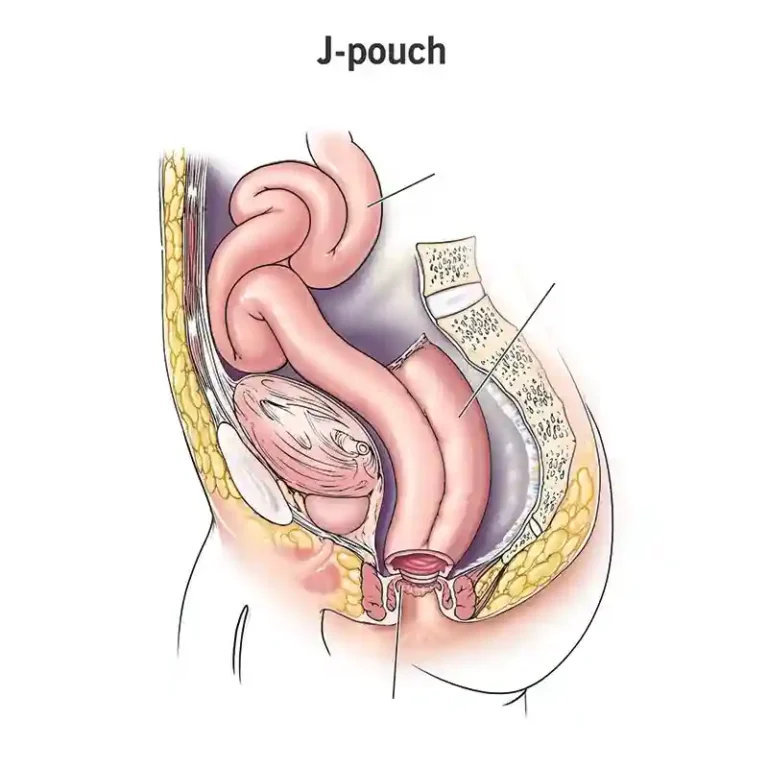
To understand of j pouch vs ostomy bag, we must first know what is a j pouch? J pouch, scientifically known as Ileal pouch-anal Anastomosis, IPAA. It is a surgical operation that reconstructs a new rectum using the patient’s own terminal ileum. When a patient has colonic lesions or damage, the intestines and rectum need to be removed. At this point, the doctor will fold the end of the patient’s small intestine into a “J” -shaped bag to store feces, which will then be discharged through the anus. This can replace the original defecation function of patients after intestinal resection and avoid various complications after the use of a stoma and the creation of a stoma using a stoma bag.
J-pouch usually requires two to three stages to complete. The surgery is rather complex and the recovery time is long. However, the J-pouch can help patients continue defecating without relying on the ostomy bag, maintaining their self-esteem and confidence.
2. Who is the J-pouch for?
- Patients with ulcerative colitis
This accounts for the majority of patients undergoing J-pouch surgery.
Consider when drug treatment is ineffective or there is a risk of cancer.
- Patients with colorectal adenomatous polyposis (FAP)
There are a large number of polyps in the colon and rectum, and the risk of canceration is high. It is necessary to preventively remove the large intestine and retain the natural anus for defecation.
- Some postoperative patients with colorectal cancer
Under the premise of ensuring the safe resection of cancerous tissues, partial ileal pouch reconstruction can be performed.
- Those whose conditions permit:
Patients with good anal sphincter function.
Patients without small intestinal inflammation, radiotherapy injury or pelvic infection.

3. Advantages of J Pouch Surgery
To correctly understand j pouch vs ostomy bag, it is also necessary to know the Benefits of j-pouch. It mainly consists of the following five aspects:
- Not dependent on colostomy bag
Patients can defecate naturally through the anus without the need for a stoma or colostomy bag. Anal defecation becomes simpler and more convenient, and daily life is more comfortable and natural. It can alleviate psychological pocket-making anxiety and inferiority complex.
- Boost confidence
No longer need to worry or be anxious about the impact of wearing the colostomy bag on your image. You will be more confident in your daily social interactions. There is no need to worry about the leakage and unpleasant smell of the colostomy bag either. Daily activities, travel and sports have become more convenient, natural and comfortable. At the same time, there is no need to worry about the problem of clothing squeezing or exposing the colostomy bag.
- The defecation function has improved
The small intestine will gradually adapt to the function of storing feces and urine, and the defecation function will continuously improve.
Most patients can maintain normal daily defecation after the operation and have the ability to control their bowel movements.
- Reduced complications
There will be no complications of the stoma, such as stoma prolapse, retraction, stenosis, hernia or bleeding, etc.
There will be no leakage or unpleasant smell of the colostomy bag.
There will be no skin problems around the stoma, such as skin allergies, redness, swelling, itching, and ulceration
- Reduced nursing costs
There is no need to purchase a large number of colostomy bags and ostomy accessories products. At the same time, it avoids complications of the stoma and the skin around the stoma, reducing the cost of stoma care and treatment.

4. Disadvantages of J Pouch Surgery
To understand of j pouch vs ostomy bag, we also need to know disadvantages of j pouch surgery. It mainly consists of the following five aspects:
- Frequent defecation
In the early postoperative period, patients may experience frequent defecation, missed stools and inability to control the urge to defecate.
- Complication pouchitis
Most patients may have the complication pouchitis of J-pouch. pouchitis is usually characterized by diarrhea, abdominal pain, fever and weakness, etc.
- Poor nutrient absorption capacity
The small intestine takes over the function of storing feces from the colon, and some patients may have mild dehydration problems.
- Long recovery period
J-pouch usually needs to be completed in two to three stages. The operation is rather complex and the recovery time is long.
- Some people are not suitable for J-Pouch
It is not suitable for everyone, such as those with poor rectal sphincter function or severe intestinal inflammation. It is necessary for professional doctors to conduct an assessment and formulate a specific treatment plan to determine whether the J-pouch surgery can be performed.
5. Potential Complications of J Pouch Surgery
- Pouchitis: Sudden increase in the frequency of bowel movements and abdominal pain. The stool contains pus or blood. Fever or fatigue.
- Defecation problem: Increased frequency of bowel movements. Increased bowel movements at night. Local skin irritation, anal burning sensation.
- Ileus/SBO:Peritoneal adhesion caused by surgery. Symptoms include abdominal distension, vomiting, and cessation of flatulence and defecation.
- Anal sphincter or pelvic floor dysfunction: incomplete defecation, incontinence, and inability to empty the bowels.
- Anastomotic leak: Temporary stoma protection and healing may be required
- Bursa – anal canal stenosis:Causes difficulty in defecation.
- Fistula:It occurs particularly in patients diagnosed with atypical UC and possibly Crohn’s disease.
About your ostomy bag
1. What is an ostomy bag?
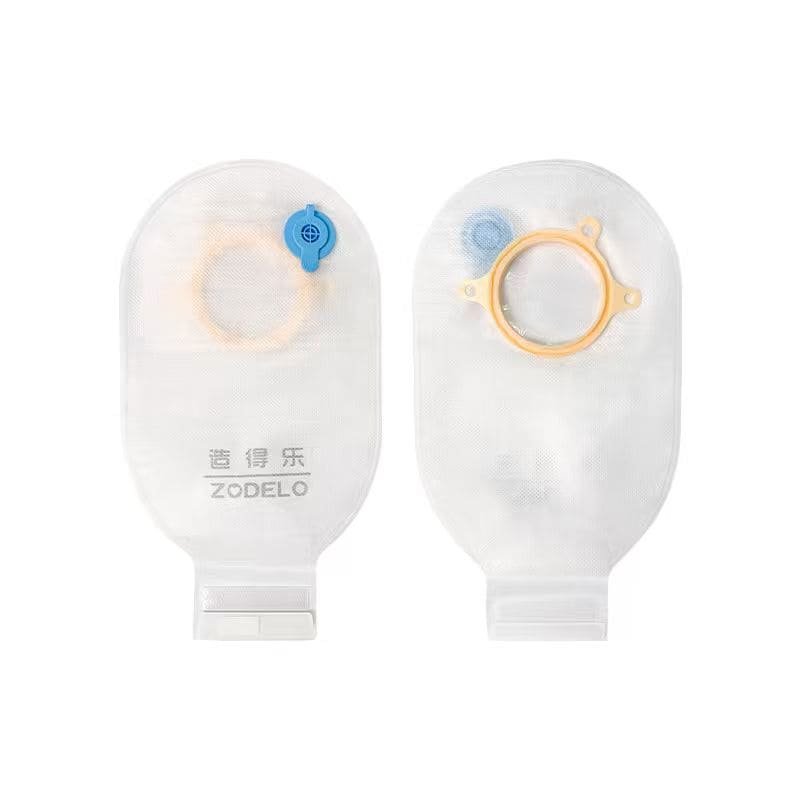
To understand J Pouch Vs Ostomy Bag, it is necessary to understand what is an ostomy bag. The Ostomy bag is a medical collection bag specifically designed to receive feces and urine discharged from the stoma. Some patients, due to inflammation or cancer in the anorectal area, external trauma or congenital diseases, are unable to use the intestinal excretion function normally. Therefore, they need to undergo stoma surgery to create a stoma in the abdomen to replace the original excretion function. After the operation, the ostomy bag needs to be fixed on the skin around the stoma to receive the excrement discharged from the stoma. The Ostomy bag can effectively protect the skin from being contaminated by excretory waste, while preventing leakage and odor.
2. Types of ostomy bags
One of the difference between j pouch vs ostomy bag is the types of ostomy bag The main types of Ostomy bags are as follows:
- Colostomy Bag: Suitable for colostomy. The stoma is located in the large intestine. The excrement is mainly formed feces. Colostomy bags are mostly equipped with activated carbon filters for odor control. It has a medium capacity and is suitable for patients with regular bowel movements.
- Ileostomy Bag: Suitable for ileostomy. The stoma is located in the ileum at the end of the small intestine. The excrement is mainly loose or liquid. Ileostomy bags are mostly open-top. It has a large capacity. It is usually equipped with a stronger leak-proof skin barrier. Patients change it more frequently.
- Urostomy Bag: Suitable for ileal conduit or ureterostomy. The excrement is mainly urine and is continuously discharged. The Urostomy Bag is equipped with an anti-reflux valve to prevent urine reflux. The bottom is generally a tap outlet.
3. Who needs ostomy bag?
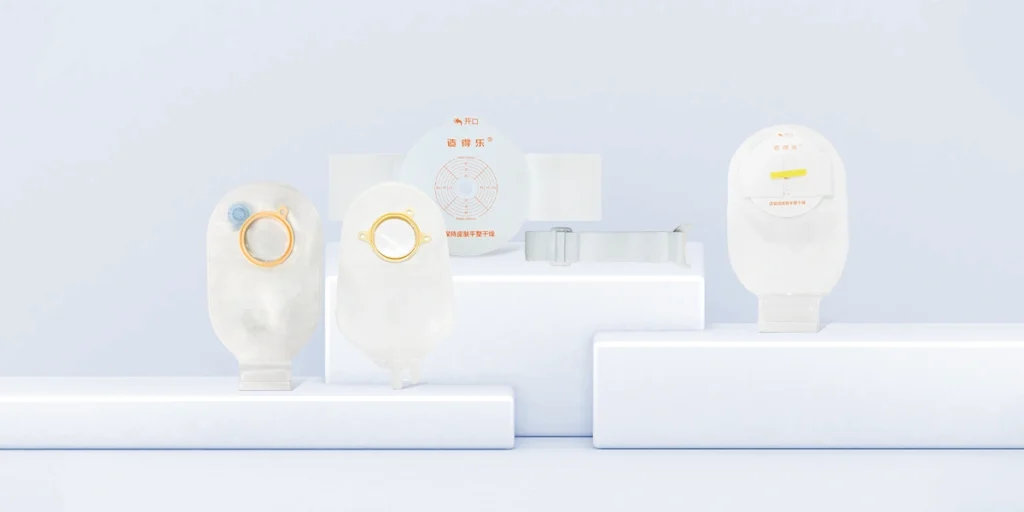
- Colostomy patients:Usually patients with rectal cancer, traumatic intestinal perforation, diverticulitis or inflammatory bowel disease. The excrement is mostly solid or semi-solid feces. Commonly used Closed-end ostomy bag. It can be used in combination with leak-proof rings and skin protective films to protect the skin and prevent leakage and odor.
- Ileostomypatients: Usually those with ulcerative colitis, Crohn’s disease or severe intestinal injury. Excrement is in liquid form and requires the use of a drainable ostomy bag. It can be used in combination with sealing rings and leak-proof ointment to enhance sealing performance and protect the skin.
- Urostomy patients:Those who have undergone cystectomy or have congenital urinary system defects. urostomy bag or Night drainage bag is required. Note that an anti-reflux valve needs to be used to prevent urine backflow.
- Temporary stoma patients:Short-term postoperative shunt to promote intestinal healing. A transparent ostomy bag can be used for convenient postoperative observation and care.
- Patients with long-term or permanent stoma:Permanent stoma caused by tumors, radiotherapy or chronic diseases. If you need to wear the ostomy bag for life, you can use the Two-Piece ostomy bag, which is more skin-friendly and economical.
4. Advantages of Ostomy bag
To correctly understand difference between j pouch vs ostomy bag. It is also necessary to know Benefits of ostomy bag. It mainly consists of the following four aspects:
- Sustain life
Colostomy can allow the affected area to rest and heal, while taking over the original defecation function, preventing infection, intestinal rupture or poisoning, and maintaining the patient’s life. In colorectal cancer surgery, Colostomy can create conditions for radiotherapy and chemotherapy and improve survival rates.
- Restore the defecation function
Colostomy can create a stoma in the patient’s abdomen to discharge excrement, replacing the original defecation function and allowing them to resume a normal life.
- Reduce infections and complications
For patients with severe intestinal inflammation or trauma, a temporary stoma can allow the affected area to rest and heal, preventing the spread of infection.
- Improve the quality of life
The colostomy bag can collect excrement and prevent it from being contaminated. At the same time, protect the skin around the stoma to prevent leakage and odor. Effectively enhance the quality of life and comfort of patients. Enhance patients’ confidence and freedom of movement.
5. Disadvantages of ostomy bag
- Stoma care issues
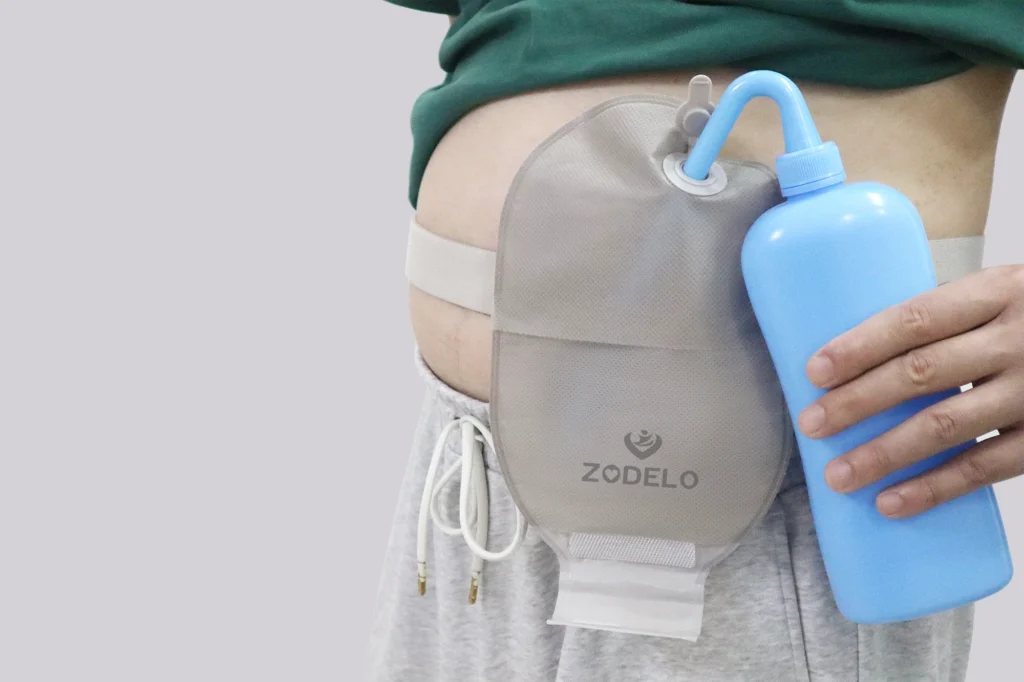
In the early stage after ostomy surgery, patients need to choose the most suitable ostomy bag for themselves. And learn how to replace the empty ostomy bag, clean the skin correctly and observe the stoma.
There may be problems such as leakage, odor and allergy when using the ostomy bag.
- Psychological and social impacts
Some patients may feel anxious, inferior and other psychological emotions because they need to wear the colostomy bag all the time.
When out, the leakage or odor problem of the ostomy bag may make patients feel embarrassed.
- Complications
Stoma may develop complications such as stoma prolapse, retraction, stenosis, hernia or bleeding, etc.
Leakage of the ostomy bag may cause irritation, redness, swelling and infection of the skin around the stoma.
j pouch vs ostomy bag: what’s the difference?

To understand j pouch vs ostomy bag, there are mainly the following six aspects:
1. J pouch vs ostomy bag: The Core Structural Difference
- J-pouch:Fold the small intestine at the end into a “J” shape to form an internal storage bag. Align with the anal sphincter and retain defecation through the anus. It is completely inside the body with no external structures. The essence is to reconstruct a new rectal function with the small intestine.
- Ostomy bag:Ostomy surgery leads the end of the small intestine or colon outside the abdominal wall. Feces flow into the external ostomy bag through the stoma. Essentially, it bypasses the anal system, and excrement enters the ostomy bag through the stoma.
2. J pouch vs ostomy bag: Physiological Function Differences
- J-pouch
The small intestinal pouch replaces the rectum, but it lacks the powerful water absorption capacity of the rectum.
The stool is relatively loose → the frequency of defecation is higher (generally 4 to 8 times per day).
Abdominal pressure is needed for emptying.
- Ostomybag
The feces enter the bag directly without passing through the anus.
The frequency is controllable and there is no need for the “urge to defecate”.
Less water is absorbed (especially from ileostomy), and the feces are usually more liquid.
3. J pouch vs ostomy bag: Surgical Complexity difference
J-pouch: The surgery is delicate and complex. Most of them are stage 2 to 3 surgeries. It is necessary to remove the colon and rectum, construct a pouch and anastomose the anal canal. Risks include: anastomotic leakage, cystic inflammation, stenosis, etc.
Ostomy bag: The surgery is relatively simple and safe. Most of them are one-time surgeries. The operation steps are few and recovery is fast. Complications are mostly concentrated around the stoma.
4. J pouch vs ostomy bag: Differences in Applicable Populations
Patients suitable for J-pouch:
- Ulcerative colitis (optimal indication)
- FAP
- The sphincter function is normal
- Young and with surgical tolerance
- I want to keep the way of defecating through the anus
Patients suitable for Ostomy bag:
- Crohn’s disease (J-pouch has a high risk)
- Elderly patients or those with multiple diseases
- Poor function of the sphincter or pelvic floor
- I don’t want to undergo multiple surgeries
- Pursue a more stable way of defecation
5. J pouch vs ostomy bag: Differences in Lifestyle
- J-pouch
No bags are needed, making the body appearance more natural
Exercise, dressing and socializing are more free
The defecation experience is closer to that before the operation
- Ostomy bag
Defecation is stable and controllable
The quality of life has improved significantly
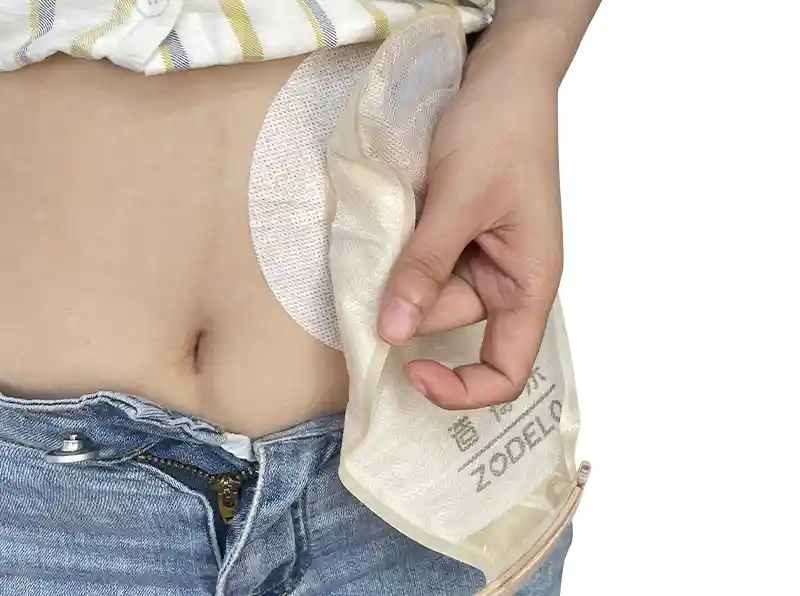
The specific differences between J pouch vs ostomy bag can be referred to in the following table:
| J-pouch | Ostomy bag |
Defecation method | Anal defecation | Abdominal wall stoma for defecation |
Whether it is external | No need | An ostomy bag is needed |
Surgical complexity | high | Moderately low |
Number of surgeries | 2 to 3 times | Once |
Complication types | Pocket inflammation, stenosis, and a sense of urgency | Stoma hernia, skin problems |
Defecation frequency | High frequency (4 to 8 times a day) | Controllable |
Appearance change | No appearance change | It needs to adapt to the stoma |
Applicable population | UC, FAP | Broader (including Crohn) |
Long-term satisfaction | Depending on the pouch function | It depends on stoma management |
How do you empty a J-pouch?
The J-shaped storage bag is a “J” -shaped fecal storage bag folded from the patient’s own small intestine and connected to the anus, replacing the original defecation function. When the J-type storage bag is filled with feces, the patient will go to the toilet to defecate as if they were having a normal bowel movement. Most patients can establish a regular bowel movement habit within 3 to 6 months after the operation.
However, it should be noted that patients need to avoid excessive straining or prolonged defecation to prevent damage to the health of the pelvic floor.
It can gently contract the abdominal muscles and help with excretion.
FAQs about J pouch vs ostomy bag
Q1. How does a person know if their J-pouch is failing?
- Symptoms continue to worsen: The frequency of defecation remains consistently higher than 10 to 12 times per day. There is a significant increase in bowel movements at night. Severe sense of urgency and constipation
- Ineffective treatment for cystic pocket inflammation:The use of multiple antibiotics still shows no improvement. Recurrent attacks with shortened intervals.
- Structural problem: Narrow and unable to expand. Persistent fistula. The bag is deformed or has long-term leakage.
- Severe decline in quality of life:Inability to work or sleep normally. Incomplete defecation or it takes a long time to empty. Weight loss and malnutrition.
Q2. When is surgery necessary for ulcerative colitis?
- Ineffective drug treatment: Biologics and small molecule therapy still fail to control inflammation. Hormone dependence or difficult-to-treat hormones.
- Life-threatening emergencies: Toxic megacolon, colonic perforation, massive hemorrhage, severe acute attacks that cannot be relieved by medication.
- Cancerous transformation or high-grade dysplasia:Long-term UC brings a high risk of colorectal cancer.
Q3. What to expect with J-pouch surgery
- Surgical procedure: The colon/rectum needs to be removed, and a J-pouch is constructed with the small intestine. Anastomosis with the anal sphincter is required. Most patients need temporary stoma protection for healing.
- Early postoperative period:Pain is controllable. You can get out of bed and walk around. Gradually resume the diet from liquid. Learn about the knowledge related to stoma care.
- 1 – 2months after the operation: The frequency of defecation is relatively high. Night defecation and a sense of urgency are common. Defecation gradually became stable.
- 6 –12 months after the operation: Most patients defecate 4 to 8 times a day. Life has basically returned to normal. Exercise, travel and work are not restricted. A small number of cases may develop bagulitis and require medical treatment at a hospital.

Conclusion - j pouch vs ostomy bag
Whether it is j pouch vs ostomy bag, the purpose is to help patients restore normal excretory function. However, only by accurately understanding the differences between j pouch vs ostomy bag can one correctly choose the most suitable surgical and nursing methods for oneself. Start a confident and comfortable life again and take scientific care of the stoma.
At Zodelo, every step from material selection to meticulous craftsmanship stems from a belief: to alleviate users’ concerns and enhance their comfort. Zodelo will always be with you.
More Resouces about j pouch vs ostomy bag
- J-Pouch Surgery– my.clevelandclinic
- Comparison of long-term outcomes of S and J pouches and continent ileostomies in ulcerative colitis patients with restorative proctocolectomy-experience in subspecialty pouch center– pubmed
- Advantages And Disadvantages of J Pouch Surgery– lacolorectaldoctor
- Twists And Turns Of J-Pouch Recovery– ostomy.org
- What to know about delaying J-pouch surgery for ulcerative colitis– medicalnewstoday
- Difference Between J Pouch And Colostomy- zodelo
- How to Choose the Best Ostomy Bag?– zodelo
- Adjusting to Life with an Ostomy Bag– zodelo
- Urostomy Vs Colostomy Bag– zodelo

Top 10 Colostomy Bag Manufacturers In India 2026
top 10 colostomy bag

Top 10 Stoma Bag Suppliers Uk 2026
Top 10 Stoma Bag Sup

The Ultimate Guide To Sex With A Colostomy Bag
The Ultimate Guide T

Top 10 Colostomy Bag Manufacturers And Suppliers In China 2026
Top 10 Colostomy Bag