

Types of Colostomy Pouches: A Complete Guide to Choosing the Right System
Table of Contents
No two leaves in the world are exactly alike. Similarly, each patient’s stoma shape, physical condition, skin sensitivity, and lifestyle are unique. Choosing an ostomy pouch that isn’t the right fit can lead to issues such as leakage and skin redness and swelling.
However, selecting the right colostomy pouch for your needs allows it to perform at its best. It reduces the risk of the base flange lifting and leakage while protecting the skin around the stoma, helping patients maintain their confidence in daily life.
What Is a Colostomy Pouch and How Does It Work?
A colostomy bag is a medical care product specifically designed to collect intestinal waste, primarily used by patients who have undergone colostomy surgery. During the procedure, the surgeon brings a portion of the colon through the abdominal wall to form a stoma, allowing feces to be expelled through the stoma.
To prevent soiling of clothing, the baseplate of the colostomy bag adheres to the skin over the stoma to collect waste.A colostomy bag consists of a pouch and a baseplate. The pouch is typically made of a soft, thin, and barrier-effective multilayer composite film material. The baseplate is usually made of medical-grade hydrocolloid.
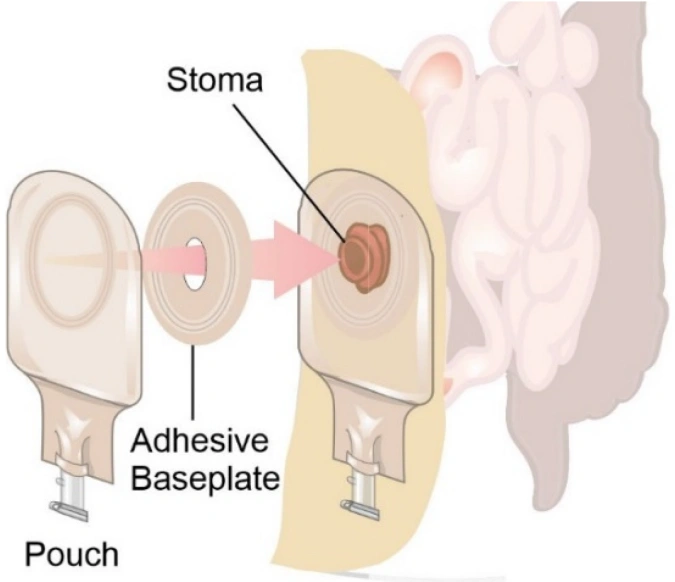
1. Main Components of a Colostomy Pouch System
Pouch: The pouch is the main component used to store waste. It features a multi-layer barrier membrane structure. It is soft and flexible, resistant to friction, and helps control odors.
Baseplate: The baseplate serves as the interface between the stoma and the pouch. Made of medical-grade hydrogel, it can absorb small amounts of moisture.
Discharge Port: There are two types of discharge ports: closed and open. Closed pouches cannot be emptied and must be replaced after each use. Open-top ostomy pouches can be emptied, cleaned, and reused.
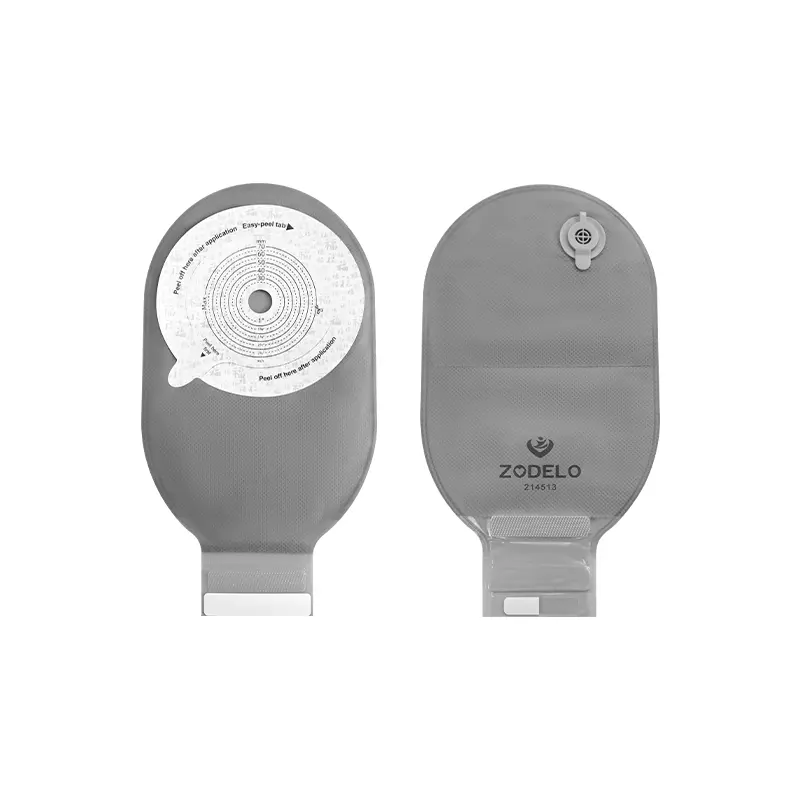
Filtration System: Some ostomy pouches are equipped with an activated carbon filter at the top to help release gases from inside the pouch. Zodelo ostomy pouches feature an air release valve that can vent air in three seconds and is also washable.
2. How a Colostomy Pouch Collects Stool and Protects Peristomal Skin?
Bowel waste is expelled through the stoma and flows directly into the ostomy pouch. The pouch is made of leak-proof material that safely contains fecal matter and prevents odors from escaping. For open-end ostomy pouches, patients can periodically empty the pouch through the drainage port at the bottom.
Fecal matter contains enzymes, moisture, and irritants that can easily damage the skin. The medical-grade hydrocolloid layer on the base plate adheres closely to the skin around the stoma, forming a barrier that isolates the fecal matter from the surrounding skin.
How Are Colostomy Pouches Classified?
Types of pouching systems can be classified into various types based on their structure, drainage method, baseplate type, and intended use. Patients’ needs for colostomy bags vary depending on the location and shape of their stoma, as well as the nature of their stool.
Types of pouching systems : Refers to different types of ostomy bag systems; this encompasses not only the ostomy bag itself but also the baseplate, the attachment method, and the overall connection structure.
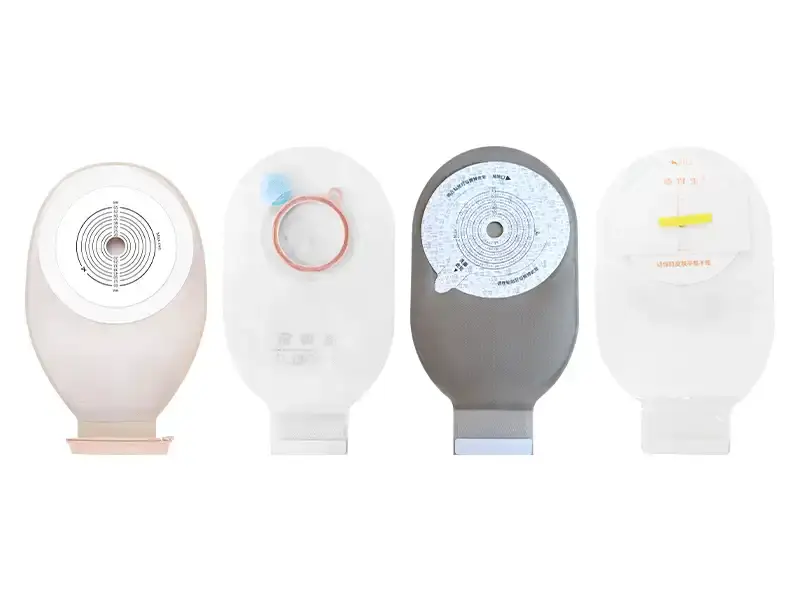
1.Classification by System Design: One-Piece or Two-Piece
Based on their structure, ostomy pouches are classified into one-piece and two-piece types.
a. One-Piece Colostomy Pouch
In a one-piece ostomy pouch, the pouch and baseplate form a single unit; to use it, simply adhere the baseplate directly to the skin around the stoma.
Features:
- Simple structure and easy to use, making it suitable for beginners or the elderly.
- The pouch is lightweight and thin, ensuring comfort during prolonged wear and a better fit under clothing.
b.Two-Piece Colostomy Pouch
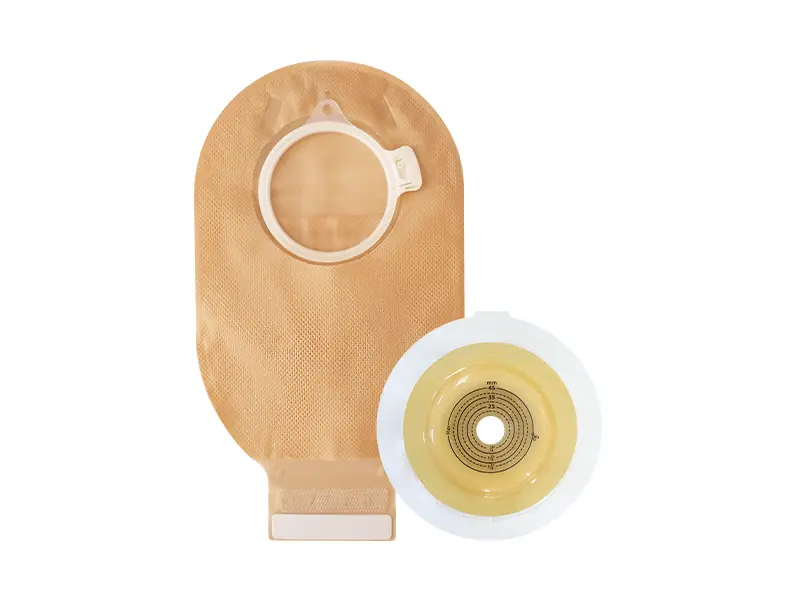
A two-piece colostomy pouch consists of a separate baseplate and pouch, which are connected via a snap or connecting ring.
Features:
- The pouch and baseplate can be replaced separately, and the baseplate is reusable.
- It reduces the need for repeated peeling of the skin, minimizing skin irritation.
- Different types of pouches can be used as needed.
2. Classification by Outlet: Closed-End or Drainable
Based on the drainage method, colostomy pouches are classified into closed-end pouches and drainable pouches.
a. Closed-End Colostomy Pouch
A closed-end pouch has no drainage opening at the bottom; when the pouch is full, it must be replaced entirely.
Features:
- Simple structure and discreet appearance; suitable for patients with low and regular stool output
- No need to clean the drainage port; simply replace as needed, making it suitable for short-term use.
b. Drainable Colostomy Pouch
Drainable colostomy pouches are designed with a drainage port at the bottom, allowing patients to open the pouch periodically to empty its contents.
Features:
- Reduces the need for frequent pouch changes over short periods.
- The interior of the pouch can be rinsed, ensuring better hygiene.
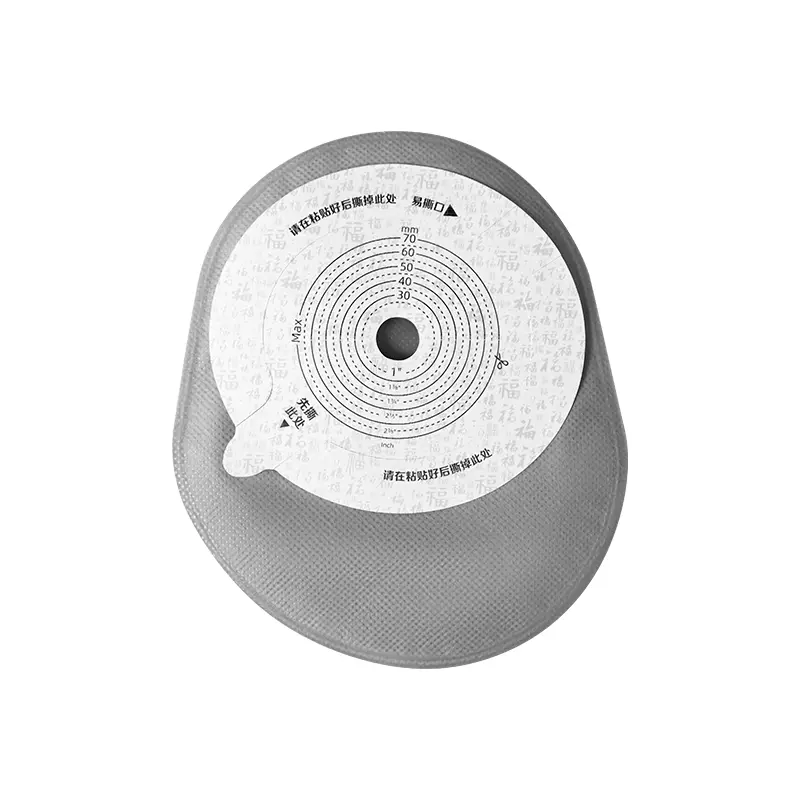
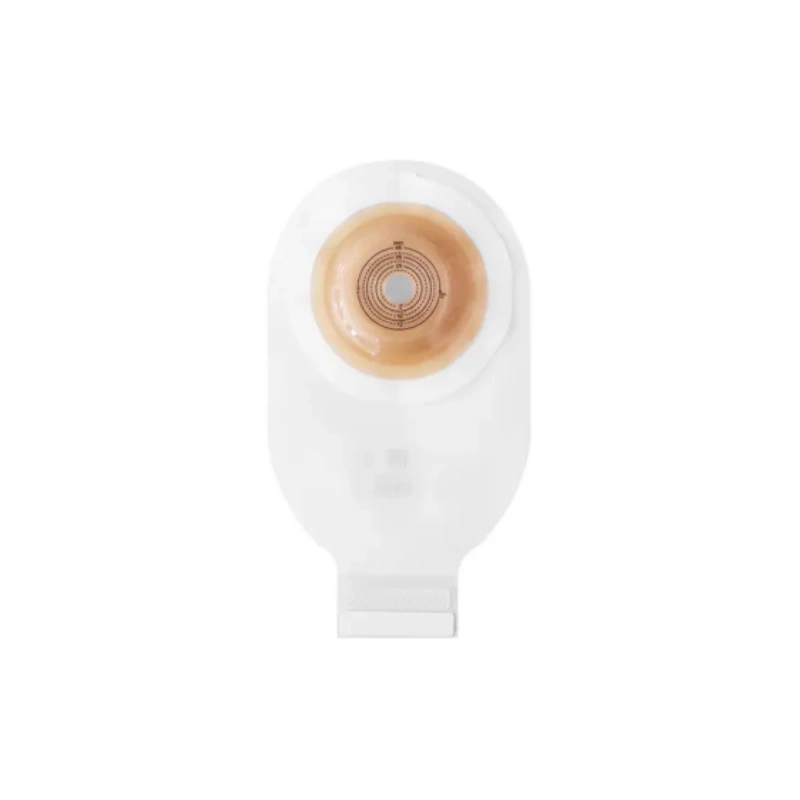
3. Classification by Skin Barrier: Flat or Convex
Based on the base design, colostomy pouches can be classified into flat-base and convex-base types.
a. Flat-Base Colostomy Pouches
Flat-base pouches are suitable for patients with a normal level of stoma protrusion and relatively smooth surrounding skin.
Features:
- Fits naturally, is comfortable to wear, and feels like a second skin.
- They adhere directly to the skin without applying pressure, resulting in a more discreet fit.
b. Convex-Base Ostomy Pouches
The curved structure of the convex base lifts the stoma, making it more prominent, and is suitable for patients with a recessed stoma.
Features:
- The convex structure provides gentle support to the skin around the stoma, reducing the likelihood of waste coming into contact with the skin.
- The convex base minimizes skin tugging caused by frequent changes, improving comfort during care.
4.Classification by Size, Visibility and Special Application
In addition to structural and functional classifications, ostomy pouches can also be categorized based on capacity, pouch transparency, and special designs.
a.Classified by Capacity
Ostomy bags of different capacities are suitable for different output volumes and usage scenarios:
- Small-capacity ostomy bags: Suitable for patients with low output and short-term use.
- Medium-capacity ostomy bags: Suitable for daily care needs.
- Large-capacity ostomy bags: Suitable for nighttime use, long-term wear, or patients with high output.
b.Classified by Transparency
- Transparent Pouch: Allows for easy observation of the stoma and waste, making it suitable for patients who have just undergone surgery.
- Semi-Transparent Pouch: Allows for observation of the stoma and waste while also protecting personal privacy.
- Opaque Pouch: The pouch is typically made of soft non-woven fabric and offers greater privacy.
c.Classified by Special Applications
To meet patients’ varying needs, ostomy pouches with special features are also available on the market:
- Ostomy pouches with activated carbon filters: Help control odors and reduce pouch swelling.
- Ostomy pouches with air release valves: Allow for quick air release in 3 seconds and can be used with a cleaning bottle to rinse the inside of the pouch.
- Hypoallergenic ostomy pouches: The base is made of medical-grade hydrocolloid, suitable for patients with sensitive skin.
- Pediatric ostomy pouches: Designed to accommodate children’s body sizes and activity levels.
One-Piece Colostomy Pouches
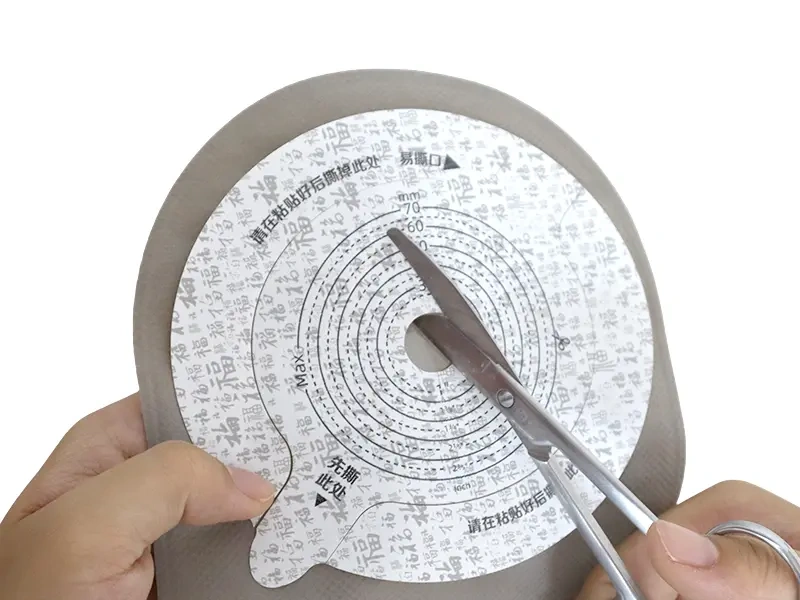
The one-piece colostomy pouch features a design where the pouch and base are integrated into a single unit. To use it, trim the base to fit the stoma and apply it to the skin surrounding the stoma. The steps are simple, and it is easy to use.
Advantages
- Simple design, easy to use: The one-piece design combines the base and pouch into a single unit. Patients do not need to connect or secure the pouch; they simply apply it in one step. The simple procedure reduces the difficulty of use and improves the efficiency of daily care.
- The integrated design is lighter and thinner: By eliminating connecting components, the one-piece ostomy pouch is lighter and thinner overall, conforming to the body’s contours and reducing the sensation of a foreign object during use.
- Quick replacement, suitable for daily care: The one-piece ostomy pouch requires fewer steps for replacement, allowing for quick changes and reducing the need for frequent replacements.
- Reduced risk of leakage at connection points: The integrated structure eliminates the need for additional connecting rings or locking mechanisms, reducing the risk of potential leakage.
Limitations
- The baseplate must be removed during replacement: When replacing a one-piece ostomy pouch, the entire unit must be removed. For patients with sensitive skin, frequent peeling and pulling can irritate the skin, leading to redness, swelling, and itching.
- Limited flexibility of use: Since the pouch and baseplate are permanently connected, a one-piece system does not allow for the free replacement of the pouch to meet different needs, unlike a two-piece ostomy pouch.
- Not suitable for complex stomas: For complex stomas characterized by stoma retraction, skin indentations around the stoma, or a high risk of leakage, a convex baseplate or a two-piece system should be selected to ensure a better seal.
Recommended for:
a:Patients seeking simplicity and convenience: Some patients wish to minimize steps and complete changes quickly; a one-piece colostomy pouch meets these needs.
b:Patients with a protruding stoma: When the stoma protrudes to a normal height, the surrounding skin is smooth, and the size remains consistent over time, a one-piece colostomy pouch provides a better fit.
c:Patients who prioritize comfort and privacy: The one-piece design is thinner and lighter than the two-piece design, so it doesn’t feel like a foreign object when worn and fits more comfortably under clothing.
d:Elderly patients or those who rely on caregivers: For patients with limited hand strength, impaired vision, or limited dexterity, one-piece ostomy pouches are easier to learn and use.
Colostomy: A colostomy involves bringing a portion of the large intestine (colon) out through an opening in the abdominal wall. This opening is called a stoma.
Two-Piece Colostomy Pouches
The two-piece colostomy pouch consists of a separate baseplate and a replaceable pouch. Patients can attach different types of pouches as needed. It offers flexible use and is gentle on the skin.
Advantages
- Reduces skin irritation and provides a comfortable experience: The base does not need to be changed frequently, significantly reducing repeated skin irritation caused by peeling and reattaching.
- Flexible replacement: Patients can switch to different types of ostomy pouches depending on the situation.
- Reduces care costs: For patients requiring long-term ostomy care, the two-piece system can alleviate the burden of care over the long term.
Limitations:
- Relatively more steps involved:
The two-piece system requires two steps—attaching the baseplate and connecting the pouch—which may take some time to master for beginners and older adults. - The connection mechanism may increase the product’s thickness:
Since the two-piece system consists of two parts, it may increase the appearance of abdominal protrusion. Patients concerned about privacy should opt for a thinner design.
Suitable for:
a:Patients requiring long-term ostomy care:For individuals who need to use ostomy pouches long-term, the two-piece system reduces the frequency of baseplate changes and helps protect the skin.
b:Patients with sensitive skin:For patients with sensitive skin, the two-piece design helps protect the skin by reducing the pressure caused by frequent removal of the adhesive layer.
c:Patients who need to switch between different pouches:Some patients need to use colostomy pouches of different capacities or types in various situations; the two-piece design allows for flexible switching.
One-Piece vs Two-Piece Colostomy Pouches
| Comparison | One-Piece Colostomy Pouch | Two-Piece Colostomy Pouch |
|---|---|---|
| Structure | Pouch and skin barrier are integrated | Pouch and skin barrier are separated |
| Ease of Use | Simple and easy to apply | Requires attaching pouch to barrier |
| Skin Protection | More frequent barrier removal | Less skin stress with longer barrier wear |
| Flexibility | Limited customization | More options for pouch replacement |
| Comfort | Lightweight and discreet | Flexible for long-term use |
| Replacement | Replace the entire system | Replace pouch only when needed |
| Best For | New users and simple daily care | Long-term users needing flexibility |
Can One-Piece and Two-Piece Pouches Both Be Closed or Drainable?
Both types are available in closed-end and open-end designs. One-piece and Two-piece refer to how the baseplate and pouch are connected, while Closed-end and Open-end refer to the method of waste discharge.
One-Piece Ostomy Pouch
In a one-piece ostomy pouch, the baseplate and pouch are integrated into a single unit.
Closed-End Design: Single-use; the entire pouch must be peeled off and discarded. Suitable for patients with low stool output and well-formed stools.
Open-end design: The bottom of the pouch features Velcro or a closure clip, allowing for repeated emptying. Suitable for patients with frequent bowel movements or loose stools.
Two-piece ostomy pouch
In a two-piece ostomy pouch, the baseplate and pouch are separable, typically connected via clips or the baseplate itself.
Closed-end design: Once the pouch is full, it can be removed and replaced by unfastening the connection; the baseplate can remain on the skin for continued use.
Open-End Design: The pouch can be emptied repeatedly, and the baseplate can be worn long-term, reducing friction and protecting the skin.
Closed-End Colostomy Pouches
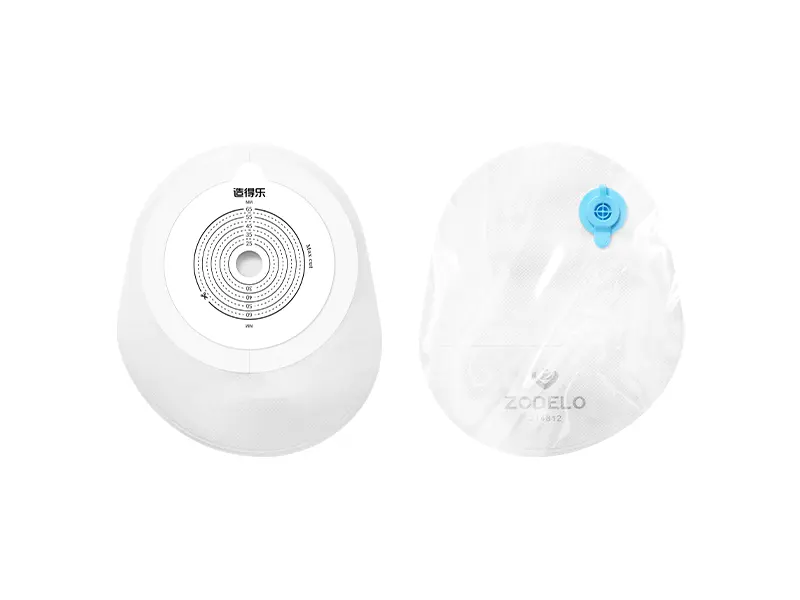
A closed-end colostomy pouch is a single-use ostomy pouch. Its bottom is completely sealed, with no drainage opening or closure clip.
Advantages:
- Lightweight and Discreet: Without a drainage opening or closure, closed-end colostomy pouches are typically thinner and lighter than open-end pouches, offering better concealment.
- Easy to Use: With no closure clips or Velcro, there is no risk of leakage due to an improperly sealed closure.
- Odor Control: Since they are sealed and discarded after a single use, there are no odor issues caused by repeated emptying.
- Lower Cost: The price per unit is often lower than that of more complex open-end ostomy pouches.
Limitations:
- Frequent replacement: Since they cannot be emptied, they may need to be replaced 2 to 4 times a day, or even more.
- Restrictions on stool consistency: Suitable only for patients whose stool is already formed.
- Inconvenient for travel: When going out, patients need to carry multiple spare ostomy bags and a bag for disposing of used ones.
Are Closed Pouches Suitable for Formed Stool?
Closed-end ostomy pouches are suitable for formed stool.
Since the stool is formed, it does not move around inside the pouch but remains securely at the bottom, reducing the likelihood of leakage.
If the stool is loose, closed-end pouches are not only prone to leakage but also need to be changed frequently because they fill up too quickly; therefore, closed-end pouches are not suitable for loose stools.
When Should You Use a Closed-End Pouch?
- Patients with a colostomy who have regular bowel movements
Closed-end ostomy bags are primarily suitable for patients with a colostomy. When a patient’s bowel movements have returned to a regular pattern and the stool consistency is stable and formed, closed-end bags provide excellent protection against leaks and odors. - Patients with low daily replacement frequency
Because closed-end bags cannot be emptied and must be discarded entirely once full, they are suitable for patients who have fewer bowel movements per day. If a patient needs to have multiple bowel movements per day, the frequent replacement of closed-end pouches would result in significant waste. - For those seeking a discreet and lightweight option
Closed-end pouches lack bottom closure clips or Velcro fasteners, resulting in a lightweight and flat overall design. For patients who are particularly concerned about their appearance when wearing tight-fitting clothing, closed-end pouches are an excellent choice. - Elderly patients with limited hand dexterity
Elderly patients with arthritis, weak hand strength, or poor vision may find it difficult to operate the clamps or Velcro fasteners on open-top pouches. Closed-top pouches are easy to use, reducing the difficulty of daily care. - During Nighttime Sleep
Some patients experience slower bowel motility at night, with smaller and more regular bowel movements. Changing to a new closed-top ostomy pouch before bed can help avoid having to get up in the middle of the night to empty it.
Drainable Colostomy Pouches
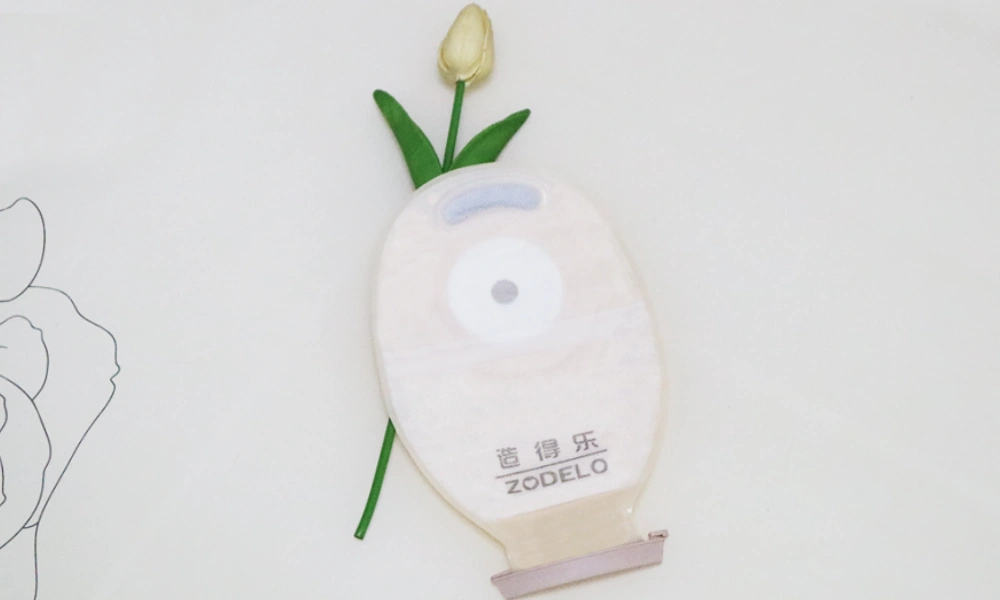
A drainable colostomy bag is a colostomy bag with a drainage port and a sealing mechanism at the bottom. The sealing mechanism typically consists of features such as Velcro or sealing clips. Patients can use the drainage port to empty the bag of stool or to rinse the interior of the bag.
Common Outlet Closure Designs
Velcro Closure: The bottom of the bag typically features two interlocking Velcro strips. The patient should roll the bottom of the bag upward 3 to 4 times, then press the Velcro strips together firmly to seal it. This design is easy to use and provides a secure seal.
Sealing Clip: The bottom of the bag is equipped with a special hard plastic clip or fastener. After emptying the bag, the patient rolls up the bottom and secures it with the clip. This design provides a very secure seal that is unlikely to come loose.
Advantages AND Limitations of Drainable Colostomy Bags
Advantages:
- Flexible and Convenient: There is no need to frequently replace the entire ostomy pouch; it only needs to be emptied when it is 1/3 to 1/2 full. This reduces the amount of supplies used and lowers usage costs.
- Suitable for Various Types of Stool: Whether loose, paste-like, or formed stool, the drainable ostomy pouch can easily handle it. It is particularly suitable for patients with unstable stool in the early postoperative period.
- Reduced Skin Irritation: With a two-piece drainable ostomy pouch, the baseplate can remain on the skin for several days, reducing damage to the stoma skin caused by repeatedly peeling off the baseplate.
Limitations:
- High Maintenance and Cleaning Requirements: After each emptying, the pouch outlet must be carefully cleaned and resealed. Improper handling or inadequate cleaning may result in odors or leaks.
- Bulky: Due to additional features at the base—such as sealing clips, Velcro, or valves—drainable ostomy pouches are slightly thicker when rolled up after emptying, which may cause a slight bulge when wearing tight-fitting clothing.
- Potential risk of leakage: Aging sealing strips, reduced adhesion of Velcro, or loosely fastened sealing clips may pose a risk of leakage during outdoor activities.
When Should Colostomy Patients Use a Drainable Pouch?
a:Early Postoperative and Recovery Periods: In the initial stages following colostomy surgery, patients typically experience loose stools and frequent bowel movements. Using a drainable ostomy pouch facilitates emptying.
b:Patients with Unstable Stool Consistency: If a patient’s stool is frequently pasty or semi-liquid, or if bowel habits fluctuate significantly due to dietary factors, a drainable ostomy pouch provides the maximum safety buffer.
c:Those seeking cost-effectiveness and environmental sustainability: For patients who need to wear ostomy bags long-term, the drainable design reduces the number of ostomy bags that need to be changed daily, thereby lowering usage costs.
Closed-End vs Drainable Colostomy Pouches
| Comparison | Closed-End Colostomy Pouch | Drainable Colostomy Pouch |
|---|---|---|
| Design | Sealed pouch without an outlet | Pouch with a drainable opening at the bottom |
| Emptying Method | Replace the entire pouch when full | Empty the pouch through the outlet and reuse |
| Convenience | Quick and simple replacement | Flexible for daily management |
| Best For | Low output and short-term use | Higher output and long-term use |
| Maintenance | No outlet cleaning required | Requires regular emptying and cleaning |
| Discretion | Compact and discreet design | Slightly larger due to outlet design |
| Cost Efficiency | Higher replacement frequency | More economical for continuous use |
Flat Colostomy Pouches
Its adhesive surface is completely flat, with no inward curves or outward protrusions. The baseplate adheres directly and evenly to the abdominal skin using medical-grade adhesive, forming a protective barrier that collects waste in the pouch.
A comprehensive guide to the different types of stoma bags : Flat pouches are more commonly used when the stoma protrudes naturally and the peristomal skin is flat and healthy.
Who Is a Flat Colostomy Pouch Suitable For?
Patients with a protruding stoma: Suitable for patients whose stoma protrudes approximately 1 to 2 centimeters above the skin surface. A protruding stoma allows waste to flow directly into the pouch.
Patients with flat abdominal skin: Suitable for patients whose abdominal skin around the stoma is flat, with no noticeable folds, scars, or indentations. Flat skin allows the adhesive on the baseplate to adhere closely to the skin.
When Can a Flat Barrier Increase Leakage Risk?
Patients with a protruding stoma: Suitable for patients whose stoma protrudes approximately 1 to 2 centimeters above the skin surface. A protruding stoma allows waste to flow directly into the pouch.
Patients with flat abdominal skin: Suitable for patients whose abdominal skin around the stoma is flat, with no noticeable folds, scars, or indentations. Flat skin allows the adhesive on the baseplate to adhere closely to the skin.
Convex Colostomy Pouches
The base of a convex colostomy pouch is shaped like a bowl or dome that protrudes outward. This design is intended to apply pressure to the skin around the stoma, helping the stoma protrude outward. Waste falls directly into the pouch.
Soft, Light and Deep Convexity Explained
- Slightly Convex: Features a shallow convex shape, used to correct minor issues such as small skin folds around the stoma or a slightly tilted stoma opening. It provides gentle tension to prevent waste from accumulating at the edges of the baseplate.
- Medium-Dome: Features a certain degree of flexibility, allowing it to bend and conform to the patient’s body movements. It is suitable for patients with insufficient stoma protrusion or noticeable folds around the stoma.
- Deep-Dome: Offers the greatest dome height and a firmer support structure. It is specifically designed for patients with severe stoma retraction, deep-set stomas, or deep grooves and sagging fat deposits around the stoma.
Convex Pouches for Flush or Retracted Stomas
- Flush Stoma: If the stoma is flush with the skin surface but the surrounding skin is relatively flat, we recommend using a shallow or medium-dome baseplate. When used with a leak-proof paste or leak-proof ring, it can fill in tiny gaps and reduce leakage.
- Recessed/Sunken Stoma: If the stoma is noticeably below the skin surface, or if there are deep folds around it or thick abdominal fat, a deep-contoured baseplate should be selected. A deep-contoured baseplate can reach deep into the recess and provide sufficient support to lift the stoma to the surface.
Can Convexity Cause Pressure or Skin Problems?
a:Risk of Pressure Injuries: If the baseplate is too deep or too rigid, it may exert pressure on the delicate skin around the stoma, leading to pressure ulcers.
b:Pain and Discomfort: If a patient experiences persistent pain or severe discomfort after wearing a convex baseplate, it usually indicates that the baseplate type is not compatible with the patient’s body shape.
c:Proper Assessment Is Key: The selection of a convex baseplate must be based on the shape of the stoma, the firmness of the abdomen, and the condition of the skin.
Flat vs Convex Colostomy Pouches
Flat vs Convex Comparison Table
| Comparison | Flat Skin Barrier | Convex Skin Barrier |
|---|---|---|
| Design | Flat surface for standard fitting | Curved design with gentle pressure around the stoma |
| Stoma Type | Normal and protruding stomas | Retracted or flush stomas |
| Sealing | Standard sealing performance | Enhanced sealing to reduce leakage |
| Skin Condition | Smooth and even peristomal skin | Uneven skin surfaces or skin folds |
| Comfort | Lightweight and flexible | Provides extra support for difficult stomas |
| Best For | Stable stoma conditions | Leakage concerns and challenging stomas |
How Stoma Height and Abdominal Contours Affect the Choice?
The height of the stoma and the condition of the abdomen are key factors in selecting a baseplate. A typical stoma should protrude 1 to 2 centimeters above the skin surface, with the surrounding abdomen being flat. A flat baseplate provides an excellent seal.
When the stoma is below skin level or there are folds, creases, or even a hernia around the stoma, a convex baseplate is needed to physically support and push the stoma outward, ensuring that waste flows directly into the pouch.
Why Convex Products Should Be Selected with Professional Guidance?
There are currently no standardized measurement criteria for characteristics such as the convexity and flexibility of convex ostomy bases; selection requires the clinical experience and assessment of a healthcare professional.
If a patient blindly chooses a convex ostomy base that is too deep or too rigid, or pairs it with a waistband that is too tight, it can easily cause excessive pressure on the skin around the stoma.
The shape of the stoma and the contours of the abdomen are not static. As a patient’s weight increases, abdominal circumference changes, or the stoma itself retracts, a baseplate that was originally a good fit may no longer be suitable.
Healthcare professionals can recommend the most appropriate baseplate type based on the patient’s current body shape.
Colostomy Pouch Comparison Chart
| Comparison | One-Piece Colostomy Pouch | Two-Piece Colostomy Pouch | Closed-End Colostomy Pouch | Drainable Colostomy Pouch |
|---|---|---|---|---|
| System Design | Integrated pouch and skin barrier | Separate pouch and skin barrier | Sealed pouch design | Pouch with drainable outlet |
| Main Advantage | Simple and easy to use | Flexible replacement and better skin protection | Compact and discreet | Suitable for long-term daily use |
| Replacement | Replace the entire system | Replace pouch only when needed | Replace after filling | Empty and reuse before replacement |
| Skin Protection | Standard skin protection | Reduced skin stress with longer barrier wear | Suitable for short-term use | Supports frequent and continuous use |
| Best For | New users and simple care | Long-term users needing flexibility | Low output and predictable output | Higher output and long-term care |
| Comfort Level | Lightweight and low-profile | More customizable | More discreet under clothing | Convenient for daily management |
| Common Applications | Daily ostomy care | Long-term ostomy management | Travel and short-term occasions | Regular home and clinical care |
How to Choose the Right Type of Colostomy Pouch?

With such a wide variety of colostomy bags on the market, many patients often find themselves overwhelmed by the choices. Before selecting a colostomy bag, it’s important to clearly understand your stoma condition and needs. To choose a colostomy bag that’s right for you, consider the following factors:
1. Based on stool consistency
Stool from a colostomy is typically well-formed. If bowel movements are regular and infrequent, a closed-end ostomy pouch is a good choice. If the stool is loose, paste-like, or bowel movements are frequent, a drainable ostomy pouch must be used.
2. Based on Stoma Shape and Abdominal Skin
The height of the stoma and the condition of the surrounding skin determine the choice of baseplate. For patients with a well-protruding stoma and a flat abdomen, a flat baseplate provides excellent sealing.
If the stoma is flush, retracted, or if the abdomen has folds or indentations, a shallow or deep convex baseplate should be selected under the guidance of a stoma therapist, and used in conjunction with a stoma belt.
3. Personal Lifestyle Habits and Activity Scenarios
For older adults with limited hand dexterity, closed-top or hook-and-loop-fastened ostomy pouches are easier to use. For patients who enjoy sports or travel frequently for business, choose ostomy pouches that are lightweight, discreet, and offer excellent odor and leak protection.
Whether at work or resting at home, two-piece ostomy pouches allow for the replacement of just the pouch body, which is both convenient and hygienic.
4. Based on Financial Considerations
One-piece ostomy pouches are easy to change, but the cost of frequent replacement over the long term is slightly higher. Two-piece ostomy pouches may require a slightly higher initial investment, but the base can be reused for several days—requiring only the pouch to be replaced—making them more cost-effective in the long run.
A guide to ostomy bags and pouching systems : Ostomy nurses at the University of Chicago Medical Center state that factors to consider when choosing an ostomy pouching system include the type of stoma, your body shape, stoma configuration, discretion, activities of daily living, and personal preference.
Which Colostomy Pouch Is Best for Different Situations?
Like anyone else, patients need to use the appropriate ostomy pouch for different daily situations. Below are recommendations for several common scenarios:
1. Early Postoperative and Recovery Period: Two-piece transparent open-top pouch
In the early postoperative period, there is often swelling around the stoma, and output is typically loose, frequent, and irregular. A two-piece transparent open-top pouch is the best choice.
The transparent design allows patients and healthcare providers to monitor the stoma’s condition and the stool at any time; the two-piece base can remain on the skin for several days, requiring only the pouch to be replaced, which reduces skin irritation caused by frequent removal. The open-top design allows for easy emptying.
2. Resting at Home and Nighttime Sleep: Closed Pouches
When resting at home or sleeping at night, activity levels decrease. If bowel movements are regular and well-formed, lightweight, closed pouches are a convenient and comfortable option.
3. Work and Travel: Two-Piece Open-Top Pouch or One-Piece Closed Pouch
For patients who work long hours or enjoy traveling. With a two-piece open-top pouch, the pouch can be removed separately for emptying or cleaning without having to peel off the baseplate, so it doesn’t interfere with work. If bowel movements are very regular and infrequent, a one-piece closed pouch is also a reliable choice for long-distance travel.
4. Exercise and Swimming: One-Piece Open-Top Pouch
During exercise or swimming, an ostomy pouch must offer excellent flexibility and stay securely in place.
One-piece ostomy pouches are lighter, thinner, and softer, conforming better to the contours of the abdomen and reducing friction during physical activity. It is also recommended to use an ostomy belt to reinforce the baseplate and prevent it from shifting or coming loose during vigorous exercise.
5. Social Gatherings and Intimate Moments: Skin-Tone, Opaque, Closed Pouches
When attending dinners, going on dates, or engaging in intimate activities, patients need ostomy pouches that offer good concealment. Skin-tone, opaque, closed pouches minimize their visual presence.
Key Features That Affect Colostomy Pouch Performance
When selecting the right ostomy pouch, in addition to choosing the baseplate and pouch structure, certain special designs and features of the pouch are important. Understanding these features and characteristics can help you make a more informed decision:
- Activated Carbon Filter
This design helps address “pouch bloating” and odor. The intestines produce gas during digestion; if this gas cannot escape, the ostomy pouch will swell like a balloon, which can easily lead to leakage. Ostomy pouches with built-in activated carbon filters silently release gas from the pouch and effectively absorb odors. - Air Release Valve
Zodelo’s innovative design features an air release valve located at the top right of the pouch.
This valve releases air in 3 seconds, helping you quickly resolve pouch bloating issues. It can also be used with the matching rinse bottle: simply insert the rinse nozzle into the vent to easily flush waste out of the pouch with clean water. This method is both hygienic and effective at preventing odors. - Base Adhesive Material
The base is the part of the ostomy pouch that comes into direct contact with the skin, and its material directly affects the skin. High-quality bases typically use skin-friendly, flexible medical-grade adhesive that can stretch and contract with the contours of the abdomen and the body’s movements. - Pouch Material
The film used in ostomy pouches typically consists of multi-layer co-extruded high-barrier PE film or EVA and TPE films. A high-quality pouch is not only soft and form-fitting but also effectively blocks odors. - Transparency and Visibility
The transparency of the ostomy pouch is also crucial. In the early postoperative period, it is necessary to monitor the condition of the stoma and the waste. A transparent design also helps improve the efficiency of care. - Leak-Proof Sealing Process
The heat-sealing process used on the edges of ostomy pouches determines their durability and leak resistance. High-quality products typically employ a multi-layer heat-sealing process, which ensures tight, neat edges and prevents leakage of waste.
How to Fit and Use a Colostomy Pouch Correctly?
Once you’ve chosen the right ostomy pouch, you’ll also need to learn how to wear it properly.
1. Know the Best Time to Change the Pouch
The best time to change an ostomy pouch is usually in the early morning on an empty stomach, or two to four hours after a meal. At these times, bowel movements are relatively slow and stool volume is low, which greatly reduces disruption during the change. When the pouch is one-third full, it should be emptied promptly.
2. Removal and Cleaning
Use one hand to hold the skin around the stoma while using the other hand to slowly and gently peel the old baseplate off from top to bottom, taking care not to pull or tug. Then, use warm water or alcohol-free wipes to gently wipe the stoma and surrounding skin from the outside in, removing any residual adhesive and waste.
3. Measurement and Cutting
In the early postoperative period, the stoma undergoes a process of edema resolution, and its size will change; therefore, it must be remeasured before each change. Use a specialized stoma ruler to measure the size at the base of the stoma; the opening of the baseplate should be 1 to 2 millimeters larger than the actual measured size.
An opening that is too small may rub against the stoma and cause bleeding, while an opening that is too large will expose the skin to waste, leading to dermatitis.
4. Skin Protection and Baseplate Application
If the skin around the stoma is damaged, first sprinkle a small amount of stoma care powder and brush off any excess. Then spray a layer of alcohol-free skin barrier spray and allow it to dry completely to form a “protective film.”
Peel off the backing paper from the baseplate, align it with the stoma, and apply it smoothly from bottom to top. After application, gently press the base plate with the palms of both hands for 5 to 10 minutes, using the warmth of your hands to help it adhere.
5. Sealing and Daily Checks
For a two-piece ostomy pouch, secure the pouch to the base by snapping the clips into place. For an open-top pouch, after emptying it, roll the bottom up 3 to 4 times and secure it tightly with a closure clip or Velcro.
Common Problems with Different Colostomy Pouch Types
Even when the right ostomy pouch is selected, some issues may arise during daily use.
1. Frequent leakage from the baseplate
Leakage usually has three causes: First, the baseplate is cut improperly—it should not be too large or too small. Second, the skin is not properly prepared; make sure to thoroughly remove any residual adhesive before applying a new baseplate. Third, the skin around the stoma is damaged or has dermatitis, preventing the adhesive from adhering securely.
Recommendations: Re-measure the stoma size accurately to ensure the baseplate opening is 1–2 millimeters larger than the base of the stoma; thoroughly clean and dry the skin before changing the baseplate; if the skin is already damaged, first use stoma care powder and a skin barrier to repair it before applying the baseplate.
2. Stoma Pouch Bulging
When the intestines produce a large amount of gas and the activated carbon filter in the stoma pouch becomes saturated with fecal fluid or clogged, the gas cannot escape, causing the pouch to bulge like a balloon. This not only increases the risk of detachment but also causes discomfort.
Recommendations: Avoid consuming excessive amounts of gas-producing foods. Use products with an air vent; Zodelo stoma pouches are equipped with an air vent that allows for rapid gas release.
3. Redness, Itching, or Sores Around the Stoma
Skin issues are primarily divided into three categories: moisture-related dermatitis, allergic dermatitis, and mechanical irritation.
Recommendations: It is important to keep the skin around the stoma dry. If you experience an allergic reaction, try switching to a different brand of ostomy products. Use an adhesive remover when removing the pouch.
4. Stoma Bleeding
The stoma mucosa itself lacks pain-sensing nerves. If patients apply excessive force during cleaning or application, or if the stoma bag repeatedly rubs against the stoma, this can easily cause minor bleeding from the mucosa outside the intestinal lumen.
Recommendations: When cleaning the stoma daily, use gentle movements and soft, damp tissues or specialized wipes; do not rub vigorously with dry tissues. When changing the stoma pouch, leave a small amount of air inside the pouch to act as a cushion, preventing the inner wall of the pouch from rubbing directly against the stoma mucosa.
5. Stoma Retraction or Prolapse
Sudden weight gain can cause stoma retraction, which may lead to leakage. Frequent coughing or lifting heavy objects may cause the bowel to prolapse outward.
Recommendations: For a retracted stoma, use a convex baseplate in combination with a waist belt. In daily life, avoid lifting heavy objects or standing up quickly as much as possible. When coughing, gently cover the stoma with your hand to reduce pressure.
Common Mistakes When Choosing a Colostomy Pouch
- Ignoring Stoma Shape and Blindly Choosing a Flat Baseplate
Many beginners believe that one-piece flat stoma pouches are convenient and quick to use, so they purchase and use them without further consideration.
However, for patients whose stoma is low-lying or retracted, or who have noticeable skin folds and indentations around the abdomen, a flat baseplate cannot form an effective seal, making leakage very likely.
Correct Approach: Before purchasing, consult a healthcare professional to assess the stoma height and abdominal contour. Select a shallow, appropriately sized base plate based on the stoma’s shape, and use it in conjunction with a stoma belt. - Inaccurate or rigid cutting of the chassis
Some patients prefer not to rub against their stoma and are in the habit of cutting the opening of the stoma baseplate slightly larger. Others continue to use the same size for a long time after surgery, neglecting changes in the stoma.
An opening that is too large can cause the skin to be continuously exposed to fecal matter, leading to severe dermatitis. Conversely, an opening that is too small can constrict the stoma and cause bleeding. Changes in body weight can also affect the shape of the abdomen, and using a fixed size can easily lead to leakage.
Correct Approach: Re-measure at every change; the opening of the baseplate should be 1–2 millimeters larger than the base of the stoma. It is recommended to reassess stoma size and abdominal contours every 3 months post-surgery and adjust the baseplate size flexibly based on actual changes. - Overemphasizing Adhesion and Frequent Changes
Some patients, concerned about leakage, blindly choose highly adhesive ostomy bases or peel them off and replace them multiple times a day. Excessively strong adhesive can easily damage fragile skin, and frequent removal can also harm the skin.
Correct Approach: Stronger adhesion is not necessarily better. Patients with sensitive skin should choose flexible ostomy bases containing skin-care ingredients. Reduce the frequency of peeling off the ostomy base. - Excessive Cleaning or Incorrect Use of Leak-Proof Paste
Some people with a tendency toward excessive cleanliness are in the habit of wiping the area around the stoma with strong disinfectants such as alcohol or povidone-iodine, or applying leak-proof paste all over the ostomy baseplate.
Excessive disinfection can damage the skin’s natural barrier, leading to dryness and cracking. Applying leak-proof paste over a large area not only creates gaps that can cause leakage but also makes it difficult to remove, which can interfere with the adhesion of a new baseplate.
Correct Approach: For daily cleaning, simply gently wipe the area with lukewarm water (around 37°C) or a mild, pH-neutral cleanser, then pat dry. Apply barrier paste or skin care powder sparingly only to the area around the base of the stoma where there are small gaps or breaks; do not apply it over a large area.
Types of ostomy bags and how to choose what’s best for you: A report from a leading ostomy association notes that finding the right ostomy bag may require some trial and error. Do not expect the first one you buy to be a perfect fit; you need to try out products to ensure they are comfortable and suit your lifestyle.
Colostomy Pouches vs Ileostomy and Urostomy Pouches
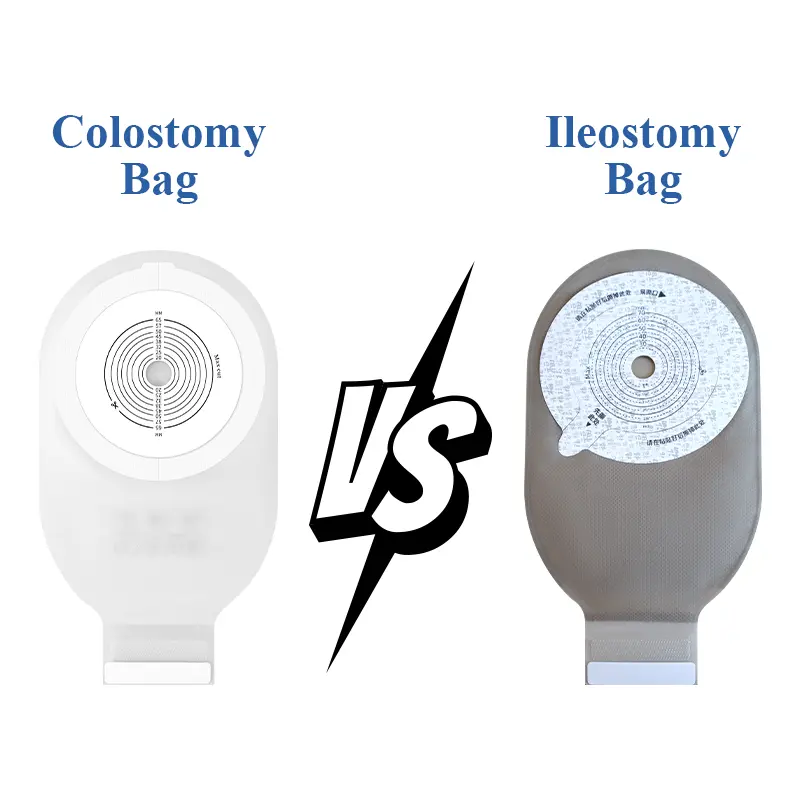
a:Colostomy Bag vs. Ileostomy Bag
The difference lies in the consistency and frequency of stool.
Colostomy: The stoma is located in the large intestine; the stool is typically more formed, and bowel movements are relatively infrequent and more regular. Therefore, colostomy patients can flexibly choose between closed or open bags depending on their situation.
Ileostomy: The stoma is located at the end of the small intestine, and the stool is mostly paste-like, containing large amounts of corrosive digestive enzymes. The volume of stool is high, and the frequency of bowel movements is frequent. Therefore, ileostomy patients must use open-top pouches that can be emptied frequently.
b:Colostomy Pouch vs. Urostomy Pouch
The difference lies in the physical form of the waste and the anti-reflux design.
Colostomy: Primarily collects feces; the pouch design focuses on supporting the weight of solid or semi-solid waste, as well as odor control and venting functions.
Urostomy: Primarily used to collect urine. Since urine is a continuously produced fluid, urostomy bags must be equipped with special anti-reflux mechanisms to prevent urine backflow, which can lead to urinary tract infections.
Urostomy bags are typically designed with a drainage valve at the bottom that can be connected to a bedside drainage bag, allowing for continuous urine drainage while the patient sleeps at night.
For Distributors and Healthcare Buyers: How to Specify Colostomy Pouches

1. Identify the Base Type and Suitable User Groups
Before purchasing, determine the primary stoma characteristics of the target user group. For typical patients with a protruding stoma and a flat abdomen, stock standard flat bases.
For patients with a flush or retracted stoma, or those with abdominal folds, provide shallow or deep convex bases.
2. Confirm Bag Drainage Features and Material Properties
Determine the bag type based on the characteristics of the stool: closed-top ostomy bags are suitable for patients with formed stools, while open-top ostomy bags are essential for patients with loose stools or those in the early postoperative period.
Also pay attention to product specifications, such as whether the bag includes an activated carbon filter or an air vent, whether the bag is made of noise-reducing material, and whether the base plate contains skin-care ingredients.
3. Standardize Measurement and Cutting Guidelines
Stoma size varies from person to person and may change postoperatively. When purchasing, select baseplate products that allow for precise cutting and come with a standard stoma measuring ruler. The product specifications should clearly indicate the cutting range for the baseplate opening.
4. Evaluate Product Sealing and Leak-Proofing Technology
Leak prevention is central to stoma care. When purchasing, examine the adhesive material of the baseplate and the heat-sealing process along the pouch edges. High-quality sealing technology effectively prevents waste backflow and odor leakage, extends the wear time of the baseplate, and reduces long-term costs for patients.
How to Evaluate a Colostomy Pouch Manufacturer?
For distributors, healthcare purchasers, and OEM customers, selecting a reliable ostomy pouch manufacturer is essential to ensuring product competitiveness in the market and patient safety. When evaluating potential partners, the following five core criteria should be considered:
1. International Medical Certifications and Compliance Qualifications
Ostomy bags are medical devices that come into direct contact with human skin, so compliance is the first priority. A high-quality manufacturer must have a comprehensive quality management system and be certified under standards such as ISO 13485 for medical device quality management systems.
It must also obtain the necessary market access certifications, such as the EU’s CE Mark and the U.S. FDA approval, to ensure the products’ legal distribution worldwide.
2. R&D Capabilities and Patented Technologies
The core competitiveness of ostomy bags lies in the adhesive technology of the base, leak-proof sealing processes, and the barrier performance of the pouch. When selecting a manufacturer, it is also necessary to assess whether they have an independent R&D team and a significant number of technical patents.
Suppliers with experience in collaborative research with hospitals and participation in postoperative rehabilitation programs can accurately identify patient needs.
3. Rigorous Performance Testing and Inspection Standards
Reliable manufacturers subject their products to comprehensive and rigorous testing. This includes seal performance testing, material biocompatibility testing, mechanical strength testing, and environmental adaptability testing.
Determining whether a manufacturer has a well-equipped in-house testing laboratory or commissions authoritative third-party institutions to conduct CMA/CNAS-accredited testing is key to assessing the stability of product quality.
4. Product Line Diversity and OEM Customization Capabilities
Market demand for ostomy pouches is diverse. A top-tier manufacturer should be able to offer a comprehensive product line, including various types such as one-piece/two-piece, closed/open, with/without filters, and flat/convex bases.
Purchasers seeking to differentiate themselves in the market should also evaluate whether the manufacturer has flexible OEM/ODM customization capabilities and can provide competitive pricing and stable supply services in line with market demand.
Frequently Asked Questions About Types of Colostomy Pouches
What are the main types of colostomy pouches?
Common types include:
- One-Piece Colostomy Pouch
- Two-Piece Colostomy Pouch
- Closed-End Colostomy Pouch
- Drainable Colostomy Pouch
- Flat and Convex Skin Barrier Colostomy Pouches
Should I choose a one-piece ostomy pouch or a two-piece ostomy pouch?
It depends on your hand dexterity and skin condition. A one-piece ostomy pouch has the baseplate and pouch integrated into a single unit, making it easy to use. A two-piece ostomy pouch has a detachable baseplate and pouch, so you don’t need to remove the baseplate when changing the pouch.
How should you choose between closed-end and open-end ostomy pouches?
If your bowel movements are regular and the stool is fully formed, a closed-end ostomy pouch is an excellent choice. If your stool is loose, or if you have frequent and irregular bowel movements, you must choose an open-end ostomy pouch.
My stoma is flush with the skin or even recessed; what type of base should I use?
Standard flat bases are highly prone to leakage. You should consult a professional stoma therapist to select either a shallow or deep convex base.
What is the purpose of activated carbon filter inserts for ostomy pouches? Does everyone need them?
Activated carbon filter inserts quietly release gas produced in the intestines, prevent the pouch from bulging, and absorb odors. They are suitable for patients who participate in many social activities. You can also choose them based on your needs.
How often should a stoma pouch base be replaced?
The frequency of replacement varies from person to person. Generally, it is recommended to replace a one-piece base every 1–3 days, while a two-piece base can be worn for 3–7 days.
Can I shower or swim while wearing a stoma pouch?
Absolutely. The stoma itself is not affected by water. You can shower normally while wearing the pouch, but be sure to dry the area around the base plate with a towel immediately after showering. If you swim or shower frequently, we recommend using a two-piece stoma pouch system: remove the pouch during your shower and replace it with a clean one afterward.
What are the most common causes of leakage in ostomy pouches?
The most common causes of frequent leakage are improper cutting of the base (the opening is too large or too small), failure to thoroughly clean and dry the skin before application, or a mismatch between the base type and the shape of the stoma.
What type of ostomy pouch should I use at night?
If your bowel movements are infrequent and regular at night, you can choose an ultra-thin, closed-end ostomy pouch. If you have frequent bowel movements at night, we recommend using a two-piece open-end pouch and making sure to empty it before going to bed.
Can ostomy pouches be reused?
One-piece ostomy pouches and the base of two-piece systems are single-use products and cannot be reused once removed. However, the base of a two-piece ostomy pouch can be reused.
Conclusion: Choosing the Best Colostomy Pouch for Individual Needs
Choosing the right colostomy pouch involves more than simply comparing product types and designs; it requires a comprehensive assessment of the patient’s stoma condition, bowel habits, skin condition, and daily living needs. Scientific and proper stoma care, as well as the correct use and replacement of colostomy pouches, are also crucial.
Zodelo is committed to providing high-quality colostomy bag solutions to medical distributors and agents worldwide. Our product range includes one-piece, two-piece, closed-end, and drainable styles, as well as various base designs. Combining medical-grade hydrocolloid materials, multi-layer leak-proof structures, and a rigorous quality control system, we help you meet the healthcare needs of diverse markets.
Partner with Zodelo to provide safer, more comfortable, and more reliable colostomy care solutions for your market. If you have any requests or questions, please feel free to contact us or request a product catalog at any time!

Top 10 Colostomy Bag Manufacturers In India 2026
top 10 colostomy bag

Top 10 Stoma Bag Suppliers Uk 2026
Top 10 Stoma Bag Sup

The Ultimate Guide To Sex With A Colostomy Bag
The Ultimate Guide T

Top 10 Colostomy Bag Manufacturers And Suppliers In China 2026
Top 10 Colostomy Bag