

10 Things Distributors Should Check Before Choosing an Ostomy Bag Supplier
Table of Contents
How do you choose a reliable ostomy bag supplier?
For many importers and distributors, this is not a simple question. Unlike general products, ostomy bags are medical devices where quality, safety, and compliance are critical.
Choosing the wrong supplier can result in product failures, dissatisfied customers, and even legal or regulatory issues in your country.
So what should you actually choose ostomy bag supplier?
In this article, we break down the key factors you need to consider before making your decision.
What is the difference between a one-piece and a two-piece ostomy bag pouching system?
One-Piece System
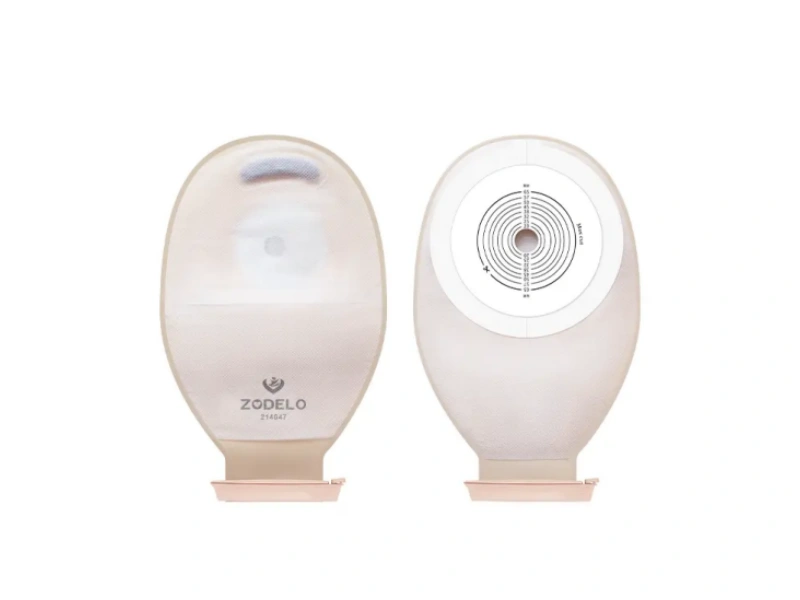
One-Piece Pouch System Components:
- Adhesive Skin Barrier
- Collection Pouch
Features:
- No connection interface
- Adheres directly to the skin
Two-Piece System
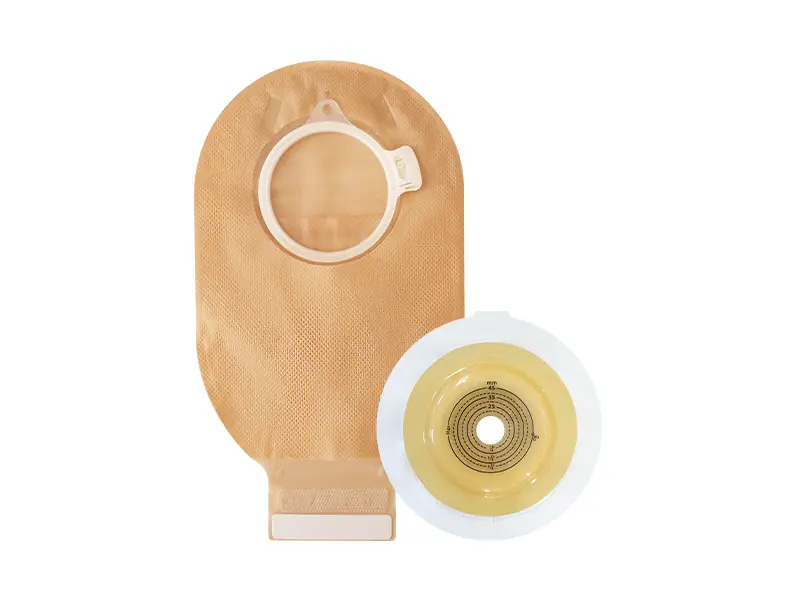
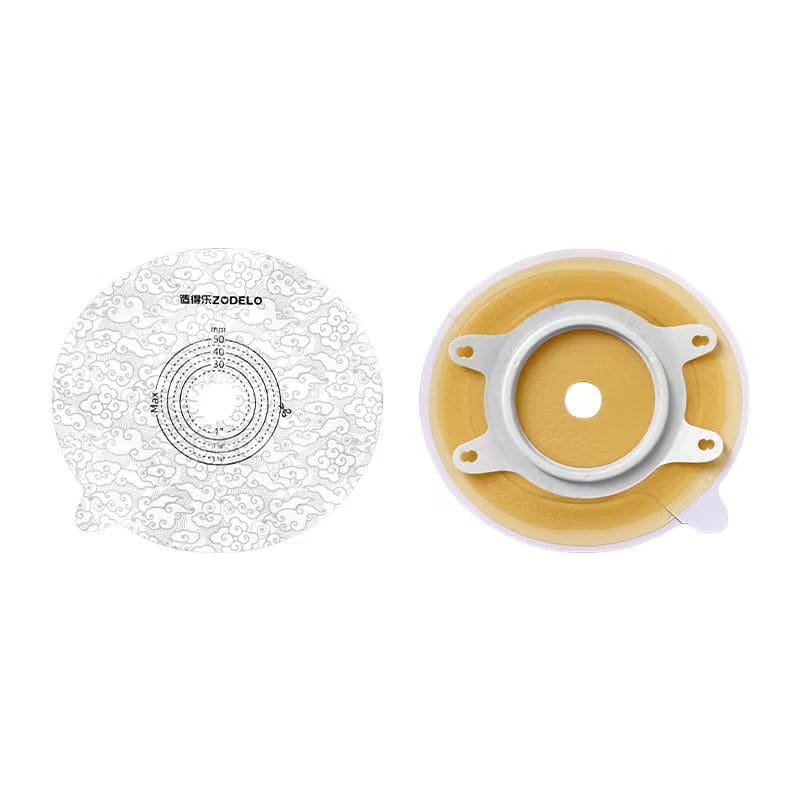
Two-Piece Pouch System Components:
- Skin Barrier (worn on the skin for an extended period)
- Detachable Pouch
- Connection System (Snap-lock / Adhesive Ring)
Why Choosing the Wrong Supplier Can Cost You More
- Product Defects and Return-Related Losses
- Product defects—such as leakage or poor adhesion—directly lead to increased costs associated with customer returns and compensation claims.Always choose ostomy bag supplier with proven quality.
- Quality fluctuations between different production batches increase the workload for after-sales support and drive up operational costs.Carefully choose ostomy bag supplierto avoid inconsistencies.
- A high return rate can erode the trust and willingness to cooperate among channel partners.Distributors should always choose ostomy bag supplierwith consistent track record.
- Damaged Brand Reputation (Long-term Hidden Cost)
- Substandard products or frequent customer complaints diminish end-users’ trust in the brand.Choose ostomy bag supplier to protect brand reputation.
- Medical channels (such as hospitals or care centers) may reduce their purchasing volume or terminate their partnership.
- The cost of brand reputation repair is substantial, negatively impacting long-term market expansion and customer loyalty.
- Missing or Non-compliant Certifications
- Products may be legally barred from entering specific markets, such as the EU, the US, or the Asia-Pacific region.
- High customs clearance risks may result in shipments being detained or returned to the sender.
- Products lacking proper certification are prone to being delisted or having their sales restricted on e-commerce platforms.
- Risk of Fraudulent Certification
- Certain suppliers may provide counterfeit CE, FDA, or ISO certificates.Always verify before you choose ostomy bag supplier.
- Fraudulent certifications expose the business to legal liabilities and fines, and may jeopardize long-term export permits.
- It is essential to verify the authenticity of certificates through official databases or independent third-party verification services.
- Delayed Delivery
- Insufficient production capacity or a lack of standardization in production lines can lead to order delays.
- Delayed deliveries disrupt channel sales plans and complicate inventory management.Alwayschoose ostomy bag supplier that can handle large orders on time.
- The inability to fulfill urgent replenishment requests increases overall supply chain risk.
- Inconsistent Batch Quality
- While samples from a single batch may perform well, the overall production quality may be unstable.
- Performance metrics—such as adhesive strength, leak prevention capabilities, and skin compatibility—may fluctuate between batches.
- Batch inconsistency increases the likelihood of product returns and customer complaints.
- Inefficient Communication
- Unclear communication regarding order details can result in shipping errors or delays.
- Slow response times to issues compromise supply chain agility and hinder effective risk management.
- In the long run, inefficient communication contributes to increased hidden costs.
- Insufficient After-Sales Support
- The supplier may be unable to provide necessary technical guidance or effective solutions to product-related issues.
- Inadequate complaint resolution processes negatively impact end-user satisfaction.
- The inability to rapidly provide product replacements or execute recalls increases operational risks.
- Missed Market Opportunities
- Insufficient supplier production capacity or extended lead times prevent the fulfillment of new market demands.
- A lack of customization capabilities hinders the rapid launch of proprietary brands or private label products.
- Missed sales windows result in competitors capturing market share.
- Inability to Establish Long-term Partnerships
- Suppliers focused solely on transactional dealings lack a strategic mindset for long-term collaboration.
- Inconsistent long-term quality and service standards impede brand development and channel expansion.
- A lack of a foundation of trust undermines future capabilities regarding product customization, OEM arrangements, or price negotiations.
Key Factors When Choosing an Ostomy Bag Supplier

Certification and Compliance
- Do you have CE / FDA / ISO 13485 certifications?
- Do you comply with the regulations of the target market?
Product quality
- Is the material skin-friendly and low in allergenicity?
- The properties of the adhesive and the leak-proof design
- Is the filtration system effective?
Quality stability
- Is the batch stable
- Does it have a complete quality control system
Production capacity
- Production capacity and delivery time
- Automation level
- Does it support large orders
Supply chain stability
- Is the raw material supply stable
- Does it have the ability to provide continuous supply
OEM/Customization Capability
- Whether it supports private labeling
- Packaging and product customization capabilities
Price and MOQ
- Is the price reasonable and stable
- Does it support small batch trial orders
Delivery capability
- Is the delivery schedule stable
- Is there a risk of delay
Export Experience
- Do you have international market experience
- Are you familiar with customs clearance and documentation
Communication and Service
- Response Speed
- After-sales Support Capability
Common Mistakes Buyers Make

Overemphasizing Price While Neglecting Quality Consistency
- Low prices are usually accompanied by unstable materials and processes, especially in the viscose system and leak-proof structures.
- The performance of a single sample cannot represent the quality of mass production. Distributors must choose ostomy bag supplier with proven batch consistency.
- For medical consumables, what is more crucial is long-term batch consistency (batch-to-batch consistency).
- Stability is the core competitiveness of high-quality suppliers (such as Coloplast). Choose ostomy bag supplier with strict quality control processes.
Overlooking Regulatory Compliance
- The absence of compliance documents will directly affect market access and channel sales.
- It may lead to customs clearance failures or the products being removed from the platform. Choose ostomy bag supplier with proper compliance credentials.
- Compliance issues are high-risk systemic problems that affect the entire business chain.
Underestimating the Impact of OEM Capabilities on Business Growth
- The lack of customization capabilities will limit the establishment of own brands.
- The severe product homogeneity has restricted the profit margin.
- The mature supply chain system generally relies on OEM collaboration (such as Hollister Incorporated)
Failing to Assess Actual Production Capacity and Delivery Capabilities
- High-quality samples ≠ having the capacity for large-scale delivery
- Insufficient production capacity will directly affect order fulfillment and channel stability. Distributors should choose ostomy bag supplier that meets delivery commitments.
- The production system (especially the level of automation) determines the stability of delivery and the expansion capability
Insufficient Sample Testing
- A single batch test cannot reflect the true quality fluctuations.
- Different usage scenarios can significantly affect the product performance (such as temperature, humidity, and usage duration).
- Medical products should pay more attention to stability and applicability rather than a single performance measurement.
Neglecting Communication and Service Capabilities
- Communication efficiency directly affects the accuracy of orders and the speed of problem-solving.
- It is a hidden cost factor in long-term cooperation.
- Insufficient communication skills often magnify operational risks.
Lacking a Long-Term Supply Chain Perspective
- Frequent changes in suppliers will lead to unstable quality.
- It is likely to cause problems related to brand image and channel trust.
- Short-term cost optimization may bring long-term risks. Distributors should choose ostomy bag supplier that balances cost with reliability.
How to Verify a Supplier Before Ordering
1. Compliance and Credential Verification
- Verify the authenticity and validity of core certifications such as CE, FDA, and ISO 13485.
- Confirm that the certificates cover specific products and target markets to avoid customs clearance or sales risks.
- Check whether the supplier has the ability to continuously update the compliance system to ensure long-term market access. This is a key factor when you choose ostomy bag supplier for ongoing cooperation.
2. Factory and Production Capacity Verification
- Verify whether the supplier is a genuine manufacturing enterprise rather than an intermediary trader.
- Evaluate the standardization and automation level of the production line to ensure the ability to supply in large quantities.
- Check the monthly production capacity and delivery cycle to determine whether it can meet the requirements of long-term cooperation.
3. Quality and Consistency Testing
- Conduct multi-batch sample tests, focusing on adhesion, leak-proofness, and skin compatibility.
- Carry out scenario-based tests of product performance in different environments to ensure long-term stability.
- Use batch consistency as the core evaluation indicator rather than the performance of a single sample.
4. OEM and Customization Capability Assessment
- Confirm whether the supplier supports Private Label and product customization.
- Evaluate the flexibility of packaging, instructions, and product specification adjustments.
- Examine its past OEM cases to judge the long-term brand expansion capability.
5. Commercial and Delivery Capability Confirmation
- Clarify the minimum order quantity (MOQ), payment method, and price terms. Choose ostomy bag supplier that offers flexible MOQs for trial and scale-up orders.
- Verify the delivery time and order fulfillment capability to avoid delays affecting channel sales.
- Confirm the supplier’s ability to handle emergency orders and large-volume orders.
6. Communication and Responsiveness
- Evaluate the professional response speed and communication efficiency of the supplier.
- Confirm that it has international trade experience and can handle cross-border procurement processes.
- A supplier with strong communication skills can reduce hidden costs and improve the efficiency of long-term cooperation. Choose ostomy bag supplier that communicates clearly and quickly.
7. Small-Batch Trial Orders
- First, verify the production and delivery capabilities of the supplier through small-batch orders.
- Observe the performance of product quality, packaging, and logistics processes in the real market environment.
- Based on the results of the trial orders, decide whether to expand the purchase and achieve low-risk supply chain management.
When You Should Choose a Local Supplier

- High timeliness and supply continuity requirements
- Strict compliance and access requirements – For stringent regulatory environments, choose ostomy bag supplier that already meets local compliance standards.
- Market testing or low inventory strategy
- High reliance on after-sales and technical support
- Dependence on brand and channel trust – Local partners can help maintain trust; it’s important to choose ostomy bag supplier with a strong regional reputation.
Why Many Importers Choose Manufacturers in China

1. Cost Structure Advantage
China possesses a comprehensive ecosystem of raw material suppliers and manufacturing support services, rendering overall production costs highly competitive. Many importers choose ostomy bag supplier in China to leverage these cost advantages.
2. Mature Healthcare Supply Chain System
From raw materials (such as hydrocolloids and non-woven fabrics) to finished product manufacturing, China has established a highly integrated industrial chain.
3. OEM / Private Label Capabilities
Most Chinese manufacturers possess mature OEM systems capable of supporting:
- Private Labeling
- Customization of packaging and instruction manuals
- Adjustment of product specifications
4. Flexible MOQs and Cooperation Models
Compared to traditional international brands (such as Coloplast), Chinese manufacturers typically offer greater flexibility regarding Minimum Order Quantities (MOQs) and cooperation models. Importers frequently choose ostomy bag supplier with flexible MOQs to reduce risk.
5. Production and Delivery Capabilities
Equipped with large-scale production capacity and rapid lead times, manufacturers are well-positioned to support growing order volumes.
FAQs about 10 Things Distributors Should Check Before Choosing an Ostomy Bag Supplier
Q1.What certifications should an ostomy bag supplier possess?
Suppliers should hold core certifications such as CE, FDA, and ISO 13485.
The key lies in ensuring that these certificates are authentic, valid, and specifically cover the relevant product categories.
Q2. How can I verify the quality consistency of the products?
Do not rely solely on a single sample. It is recommended to test multiple production batches, focusing on evaluating adhesion, leak-proof performance, and skin compatibility (benchmarking against consistency standards similar to those of Coloplast). When you choose ostomy bag supplier, prioritize multi-batch validation over single-sample testing.
Q3.What constitutes a reasonable MOQ (Minimum Order Quantity) for distributors?
The MOQ depends on the specific product type and the degree of customization required. A common range involves starting with small to medium-sized batches; ideally, you should choose ostomy bag supplier that supports flexible MOQs for market testing.
Q4. Can the supplier support OEM or private labeling?
Most high-quality manufacturers should be capable of supporting OEM services.
This includes the customization of logos, packaging, and product specifications—capabilities that are crucial for building a brand.
Q5. How important is production capacity?
It is critically important. Production capacity directly impacts lead times and the ability to scale up orders; therefore, always choose ostomy bag supplier with proven delivery and output capabilities.
Q6. How do I evaluate a supplier’s reliability?
Evaluate them through multiple dimensions:
- Export experience
- Customer case studies/references
- Responsiveness
Stability and consistency are more important than low prices.
Q7.What are the key risks involved in choosing a supplier?
The primary risks include:
- Inconsistent product quality
- Lack of regulatory compliance credentials
- Delays in delivery/lead times
These issues can directly negatively impact your market position and brand reputation.
Q8.Should I choose a brand-name supplier or a manufacturer?
This depends on your specific business model:
- Brand-name suppliers (e.g., Hollister Incorporated): Offer high levels of trust and recognition, but come with higher price points.
- Manufacturers: Offer larger profit margins and support customization options.
Q9.How can I mitigate risks before placing large-scale orders?
Follow a standard, phased process:
Sample Testing → Small-Batch Trial Order → Market Validation → Scaled-Up Procurement
Q10.What factors influence the final pricing?
The main factors include:
• Material costs
• Order quantity
• Customization requirements
• Certification and packaging specifications
Make sure to choose ostomy bag supplier that balances quality, compliance, and cost.
Evaluate the long-term supply contract of ostomy bag manufacturers

1. Quality and Consistency
- Are product specifications and performance standards clearly defined? Ensure you choose ostomy bag supplier that documents these clearly.·
- Are batch consistency requirements agreed upon?
- Does it include a mechanism for handling defective products?
2. Compliance Responsibilities
- Does it cover CE/FDA/ISO 13485?
- Who is responsible for certificate changes or invalidations?
- What are the obligations for complying with regulatory updates?
3. Pricing Mechanism
- Are there provisions for adjusting prices due to raw material fluctuations?
- Is there a tiered pricing structure (volume-based)?
- Does it consider exchange rate factors?
4. Delivery and Supply Assurance
- Is there a defined delivery lead time?
- Is there a minimum supply guarantee?
- What are the liability provisions for delayed delivery?
5. OEM and Intellectual Property
- Who owns the brand and packaging?
- What are the protection clauses for custom designs?
- Does it restrict suppliers from selling the same products externally?
6. Quality Risks and Recall
- What is the complaint handling process?
- What is the product recall mechanism?
- What are the liability divisions?
7. Service and Communication
- What are the response time requirements?
- What is the scope of technical support?
- What are the standards for after-sales service?
8. Contract Period and Exit Mechanism
- What are the contract terms and renewal conditions?
- What are the early termination clauses?
- What is the definition of liability for breach of contract?
Conclusion — Choose an Ostomy Bag Supplier
Choosing an Ostomy Bag Supplier is critical for long-term success. Distributors should choose ostomy bag supplier companies that ensure stable quality, including consistent adhesion, leak-proof performance, and skin compatibility, verified through multi-batch testing.
At the same time, it is essential to choose ostomy bag supplier partners with valid certifications (CE, FDA, ISO 13485) to guarantee market access and regulatory compliance.
Reliable production and delivery capabilities are equally important. Distributors should choose ostomy bag supplier partners with sufficient capacity, standardized production, and on-time delivery to avoid supply risks.
In addition, choosing a supplier with strong OEM and customization capabilities helps build private labels and improve competitiveness.
Finally, effective communication, after-sales support, and long-term cooperation are key. To ensure sustainable growth, distributors should choose ostomy bag supplier partners who are reliable, responsive, and committed to long-term partnership.
Get our product catalog or request an instant quote to boost your business.
More Resources about Choose Ostomy Bag Supplier
- Tips for Choosing the Right Ostomy Supplies– uoaa
- Essential Guide to Choosing Colostomy Bag Suppliers: What You Need to Know– ask
- How to Choose an Ostomy Bag Manufacturer– zodelo
- Adjusting to Life With an Ostomy Bag: What To Expect— clevelandclinic
- What does it feel like to have an Ostomy Bag?— rochester
- Types of Colostomies and What to Expect— Cancer
- Manufacturer Information– uoaa

Top 10 Colostomy Bag Manufacturers In India 2026
top 10 colostomy bag
Top 10 Stoma Bag Suppliers Uk 2026
Top 10 Stoma Bag Sup

The Ultimate Guide To Sex With A Colostomy Bag
The Ultimate Guide T
Top 10 Colostomy Bag Manufacturers And Suppliers In China 2026
Top 10 Colostomy Bag