

How to Choose an Ostomy Bag Manufacturer
Table of Contents
If you are a medical distributor, importer, or brand looking to source high-quality ostomy bags, selecting the right manufacturer is one of the most critical decisions for your business. Many buyers face challenges such as inconsistent product quality, lack of proper certifications, unreliable delivery schedules, and insufficient support for private labeling. These issues can lead to customer complaints, regulatory risks, and even lost sales opportunities.
In this guide, we’ll introduce How to Choose an Ostomy Bag Manufacturer to you in detail. By the end, you’ll know exactly how to choose a supplier who can consistently deliver safe, compliant, and high-quality products while supporting your brand and business growth.
What is an ostomy bag and pouching system?
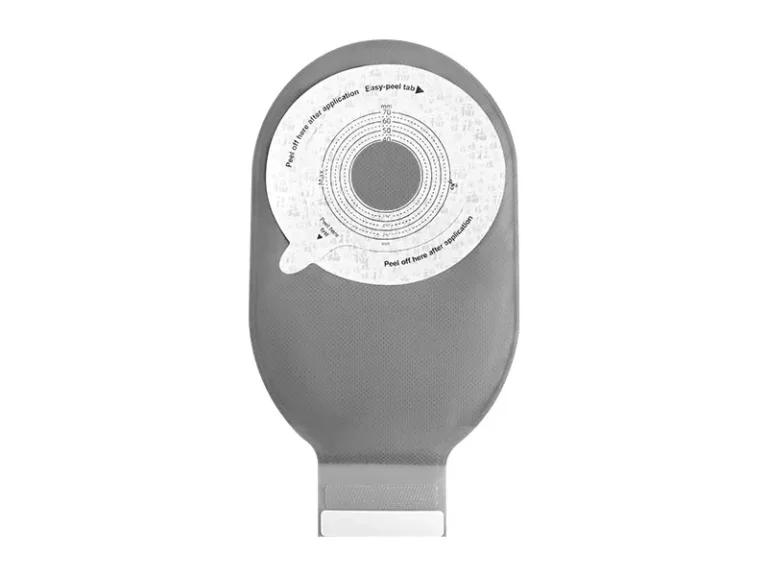
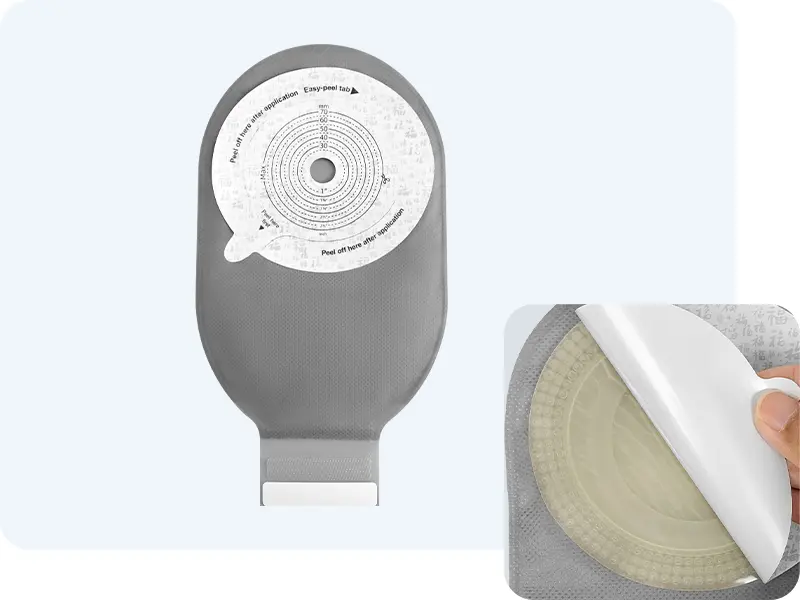
To understand “How to Choose an Ostomy Bag Manufacturer“, one must first understand what is ostomy bag and pouching system. Ostomy pouches are medical assistive devices designed for patients who have lost their natural excretion channels due to illness or surgery. They can safely and hygienically collect excretions (including feces, urine, and other body fluids), helping patients maintain their quality of life and daily activity capabilities.
Components of ostomy bag:
1. Ostomy Bag
Used to collect excretions, the material is usually a soft and breathable multi-layer composite material to ensure leak-proof, antibacterial, and low-allergy properties.
It can be divided into disposable bags and reusable bags.
2. Ostomy Flange / Skin Barrier
Attached to the skin to fix the ostomy bag and protect the skin from irritation or infection.
The material is generally hydrocolloid (water gel or water colloid), which has good breathability and softness.
Such as sealing rings, sealing clips, gas emission devices (venting), drainage tubes, etc., to enhance the comfort and functionality of use.
Different Types of Ostomy Bags
When we are considering How to Choose an Ostomy Bag Manufacturer, we should have a comprehensive understanding of the types of ostomy care bags.
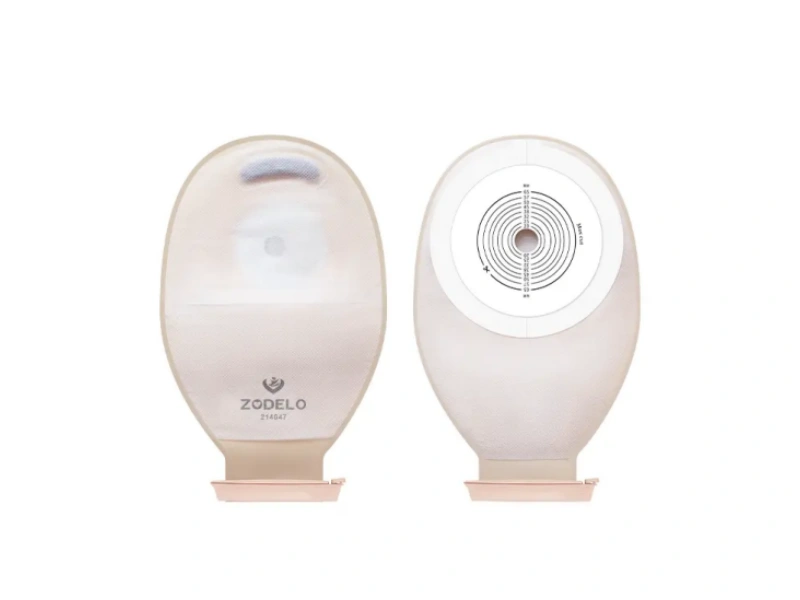
1. One piece ostomy bag
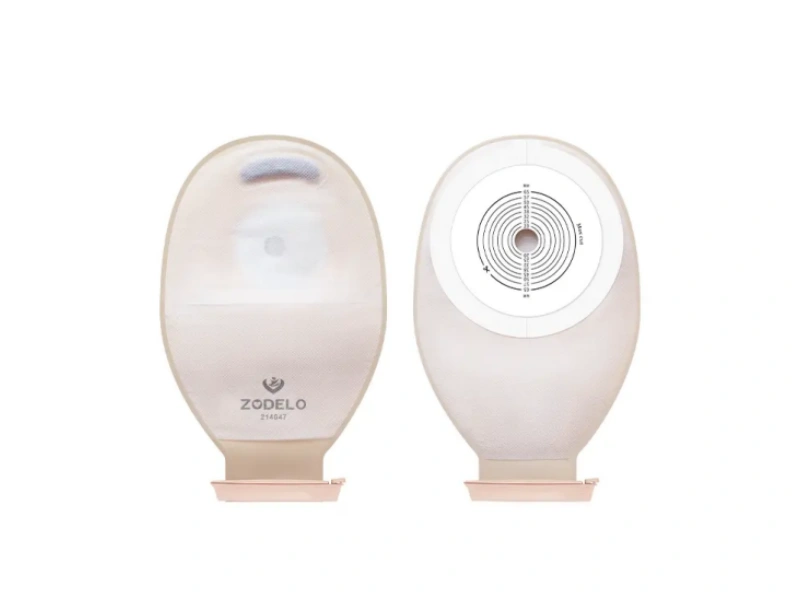
The skin barrier and the One piece ostomy bag body cannot be separated. The overall design is comfortable and lightweight. The replacement operation is simple and quick, suitable for beginners or those who pursue simple operation.
2. Two piece ostomy bag
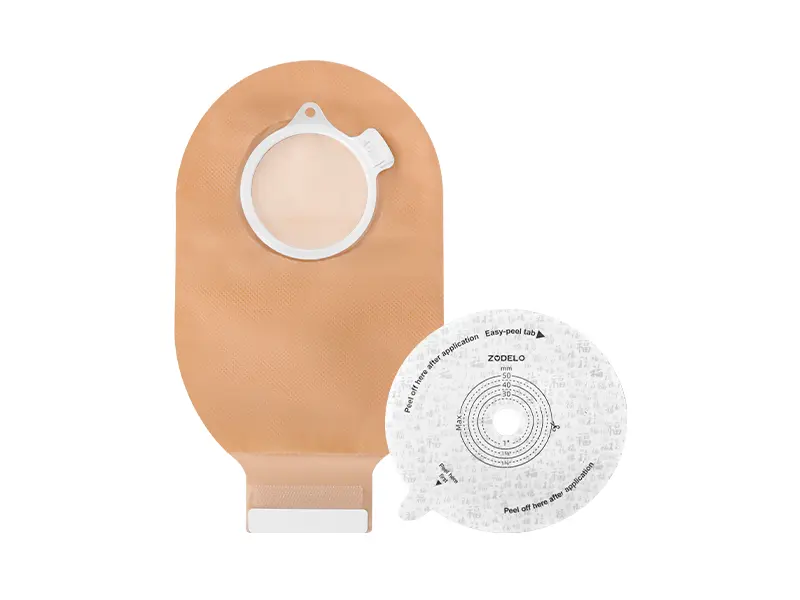
The skin barrier can be adhered to the skin for multiple uses. Just replace the two piece ostomy bag body. There is no need to frequently replace wafers to avoid skin irritation. It is suitable for patients with excretion or sensitive skin.
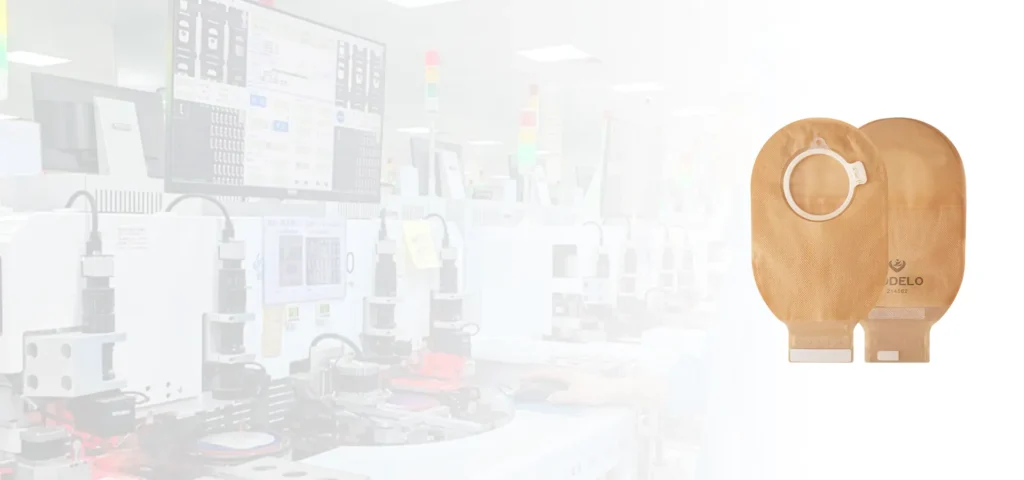
Drainable ostomy bag: The discharge port at the bottom of the colostomy bag is used to expel the excrement inside the bag. It can be washed and reused multiple times, making it more economical and practical. It is suitable for patients with loose stools or large amounts of excretion.
Closed-end colostomy bag: No excretory opening, for single use only. Replace and discard as a whole. It is more hygienic and lightweight, and there is no need to frequently discharge the colostomy bag. Suitable for people with solid feces or regular excretion patterns.
Urostomy bag: It is used to collect urine continuously discharged from the stoma. It can effectively protect the skin from the continuous contamination and irritation of urine. It has leak-proof and odor-proof functions to avoid embarrassment. It can also prevent urine reflux, reduce hydronephrosis and infection problems.
Night drainage bag: Suitable for use while sleeping at night, it has a large capacity and can be connected to a drainage tube for continuous drainage. Help patients avoid getting up frequently at night to empty the urinary tract stoma.
Why Choosing the Right Manufacturer Matters
Understanding How to Select an Ostomy Bag Manufacturer is not only about the procurement cost, but also directly affects the safety of medical products, the stability of the supply chain, and the brand reputation. The following three risks are the most concerning for purchasers:
1. Medical product risks
- Leakage and failure of protection: Inadequate sealing design or materials may lead to leakage, endangering the patient’s health.
- Skin allergies and material safety: Products with materials not meeting medical standards may cause skin irritation or allergic reactions.
- Consistency and reliability: Large differences in products between batches may trigger terminal complaints or returns.
2. Supply chain risks
- Unstable delivery time: Insufficient production capacity or shortage of raw materials may lead to delayed deliveries.
- Inventory management: Suppliers are unable to maintain continuous inventory, which may cause stockouts.
- Emergency response capability: Whether the manufacturer can respond quickly when facing sudden orders or urgent demands.
3. Brand risks
- Insufficient support for OEM/brand labels: Packaging or labels do not meet brand requirements, affecting the market image.
- Lack of after-sales service: Quality issues not being resolved in time will directly affect customer satisfaction and reputation.
- Poor terminal user experience: Unmet product quality, comfort, or ease of use will affect terminal sales.
Key Factors - How to Choose an Ostomy Bag Manufacturer
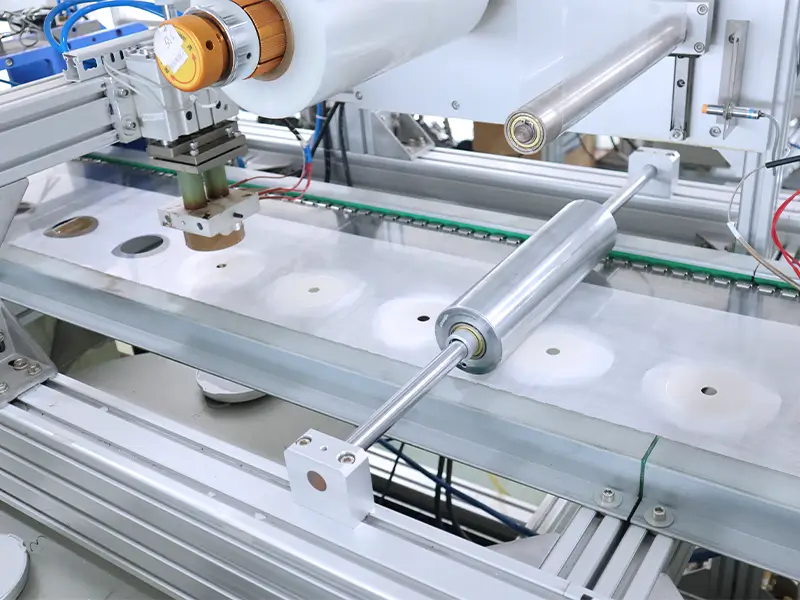
To correctly understand “How to Choose an Ostomy Bag Manufacturer“, it is necessary to conduct a comprehensive assessment from multiple aspects to ensure product safety, stable supply, reliable brand, and reduced procurement risks. Each of the following key factors can independently answer questions related to the procurement decision.
Certifications and Compliance
- ISO 13485: Quality Management System for Medical Devices, ensuring that the production process complies with international medical standards.
- CE Certification: EU market access certification, proving that the product meets safety, health and environmental protection requirements.
- FDA Registration: Certification by the US Food and Drug Administration, ensuring that the product legally enters the US market.
- Other market certifications: such as the SFDA in the Middle East, ANVISA in Brazil, COC/PVOC in Africa, etc.
- Operation suggestions: When purchasing, manufacturers should be required to provide genuine certificates and registration documents, and their validity should be verified to prevent legal or sales risks caused by using non-compliant products.
Product Quality & Skin Safety
- Sealing and leak-proof performance: The core function of the ostomy bag is to prevent leakage, and it must undergo strict testing.
- Skin friendliness: The material is low in allergens and has good breathability, making it suitable for long-term attachment to the skin.
- Batch consistency: Ensure that the performance of each batch of products is stable, reducing patient discomfort and complaints.
- Material testing: Provide chemical and biological compatibility test reports to ensure compliance with clinical safety standards.
- Operation suggestions: Choose manufacturers with clinical validation and quality traceability systems, which can reduce medical risks and post-sale issues.
Production Capacity & Delivery Reliability
- Capacity Scale: Whether the monthly production volume meets the long-term supply requirements.
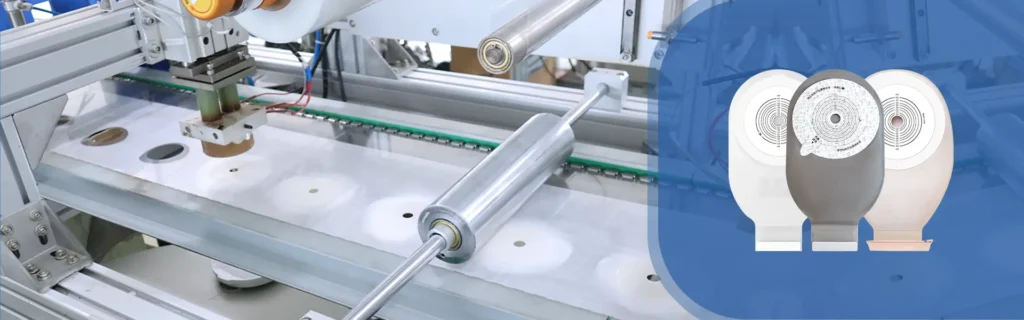
- Production Equipment and Automation Level: To enhance production efficiency and product consistency.
- Delivery Stability: Whether the manufacturer can complete orders on time and avoid supply disruptions.
- Emergency Response Capability: Whether it can respond quickly in case of sudden orders or urgent demands.
- Operation Recommendation: Preferentially choose manufacturers with stable production capacity and a mature logistics system to ensure the security of the supply chain.
OEM / Private Label Capability
- Customized Labels and Packaging: Support for brand LOGOs, packaging design, and promotional materials.
- Private Brand Experience: Does the manufacturer have mature cases of private label cooperation?
- Product Improvement Capability: Can be adjusted for material, function, or specification according to brand requirements.
- Operation Suggestions: For brand owners and importers, choosing manufacturers with OEM experience and R&D capabilities can enhance product differentiation and market competitiveness.
Pricing, MOQ, and Flexibility
- Price rationality: The value positioning is in line with product quality and certification standards.
- Minimum Order Quantity (MOQ): Supports small-batch trial orders while having the capacity for large orders.
- Flexibility: Can adjust combinations, models and packaging methods according to customer needs.
- Operation suggestion: Choose a manufacturer with transparent prices and flexibility, which is beneficial for new customers to test and for long-term cooperation.

Sampling & Testing
- Sample Provision: The manufacturer should provide samples that comply with clinical or market standards.
- Testing Period: The sample testing period is clearly defined, facilitating customers’ assessment of product performance.
- Feedback Mechanism: The manufacturer can adjust the product based on the test feedback to ensure the final quality.
- Operation Suggestions: Through sample testing, evaluate the sealing, comfort, and fit to ensure quality confirmation before mass production.
Communication & After-sales Support
- Communication efficiency: Can promptly understand customer needs and provide professional advice.
- After-sales service: Provide solutions for product issues, returns and exchanges, or technical support.
- Risk prevention: Have a quality traceability system and replenishment mechanism.
- Operation suggestion: High-quality manufacturers not only produce products but also can reduce procurement risks and enhance cooperation trust through professional communication and after-sales support.
Quick Checklist for Importers
When considering How to Choose an Ostomy Bag Manufacturer, it is recommended that purchasers follow the following actionable steps for screening and evaluation. Each item can independently answer questions and ensure supply safety and product reliability:
1. Verify certifications and compliance
Check if ISO 13485 certification is valid
Verify CE, FDA or target market regulations qualifications
Require the manufacturer to provide scanned copies of certificates and registration files to ensure traceability
2. Assess product quality and skin safety
Review material safety and low-allergy test reports
Understand sealing, leak-proof performance and batch consistency
Require the provision of clinical or third-party laboratory test data
3. Verify production capacity and delivery time
Confirm monthly production volume and production line configuration
Evaluate delivery on-time rate and emergency response capability
Ask about raw material supply channels and inventory management situation
4. Check OEM/branding capabilities
Verify if custom labels and packaging are supported
Understand if there are successful branding cooperation cases
Evaluate the manufacturer’s R&D capabilities and product improvement flexibility
5. Analyze price and ordering flexibility
Confirm transparent and reasonable prices
Check if the minimum order quantity (MOQ) can meet the trial order requirements
Confirm the production capacity and packaging flexibility of large orders
6. Sample testing and verification
Request samples for functionality and comfort testing
Understand the sample testing cycle and feedback mechanism
Verify if the manufacturer can optimize the product based on sample feedback
7. Evaluate communication and after-sales support
Test communication response speed and professionalism
Understand the after-sales service process and return and exchange policy
Confirm the product quality traceability system and risk prevention measures
8. Risks and brand protection
Understand the manufacturer’s handling ability for quality or logistics issues
Evaluate if it can provide long-term cooperation support and brand value-added services
Confirm supply stability to avoid shortage or market negative reviews risks
FAQs about How to Choose an Ostomy Bag Manufacturer
Q1. What is an Ostomy Bag?
Ostomy Bag is a medical device used to collect body fluids that cannot be naturally excreted due to colonic, ileal or urinary system ostomy surgeries. It is mainly composed of the bag body, base plate and accessories, ensuring the safety, hygiene and comfort of the patient.
Q2.What types of ostomy bags are there?
They can be classified by the type of excrement as colostomy bags, ileostomy bags, and urinary tract bags; by the usage period as disposable and reusable; by the structure as single-piece and double-piece; and by the function as those with exhaust function, convenient emptying, or low-allergy materials.
Q3. How to Choose an Ostomy Bag Manufacturer Rightly?
A comprehensive assessment needs to be conducted across nine dimensions including certification qualifications (ISO13485, CE, FDA), product quality, production capacity, OEM capability, price and MOQ, sample testing, communication and after-sales service.
Q4. What are the main quality indicators of an Ostomy Bag?
The key indicators include sealing performance, leak prevention capability, skin friendliness, low allergenicity of the material, breathability, and batch consistency, ensuring safety and reliability during long-term use.
Q5. Are ISO13485, CE and FDA certifications important?
It is extremely important. ISO13485 ensures the production quality system; CE and FDA certifications guarantee that the products comply with the medical regulations of the European Union and the United States; importers must verify the authenticity of the certificates.
Q6. What does the OEM/Private Label service for Ostomy Bags include?
We support customized labels and packaging, printing of brand logos, optimization of packaging design, as well as adjustment of materials and functions according to customer requirements, thereby enhancing brand differentiation and market competitiveness.
Q7. How does the minimum order quantity (MOQ) affect purchasing?
The MOQ determines the flexibility of trial orders. Importers can conduct small-scale trial orders to assess product quality, while large orders ensure production capacity for long-term supply.
Q8.How to test the quality and comfort level of the samples?
The samples should undergo a sealing test, leak prevention inspection, assessment of skin-fitting comfort, verification of low allergenicity and breathability of the materials, and confirmation of the feasibility of the bulk production through feedback.
Q9.How to assess the reliability of a manufacturer's supply chain and delivery schedule?
It is necessary to verify the monthly production volume, production equipment and automation level, inventory management capabilities, raw material supply channels, and emergency response capabilities to ensure that orders are delivered on time.
Q10.What should be done if there are quality issues with the Ostomy Bag?
High-quality manufacturers offer comprehensive after-sales services, including returns and exchanges, restocking, and technical support. They also have a quality traceability system, which reduces procurement risks and safeguards brand reputation.
How to Choose an Ostomy Bag Manufacturer
The best ostomy products company not only focuses on advanced technological means, but also must ensure the dignity of patients’ lives. Therefore, whether it is patients, distributors or hospital pharmacies when making purchases, they should correctly understand “How to Choose an Ostomy Bag Manufacturer“. So that every patient can lead a comfortable and healthy life.
At Zodelo, every step from material selection to research and development stems from a belief: to reduce users’ troubles and enhance their comfort. Zodelo will always be by your side, providing you with the most comfortable, safe and reassuring ostomy supplies.
Zodelo among the numerous best ostomy supply companies around the world, With 30 years of industry accumulation, professional customization capabilities, strong R&D and production capabilities, brand culture. Become the first choice for many. No matter which field your project belongs to, we can select the most suitable product for you.
Get our product catalog or request an instant quote to boost your business.
More Resources about How to Choose an Ostomy Bag Manufacturer

Top 10 Colostomy Bag Manufacturers In India 2026
top 10 colostomy bag

Top 10 Stoma Bag Suppliers Uk 2026
Top 10 Stoma Bag Sup

The Ultimate Guide To Sex With A Colostomy Bag
The Ultimate Guide T
Top 10 Colostomy Bag Manufacturers And Suppliers In China 2026
Top 10 Colostomy Bag