

OEM vs Standard Ostomy Bags: Which Is Better for Distributors
Table of Contents
OEM vs Standard Ostomy Bag choice is agonizing.
Many buyers struggle with the same questions:
Should you invest in your own brand with OEM, or start with standard products to reduce risk?
Many buyers struggle with the same questions:
Should you invest in your own brand with OEM, or start with standard products to reduce risk?
Make the wrong choice, and you may face high inventory pressure or low profit margins.
In this guide, we’ll break down the real differences and help you choose the best option for your business stage.
Quick Answer: OEM vs Standard Ostomy Bags – Which One Should You Choose?
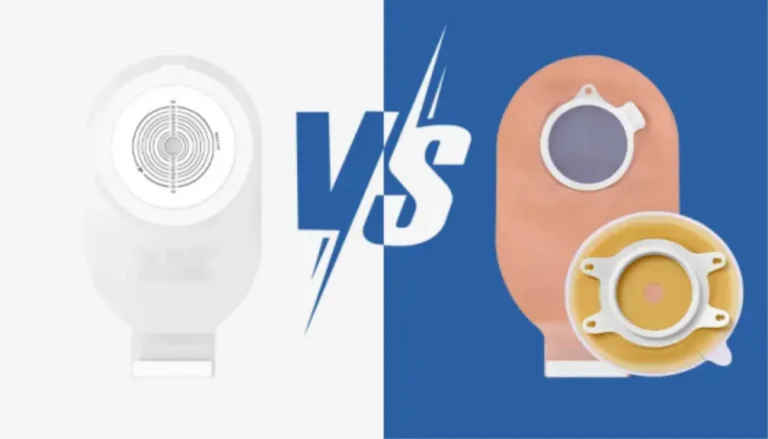
The core difference between OEM and Standard ostomy bags does not lie in the products themselves, but in the different purchasing strategies and business stages chosen, and this is exactly the philosophy behind Zodelo’s product positioning and supply solutions.
OEM is more suitable for customers who wish to establish a brand and pursue long-term profit growth, and Zodelo supports this with flexible customization, private label options, and scalable manufacturing capabilities.
While Standard is more suitable for importers or distributors who need to enter the market quickly and reduce inventory risks, Zodelo ensures stable quality, fast delivery, and ready-to-ship solutions for rapid market entry.
Which one to choose depends on your business development stage, rather than simply on the product quality, and Zodelo helps partners identify the right path based on their growth stage and market strategy.
What is an OEM Ostomy Bag?
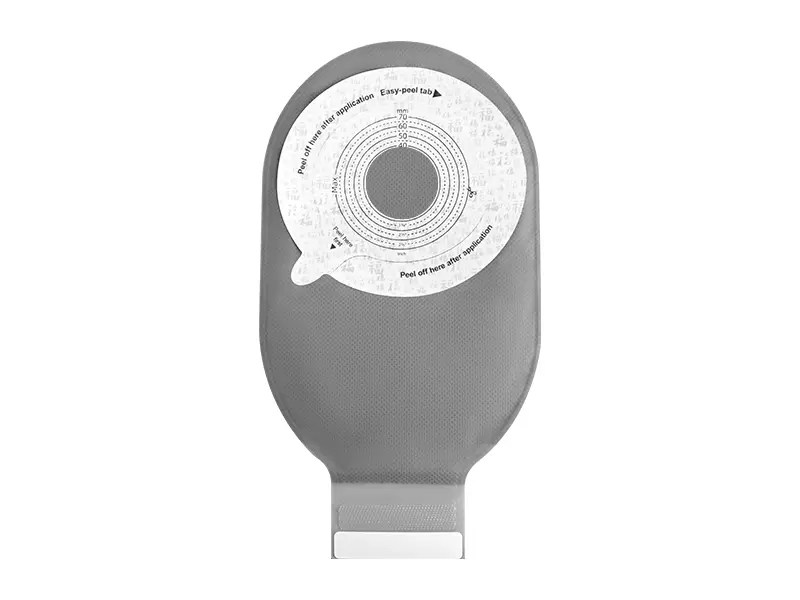
- Definition: A disposable ostomy bag product customized by a factory with medical device production qualifications based on customer brand requirements, design specifications, and market positioning.
- Manufacturing responsibilities: Responsible for product research and development, production manufacturing, and quality control. Usually follows medical quality management systems such as ISO 13485.
- Brand responsibilities: Responsible for brand design, market promotion, and sales channel construction.
- Essential model: It belongs to the collaborative model within the medical device supply chain, achieving the separation of production and brand operation.
- Value structure: The manufacturing end provides compliant production and quality assurance, while the brand end provides market entry capabilities and brand value.
- Core objective: Achieve efficient integration of compliant manufacturing and commercial operation.
What is a Standard Ostomy Bag?

- Definition: A standard ostomy pouch refers to an ostomy effluent collection system, often discussed in comparisons like , not customized for specific OEMs, and sometimes evaluated as in procurement decisions. It is manufactured in accordance with universal specifications and standardized processes. It is designed for the continuous collection of waste and for skin protection in patients with colostomies, ileostomies, or urostomies.
- Scope of Application: Suitable for the majority of routine ostomy care requirements, and is frequently compared in market analysis such as . It offers broad clinical versatility.
- Production Model: Employs standardized design principles and large-scale manufacturing processes, and is often positioned against in sourcing strategy discussions. It is not developed for specific brands or tailored clinical protocols.
- Core Characteristics: Centered on the pillars of “standardized design + mass production + universal compatibility,” and is commonly evaluated in procurement frameworks like , emphasizing consistency and supply stability.
OEM made pouches vs. Standard pouches
Comparison Dimension | OEM Ostomy Bag (Customized Type) | Standard Ostomy Bag (Standard) |
Product Definition | Customized ostomy bag developed according to customer branding, design, and market requirements | Standardized ostomy bag produced based on universal specifications and standardized manufacturing processes |
Design Logic | Brand-oriented + clinical/market differentiation design | General-purpose adaptation + standardized structure design |
Product Structure | Customizable (one-piece/two-piece system, valve, anti-leak structure, etc.) | Fixed structural configuration compatible with mainstream ostomy systems |
Material Selection | Customizable based on requirements (hydrocolloid, film materials, filtration systems, etc.) | Standard medical-grade materials (PE/EVA/hydrocolloid, etc.) |
Brand Attribute | Supports private label (logo, packaging, instructions) | Usually neutral packaging or generic branding |
Development Cycle | Longer (design, sampling, validation required) | No development cycle, ready for production and shipment |
MOQ Requirement | Higher (involves customization and production adjustments) | Lower or flexible MOQ |
Cost Structure | Higher cost (includes mold, development, and certification allocation) | Lower cost (mass production efficiency) |
Regulatory Compliance | Requires re-validation for target markets (e.g., CE, FDA) | Already compliant with basic or general certifications |
Quality System | ISO 13485 + customer-specific validation process | ISO 13485 standardized production system |
Market Positioning | Brand owners, premium markets, differentiated competition | Distribution channels, e-commerce basic products, wholesale markets |
Target Customers | Brand owners / experienced OEM buyers | New importers / distributors / test-market buyers |
Core Advantages | Brand premium, product differentiation, higher profit margin | Low cost, fast delivery, low operational risk |
Core Disadvantages | Longer lead time, higher cost, higher MOQ | Limited differentiation, weaker brand competitiveness |
Which One Should You Choose?
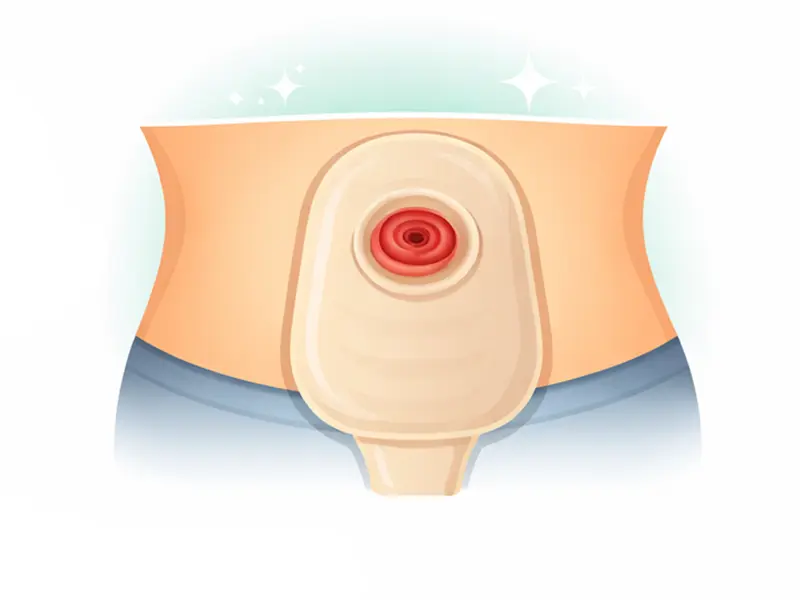
1️⃣ New Importers
Prioritize “Standard” Products
- Minimize trial-and-error costs, especially when comparing Ostomy Bag in early sourcing decisions
- No need for custom tooling; rapid shipment, often a key advantage highlighted in OEM vs Standard Ostomy Bag evaluations
- Basic compliance already secured (CE / ISO 13485), reducing entry barriers in OEM vs Standard Ostomy Bag frameworks
Goal: Rapid market validation
2️⃣ Distributors
“Standard” + Light OEM
- Standard: Rapid product rollout & inventory control, commonly benchmarked in OEM vs Standard Ostomy Bag sourcing strategies
- OEM: Cater to key accounts / high-margin SKUs
Goal: Balance between sales volume and profitability
3️⃣ Brand Owners
OEM-Centric Approach (OEM vs Standard Ostomy Bag differentiation focus)
- Product and material customization
- Private labeling & brand differentiation, enabled through OEM vs Standard Ostomy Bag supply chain control
- Build long-term competitive barriers, often cited as the key advantage in Ostomy Bag strategy
Goal: Brand premium & economic moat
4️⃣ E-commerce Sellers
Upgrade from “Standard” to OEM
- Initial Stage: Use “Standard” products for product testing, low-risk entry in OEM vs Standard Ostomy Bag context
- Intermediate Stage: Product optimization (Light OEM), refining positioning within OEM vs Standard Ostomy Bag framework
- Advanced Stage: Full-scale Brand OEM implementation, shifting away from Ostomy Bag commoditization
Goal: Data-driven growth
How We Help You Reduce Risk
In he supply chain decision-making for II-class/III-class medical devices such as ostomy bags, the core obstacle for OEM procurement is not the price, but the “uncertainty risk”, which is mainly manifested as:
- Does the product comply with the regulations of the target market (CE / FDA / MDR)?
- Does it truly meet the user experience requirements of the end users?
- Does it involve risks of inventory and capital occupation?
- Does it have the ability for large-scale replication?
- As a manufacturer with the ISO 13485 system, we have adopted a systematic
OEM approach to break down “uncontrollable variables” into verifiable, testable and iterative processes.
1.Small MOQ OEM
The traditional OEM model usually requires a relatively large order quantity, which significantly increases the trial-and-error costs for new distributors or brands entering the medical channel.
We adopt the tiered MOQ mechanism (Tiered MOQ System):
- Support small-batch OEM trial production (suitable for the market validation stage)
- Allow multi-specification combined orders (different types/sizes/底盘 systems of ostomy devices)
- Reduce the pressure of initial inventory and avoid long-term capital lock-up
- Suitable for the launch of new brands and entry into regional markets
2.Fast Sampling System
In the medical consumables sector, the efficiency at the sample stage directly determines the product’s time-to-market (i.e., the period from development to market availability).
Our proofing process is based on an engineering verification logic, rather than a simple “sample production”:
- Rapid structure assessment (single-piece / two-piece system)
- Material validation (skin contact layer, medical adhesive, barrier film)
- Support for adhesion performance and wearing stability tests
- Multiple rounds of structure optimization iteration (Engineering Iteration Loop)
3.Market Testing Support
The main reason for the failure of OEM often lies not in production issues, but in the mismatch between the product and market demand (Market-Product Mismatch).
Therefore, we support customers in conducting small-scale market validation (Pilot Launch Support):
- Small-scale pilot production (Pilot Batch Production)
- Support for changing packaging and branding schemes (Brand Iteration Friendly)
- Assist customers in verification:
- Channel acceptance (Distributor Acceptance)
- Patient compliance (User Compliance)
- Pricing fit (Price Band Match)
- Optimize the product for the second round based on feedback
6.4 Summary of the Core Logic of Risk Control
Through the above three mechanisms, we have structured and decomposed the OEM risk into:
- Financial risk → Small MOQ control
- Technical risk → Rapid prototyping verification
- Market risk → Feedback from trial sales

Real Cooperation Flow
In the OEM cooperation of medical devices, the transparency of the process directly affects the efficiency of trust establishment. We adopt a standardized cooperation path that conforms to the quality management logic of ISO 13485, ensuring that each stage is traceable and verifiable.
Step 1: Needs Confirmation and Technical Assessment
Clients typically provide basic information, including target market and product requirements.
We conduct a system evaluation:
- Product structure requirements (single-piece/two-piece system)
- Target population (colostomy/ileostomy/urostomy)
- Target market regulatory requirements (CE MDR/FDA 510K pathway assessment)
- Usage scenarios and wearing period analysis
Step 2: Solution Design and Quotation
Based on the evaluation results, we provide a complete OEM solution:
- Product structure scheme suggestions
- Material system configuration (skin contact layer/leak-proof system/filtration system)
- Packaging and brand customization options
- MOQ, delivery time, and cost structure explanation
Step 3: Sample Development and Validation
The sample stage follows engineering validation standards:
- Functional validation (sealing, emission stability)
- Comfort validation (skin compatibility)
- Structural durability testing
- Iterative optimization based on customer feedback
Step 4: Trial Order and Market Testing
After sample confirmation, we enter the small-batch production stage:
- For real-world market sales testing
- Collect end-user feedback • Optimize packaging, specifications, or structure
- Verify channel stability
Step 5: Scaled Production
Once the product has passed market validation, it enters standardized production:
- Mass production based on the ISO 13485 system
- Three-tiered quality control: IQC / IPQC / OQC
- Batch traceability management
- Stable supply chain output
Step 6: Continuous Optimization and Long-Term Cooperation
OEM cooperation is not a one-time project, but a continuous optimization process:
- Cost reduction (scale-based cost reduction)
- Product lifecycle improvement
- Market expansion support (new SKU expansion)
- Long-term supply stability assurance
FAQs about OEM vs Standard Ostomy Bag
Q1. What is the MOQ for OEM vs Standard Ostomy Bag?
OEM orders usually require higher MOQ due to customization and setup costs. Standard products can start from smaller quantities, making them more flexible for initial testing.
Q2.Is OEM vs Standard Ostomy Bag suitable for small orders?
For small orders, Standard products are more suitable because they avoid tooling and customization costs. OEM is generally more cost-effective at higher volumes
Q3. Can I switch from OEM vs Standard Ostomy Bag later?
Yes. Many buyers start with Standard products to test demand, then switch to OEM once sales become stable and branding is needed.
Q4.Do I need to pay mold cost for OEM vs Standard Ostomy Bag?
For OEM products, mold costs are usually required for full customization. Standard products do not require mold investment.
Q5. Which is faster in OEM vs Standard Ostomy Bag?
Standard products have faster delivery because they are pre-produced. OEM requires design, approval, and production lead time.
Q6. What is the main difference between OEM and Standard Ostomy Bag?
OEM is fully customized under your brand, while Standard products are ready-made and focus on fast supply and lower risk.
Q7. Which option has better profit margin?
OEM usually offers higher profit margins due to branding and differentiation. Standard products focus more on volume and price competitiveness.
Q8.Are Standard products good for branding?
Standard products have limited branding potential unless combined with custom packaging or labeling.
Q9.Which is safer for new importers?
Standard products are safer for new importers because they reduce risk, cost, and lead time.
Q10. How long does OEM development take?
OEM typically takes several weeks depending on customization level, tooling, and compliance requirements.
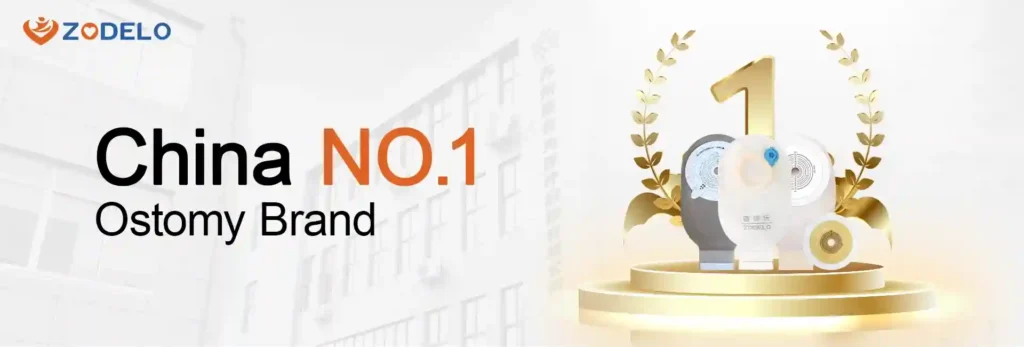
Conclusion — OEM vs Standard Ostomy Bag
In the global ostomy care market, the choice between Ostomy Bag is not a matter of superiority, but a strategic decision based on business stage, risk tolerance, and long-term positioning.
From a healthcare procurement and distribution perspective, ostomy products are not simply commodities; they are regulated medical consumables where supply continuity, patient safety, and compliance stability directly influence market access and brand credibility. Therefore, the decision framework must extend beyond product features to include regulatory readiness, supply chain resilience, and commercialization strategy.
For companies in the early market entry phase, Standard products provide a faster, lower-risk pathway to validate demand, ensure regulatory compliance, and build initial customer trust. In contrast, OEM solutions are designed for businesses that aim to differentiate, build proprietary brands, and secure higher margins through product customization and exclusive design.
In practical terms, Standard ostomy bags typically already comply with established manufacturing specifications and certification frameworks (such as ISO 13485 or CE compliance structures), which significantly reduces time-to-market and regulatory complexity. This allows importers and distributors to focus on distribution channel building and customer acquisition rather than product development. OEM, however, requires deeper involvement in material selection, structural design, and sometimes regulatory documentation support, making it more suitable for companies with established market channels or clinical partnerships.
From a supply chain perspective, Ostomy Bag also reflects two fundamentally different operating models: Standard products prioritize efficiency, stability, and scalability, while OEM focuses on customization, innovation, and brand equity creation. Selecting the wrong model at the wrong stage can lead to unnecessary inventory pressure or missed branding opportunities.
This distinction is particularly important in the medical consumables sector, where demand forecasting is often influenced by reimbursement systems, hospital procurement cycles, and patient usage variability. Standardized products allow for predictable production planning and optimized inventory turnover, whereas OEM models introduce higher SKU complexity but enable stronger differentiation in competitive markets.
Ultimately, the most effective strategy often lies in a phased approach. Many successful distributors and e-commerce sellers begin with Standard products to test the market, then gradually transition to OEM development once demand becomes predictable and brand positioning is clear. This evolution ensures both operational stability and long-term competitive advantage.
This phased model also aligns with real-world commercialization patterns in the ostomy industry: initial penetration is driven by accessibility and reliability, while long-term growth depends on brand trust, clinician endorsement, and product differentiation. By reducing upfront risk exposure, companies can allocate resources more efficiently toward market education and channel expansion before committing to customized production.
In summary, Ostomy Bag should be evaluated through the lens of business maturity: Standard supports entry and validation, while OEM enables differentiation and growth. A clear understanding of OEM vs Standard Ostomy Bag allows buyers to align procurement decisions with their commercial objectives and build a more sustainable market strategy.
When applied correctly, this framework not only improves procurement efficiency but also enhances long-term strategic positioning within regulated healthcare markets, where consistency, compliance, and trust are the primary drivers of sustainable competitive advantage.
If you have any needs or questions, please feel free to contact us or Get our product catalog!
More Resources about OEM vs Standard Ostomy Bag
- One-piece and two-piece pouches: what’s the difference?– pubmed
- A Guide to Ostomy Bags and Pouching Systems– uchicagomedicine
- Ostomy – clevelandclinic
- One Piece Vs Two Piece Stoma Bag: What’S The Difference?– zodelo
- Urostomy Vs Colostomy Bag– zodelo
- What is a Colostomy Pouch?– zodelo
- How to Choose the Best Ostomy Bag?– zodelo
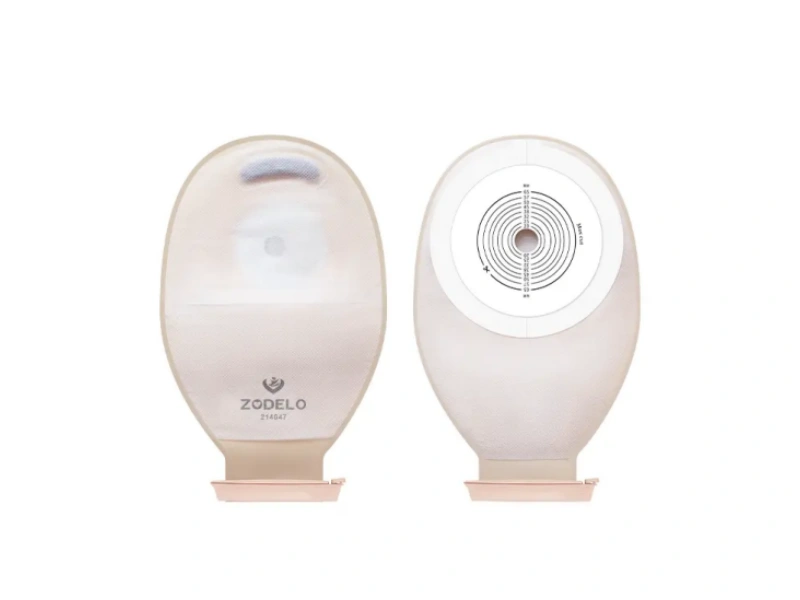

Top 10 Colostomy Bag Manufacturers In India 2026
top 10 colostomy bag
Top 10 Stoma Bag Suppliers Uk 2026
Top 10 Stoma Bag Sup

The Ultimate Guide To Sex With A Colostomy Bag
The Ultimate Guide T
Top 10 Colostomy Bag Manufacturers And Suppliers In China 2026
Top 10 Colostomy Bag